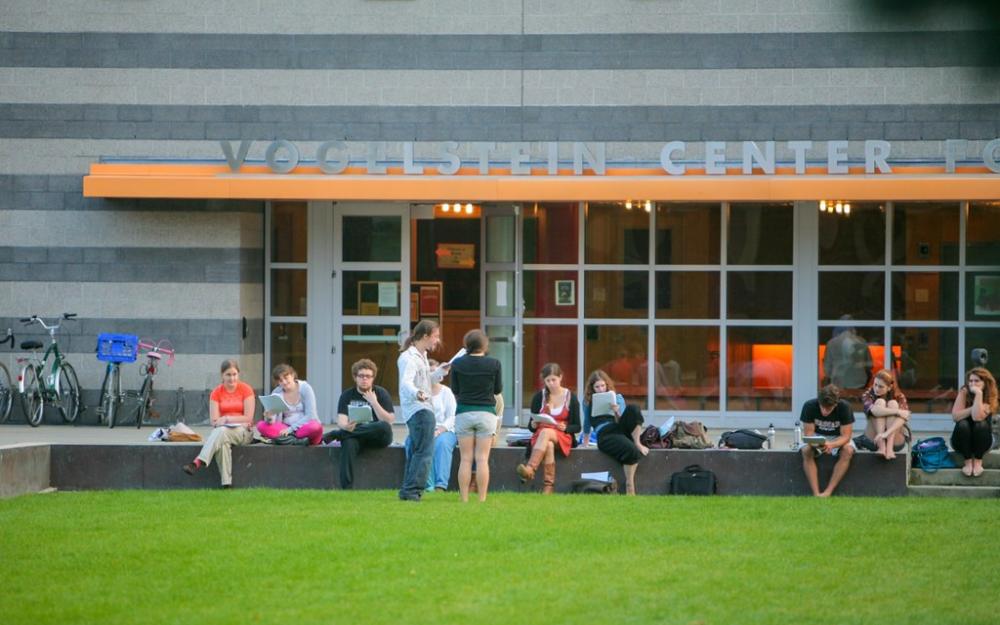
The Vassar Drama Department provides our students with a strong multidisciplinary approach to the practice of Theater-Making, the study of Theater History, Dramatic Literatures, Performance Studies, and Global Theatrical practices.
Courses & Requirements
Productions
From the Chair

Welcome back, everyone. And to those joining us for the first time, whether you're new to Vassar or simply discovering the Drama Department, welcome. We're delighted you're here.
One of the things I love most about this department is that it's really two departments in one. On one side, we're a rigorous academic program where students study the craft of theatre alongside its history, theory, and ever-evolving traditions. On the other side, we're a producing organization, a place where ideas leave the classroom and become living, breathing works of art.
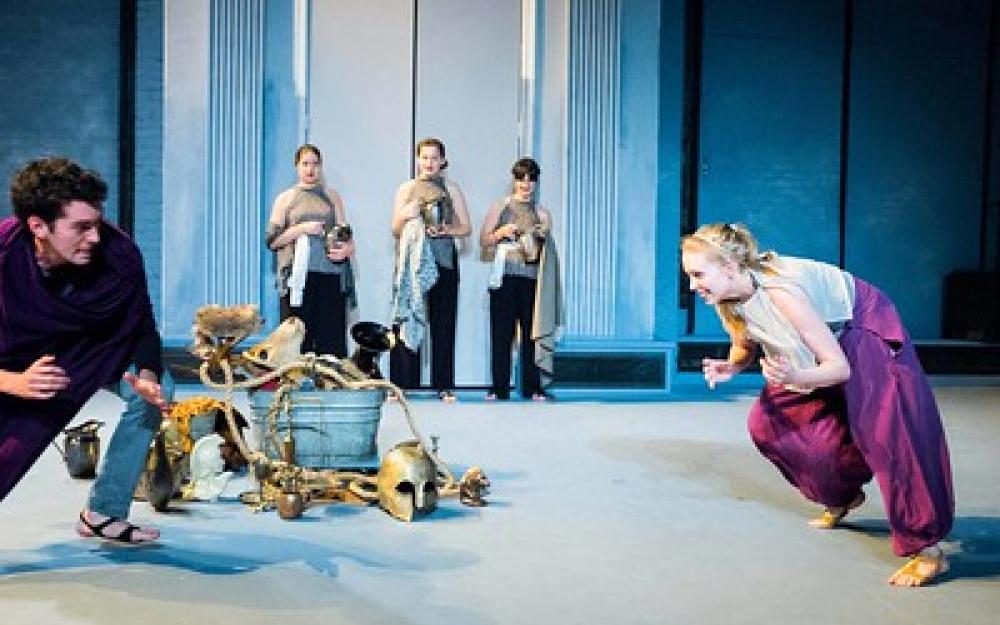
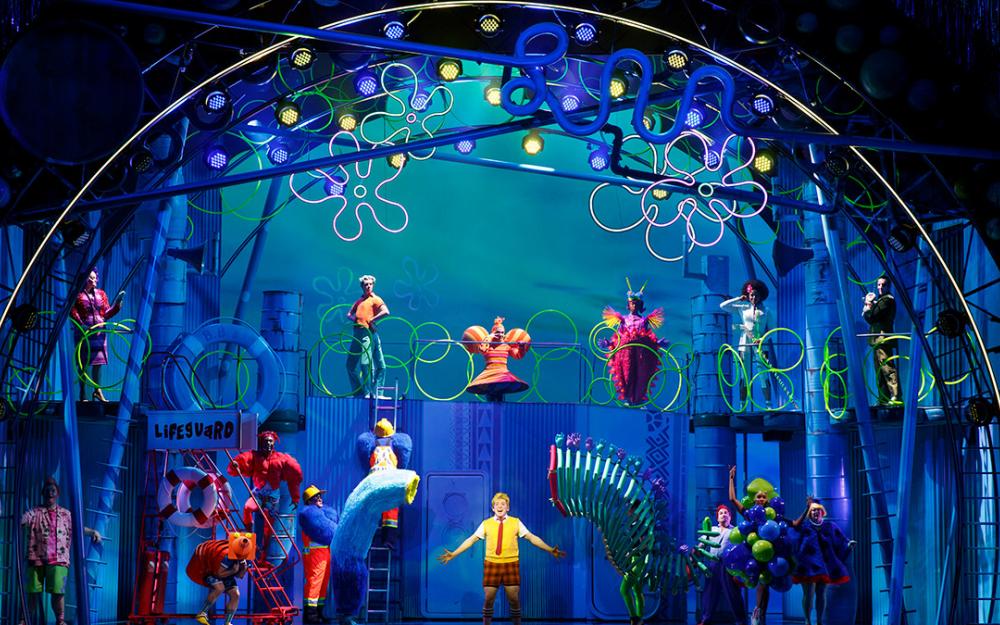
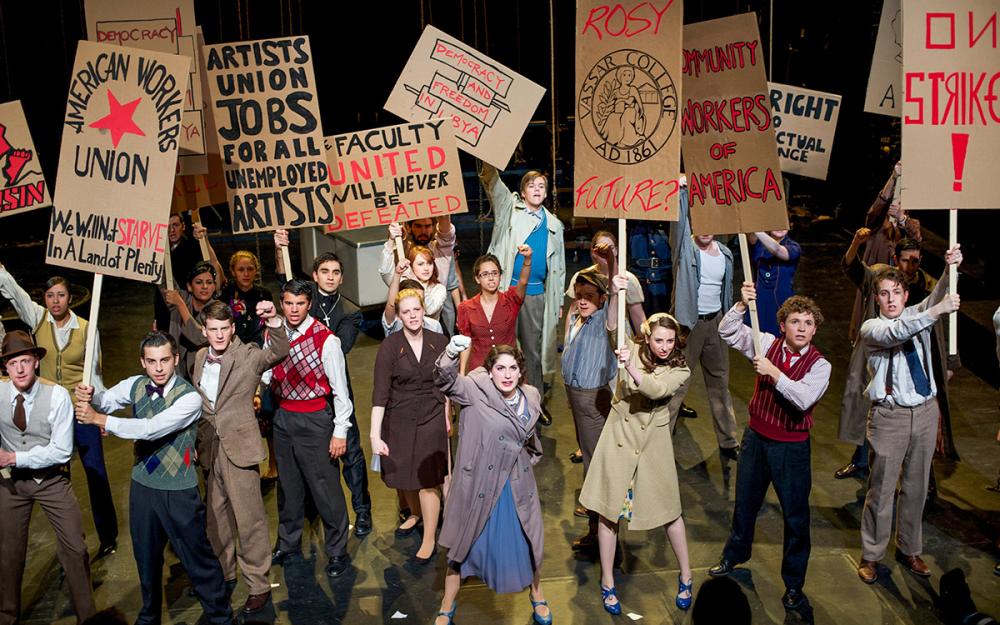
Our season is one of our greatest classrooms. Every production invites students to wrestle with a different theatrical tradition, a different set of artistic questions, and a different way of seeing the world. Together, they reflect our commitment to educating artists who are grounded in the history of the form while helping shape its future. We'll open with Jayne Deely's play, funny and deeply human, I Never Asked for a Gofundme, the story of one person's journey to receive top surgery in Alabama, a play that expands the kinds of trans and nonbinary stories we so rarely have the opportunity to see on stage. We'll follow that with one of the great musicals of the twentieth century, Cabaret. In the spring we'll welcome home alumna Emily Breeze '14 with Are the Bennet Girls OK?, alongside a workshop by our own Professor P. Achiro Olwoch's The Exiled President. Finally, we'll celebrate the next generation of playwrights through the Steerman New Play Festival, where we'll produce two new full-length plays and develop two more by our extraordinary senior writers.
Our alumni go on to build remarkable careers throughout the profession as playwrights, actors, directors, designers, producers, dramaturgs, educators, and arts leaders. Emily's return this season is just one reminder that the work begun here continues far beyond graduation.
Whether your passion is scholarship, performance, directing, design, stage management, technical theatre, playwriting, or simply sitting in the audience and experiencing great stories, there's a place for you here. You don't have to major in Drama to take our classes, audition for productions, or become part of this community. If you're curious about how theatre is made and why it matters, our doors are open.
I hope you'll join us this year in our classrooms, our shops, our rehearsal rooms, and our theatres. We can't wait to see what we'll make together.
Why Vassar Drama?
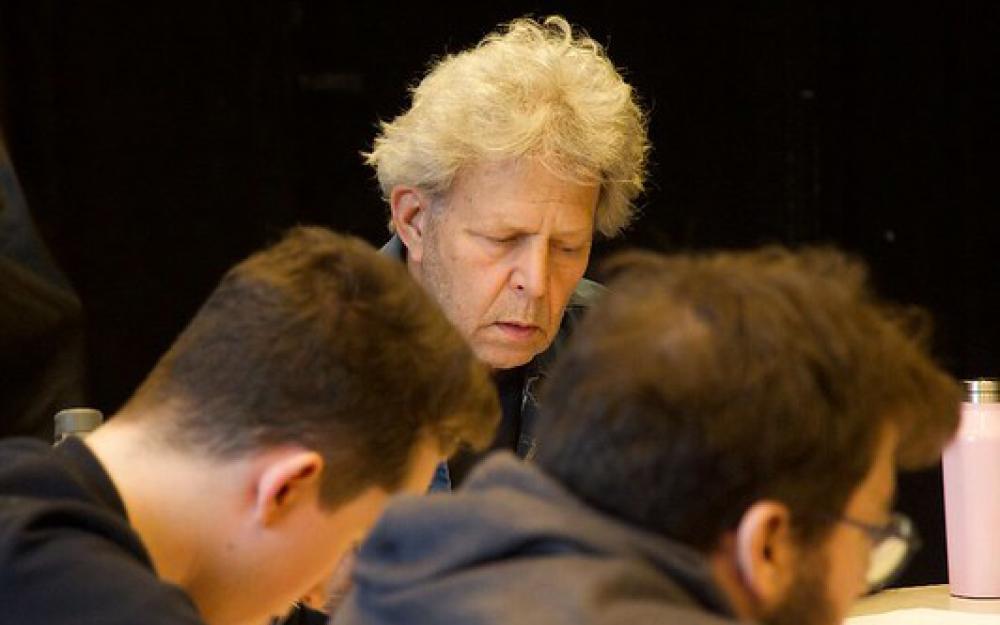
Featuring Chair and Professor of Drama; Shona Tucker (the first African American female to chair the Drama Department)
Our study of theater engages theory and practice as inseparable, dynamically interrelated elements, and considers our Experimental Theater as a laboratory for the bold exploration of form incorporating the study of history, Historiography, and the intersection of race, gender, class, and queerness.
We assume that there is no one truth or correct methodology, but rather multiple solutions to the questions we pose. In addition, we work in tandem with other disciplines and departments on campus. We understand that our methods of inquiry, pedagogies, and practices are constantly evolving. Similarly, we strive to maintain the strongest possible ethics of equity and inclusion both in our educational goals, and hiring protocols.
The requirements for concentration allow each student a good deal of agency and individual choice, allowing students to take classes which explore Theater-Making, Dramatic Literature and the History/Theory of Theater, Scenography, Dramaturgy, Production methods, as well as courses in Acting, Movement for Actors, Extreme Performance, Directing, Playwriting, Stage Management, and Technical Theater.
The Drama curriculum reflects our mission for both non-majors and majors: to encourage students to read deeply and to understand the basics of literary-critical analysis through phenomenological and practical means. Drama 102, “Introduction to Theater-Making,” reflects our teaching philosophy and our collaborative process. It is designed to engage students as critical audience members, helping them to move beyond purely emotional reactions to critical judgment and analysis and to become effective and generous collaborators. In these ways, the course fulfills the college’s mission of helping students to develop their powers of reason and imagination through processes of embodied analysis and synthesis. Our culminating course, “Drama 390. Senior Project in Drama,” is an intensive and collaborative thesis that explores a particular text, or practice and can also consist of original work in Playwriting. Alternatively, we also strongly encourage scholarly research and critical writing as the basis for a thesis.
By the time drama majors leave Vassar, we expect students to have developed the ability to think critically about literature and production, text and performance, and to be able to express original critical and analytical thought through clear prose. Finally, we expect students to have gained an understanding of and practical ability in the various elements of theatrical production: acting, directing, playwriting, design, dramaturgy, and technical theater.