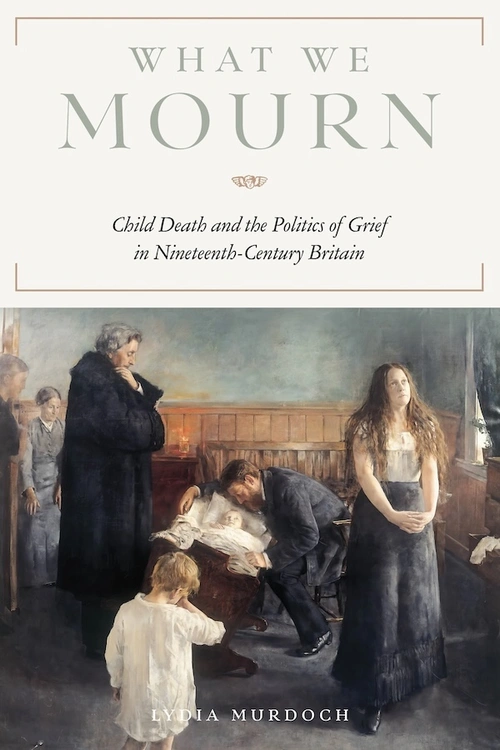

Professor of History Lydia Murdoch publishes a new book, What We Mourn
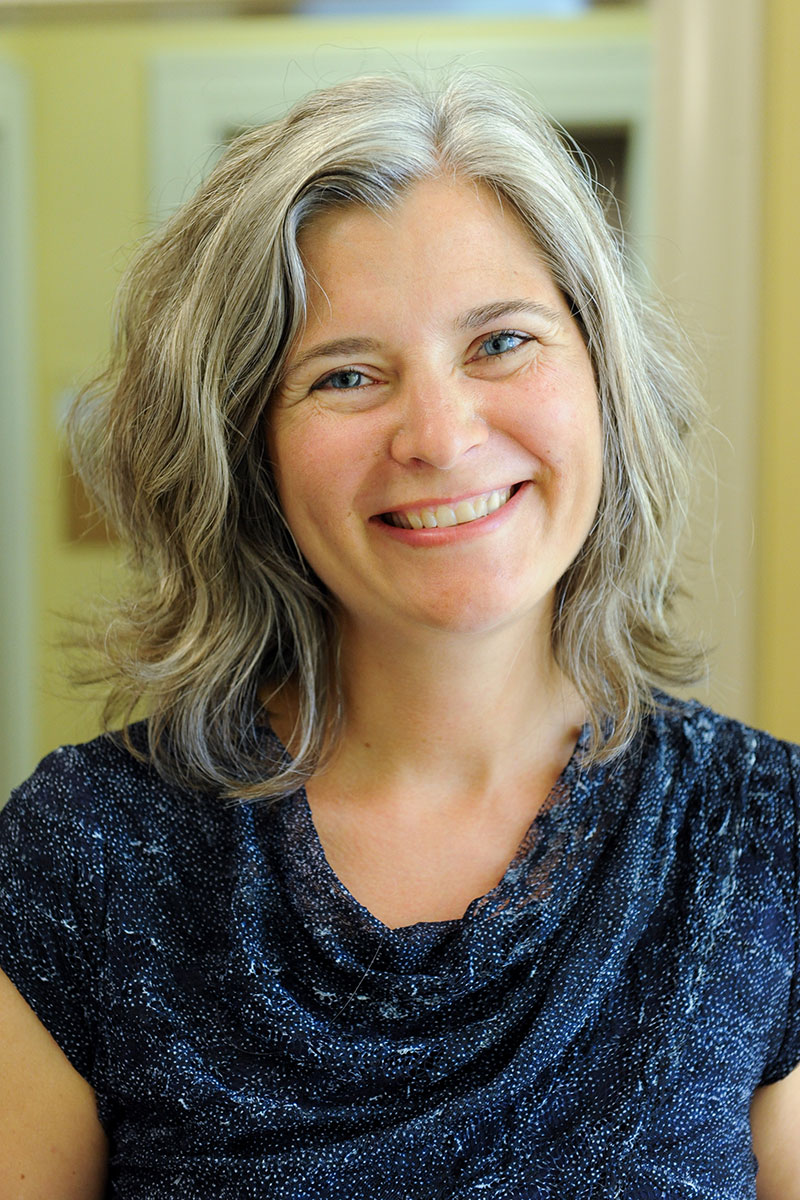
In What We Mourn: Child Death and the Politics of Grief in Nineteenth-Century Britain, Professor of History Lydia Murdoch captures an unfolding public reckoning, one where the scale of child mortality and human grief leads to a new culture of bereavement that shapes views about the role of the state as protector of rights, of children and others.
When the Tory Member of Parliament Michael Sadler argued in 1832 for state intervention on behalf of Britain’s dying child factory workers, he elicited smirks and ridicule from his Liberal adversaries—a response that would have been unimaginable by the century’s end. What We Mourn traces the changing understandings of child death within British, imperial, and transatlantic contexts and reveals the importance of youth and emotion to constructions of the modern state.
As childhood took on new meanings over the course of the long nineteenth century, public mourning for the premature deaths of children emerged as a way of asserting and even redefining British rights and citizenship. Factory hands and abolitionists, sanitation reformers and suffragists democratized and politicized their grief as they called upon the state to recognize their lives as part of a new, reimagined political order. As Lydia Murdoch shows, carrying their own and others’ private grief into the public sphere—with petitions and marches, public lectures and poetry—allowed marginalized members of society to assert their claim to rights. What We Mourn explores both the power and the limitations of a new politics founded on grief and the protection of child life. (Provided by the publisher, University of Virginia Press.)