At Vassar, the New York Conference on Asian Studies Explored Environments Across Time and Space
China’s solar industry, Taiwan’s rice varieties, and South Korea’s construction boom in the Middle East may seem like subjects far removed from one another. But at the New York Conference on Asian Studies, hosted by Vassar College on October 23 and 24, they formed a common thread: how political, economic, and cultural forces have shaped Asia’s environments across time and space.

The two-day conference brought together faculty, independent scholars, and students for panels, keynote talks, exhibitions, and performances. This year’s theme, “Asia and Environment Across Time and Space,” allowed an expansive view of the environment, encompassing not only climate change but also the impact of technology, social movements, cultural memory, migration, and education on socioeconomic and political landscapes. Presentations examined everything from public trust in Singapore’s water supply to transnational religious practices in Korea and efforts to preserve the Manchu language.
Founded in 1975, the New York Conference on Asian Studies (NYCAS) is among the oldest regional conferences affiliated with the Association for Asian Studies. Of 155 presenters in panels and sessions, 82 were undergraduate or graduate students—including 5 Vassar students—and 68 were faculty, according to conference organizers.
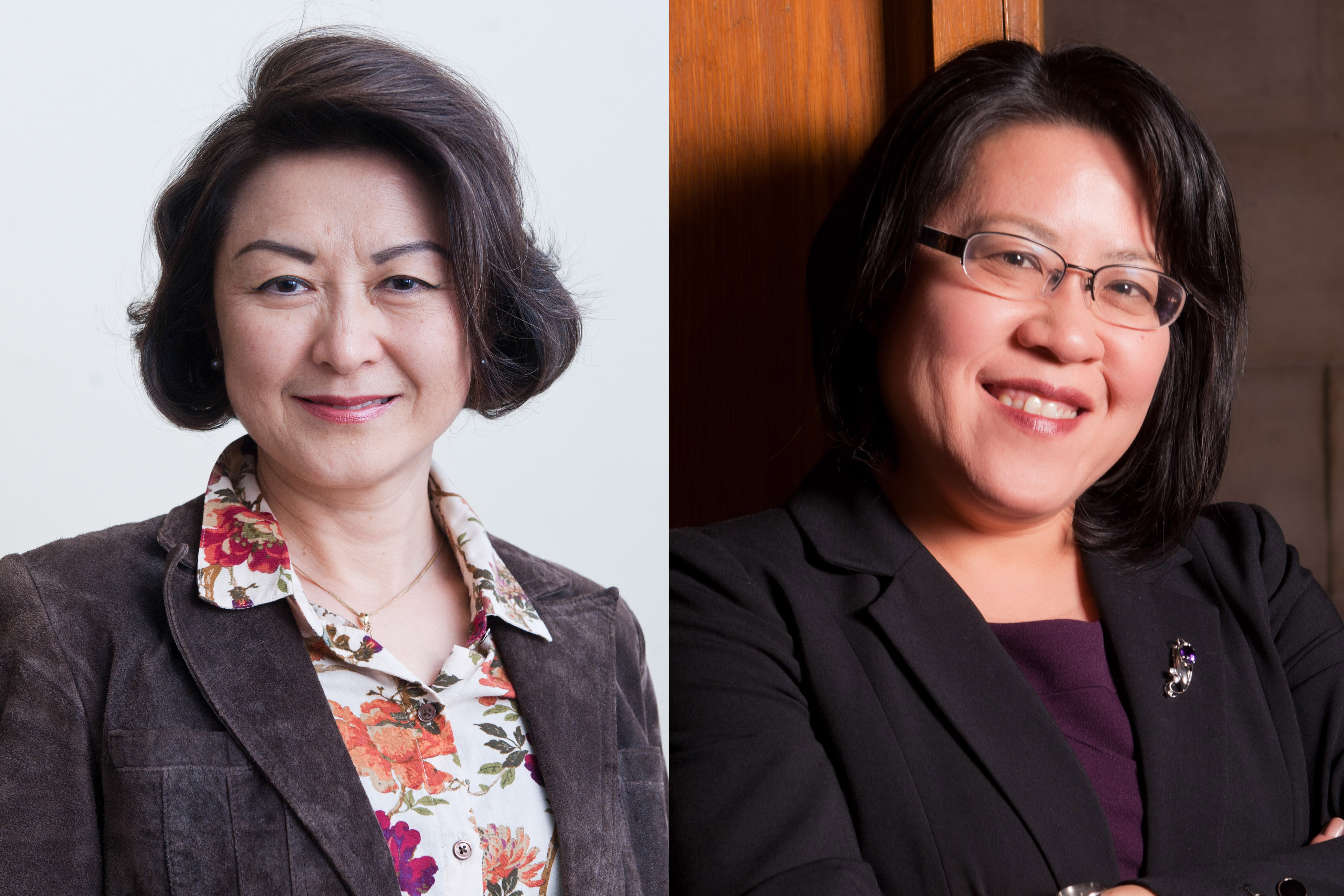
Participants came from all over the world, from Asia to Europe, said Hiromi Tsuchiya Dollase, Professor of Chinese and Japanese at Vassar and a co-organizer of the conference. “It was a huge gathering and definitely one of the most robust regional conferences in Asian studies,” Dollase said.
Professor of Sociology Seungsook Moon, also a conference co-organizer, said she was most impressed by the diversity of the topics and participants. “[T]hey reflected the increasing significance of global and transnational approaches in Asian Studies,” she noted. “Many panels were small in size, but the quality of presentations and audience engagement was high. As the creator of the conference theme and the one who arranged most papers into thematic panels, I found it very rewarding to hear from participants that the conference was intellectually stimulating and thematically coherent. ”
The panel “Mundane Objects in Sublime Techno-Environmental Landscapes” explored what everyday objects reveal about their societies, from the cultural significance of Japanese manhole covers after the 2011 Tōhoku earthquake and tsunami to the poetics and politics surrounding gravestones in Nagaland, India.

Another session, “Affective Labor in Migration and Solidarity,” explored how migration shapes emotional expression, including one researcher’s account of a mother who never told her children “I love you.”
Other panels examined the relationship between online culture and public attitudes, including how South Korean social media portrayed “Patient 31”—a 61-year-old South Korean woman who became a pivotal “super-spreader” early in the COVID-19 pandemic—and American debates surrounding Black cultural appropriation in K-pop.

The two keynote talks centered on political commitment and national development. Elora Shehabuddin, President of the Association for Asian Studies and Professor of Gender and Women’s Studies at the University of California, Berkeley, discussed young women in Sylhet, Bangladesh, who joined the Communist Party in the 1930s and 1940s. Among them was Hena Dutt Das, whose activism helped to establish Bangladesh’s largest women’s organization. Their experiences challenged the easy distinctions between communism and feminism and raised questions about the interplay among political, religious, and national identities.
The other keynote speaker was Eleana Kim, Professor of Anthropology and Asian American Studies at the University of California, Irvine, who examined South Korea’s overseas construction boom in the 1970s and 1980s. Drawing on a television drama produced with Hyundai’s cooperation, she showed how the government and corporations cast workers building infrastructure in the Middle East as patriots making sacrifices for national development. Exhaustion, labor unrest, and separation from family, however, complicated that ideal.

Exhibits extended the conference’s themes. The Wild China, displayed at the College Center, featured photographs by Chinese wildlife photographer and conservationist Xi Zhinong, known for documenting endangered species.
At the Palmer Gallery, Strata of Relations: Tales Across Asia and Beyond, curated by Yixuan Wang ’25, brought together Asian and Asian-diasporic artists who explore landscapes shaped by colonial histories, infrastructure, local communities, and natural processes.
In addition, there was a reception showcasing the Asian art collection at The Frances Lehman Loeb Art Center.
Music offered another way to explore the natural world. During one session, Sumanth Manjunath and Nanda Gopal performed Carnatic music, a South Asian classical tradition in which ragas—melodic frameworks for improvisation—evoke seasons, times of day, plants, and animals. The next morning, they led a workshop on environmental ragas. The concert and workshop were planned and organized by Assistant Professor of Drama Amanda Culp and Associate Professor and Chair of Music Justin Patch.

Putting Research Questions to the Test
During the conference, students from dozens of institutions across the United States and abroad presented original research alongside established scholars.
Jessie Cai, a Vassar junior majoring in environmental studies with a correlate in data science and society, presented research on China’s solar panel industry. Her paper, “China’s State-Market Nexus: Rethinking Capitalism through the Solar Industry,” examined how central government policies, local government interests, and private companies seeking profit have shaped the industry’s development.

Yuanle Zhu ’28, Sihan Chen ’28, and Aidan Francis ’29 presented Incognito: An Experimental Exhibition on the History of the “Comfort Women.” The multimedia project, which seeks to raise public awareness of the history and ongoing ramifications of the “comfort women” system, featured an interactive oral history project directed by Professor Emeritus Peipei Qiu that preserves the testimony of Peng Zhuying, a Chinese survivor of Imperial Japan’s system of sexual slavery during World War II.
At a student poster session, Matthew DeMelo, a games and emerging media major at Marist University, presented a strategy role-playing game he has spent years developing. Set in a fantasy world divided among six nations, the game draws on Japanese role-playing games and fantasy storytelling. “It was super uplifting,” he said of his first academic panel.

For Summer Xiaomei Wu ’25, now pursuing an MA in East Asian Studies at Duke University, the conference offered an opportunity to share her latest research with professors who had mentored her as an undergraduate. During one panel, Wu offered a preview of her dissertation, which examines how Taiwan’s rice-breeding policies shifted from prioritizing high-yield crops to promoting premium rice, and how conflicting incentives among government agencies and farmers have complicated that transition.
Dollase said students, alums, educators, and other scholars appreciated how the program brought together diverse subjects under a coherent theme, alongside music and exhibitions.
“Organizing a conference of that scale was challenging but rewarding,” she said. “This experience made us realize how lucky we are to be supported by genuinely nice people from many different offices and campus services.”