Travel to Germany
By Sophia Blankenship ’26
I have always thought that travel is uniquely important to studying history. It takes events out of books and theory and grounds them in the present and past of existing cultures, it changes our understanding of the past from an academic puzzle to the story of people like ourselves, who once lived where we now stand and whose lives left traces we follow there now. I didn’t think I would have the chance to apply for grants and fellowships that would allow me to explore my own historical questions through travel until graduate school at least, so to be awarded one of the Evalyn Clark Memorial Travel Fellowships for my senior thesis research was an amazing opportunity, for which will always be grateful.
My Clark Fellowship took me to Berlin and Frankfurt to discover how the museums and historical sites and monuments in these cities tell the story of the 1848 and 1989 revolutions today. I wanted to compare how these revolutions, the first famous for its failure and the second for its success, were presented to visitors by the cities where they once occurred. How many sites from each were preserved, and how many were geared towards international tourism versus local remembrance and education? How did the stories of these revolutions told through these institutions agree with or differ from what I had learned from primary accounts and academic publications back in the Vassar library?
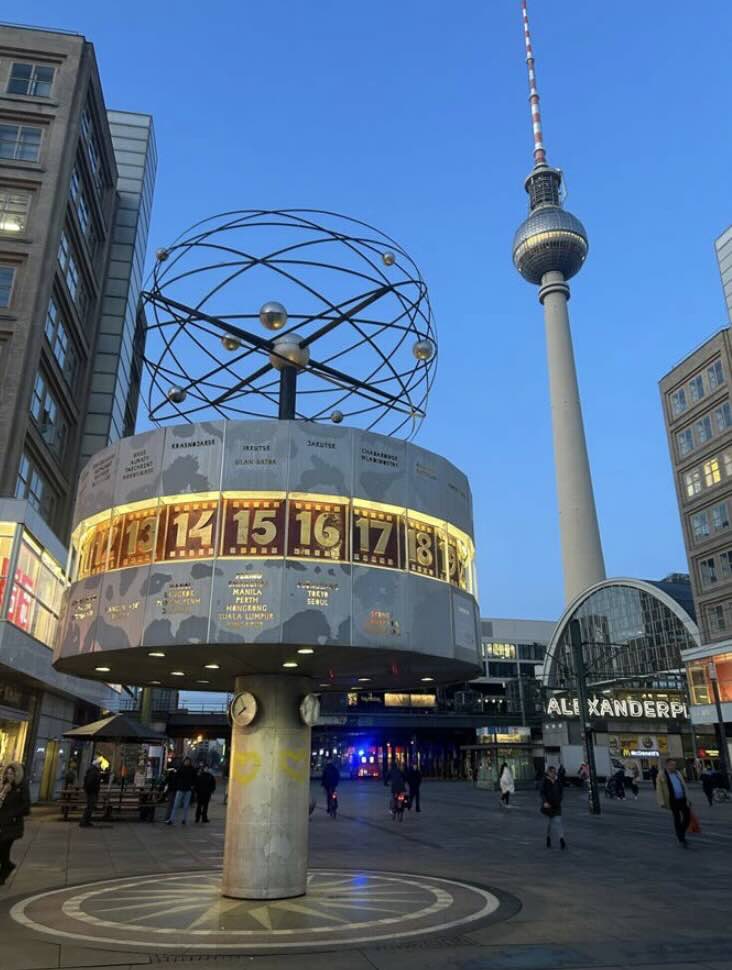
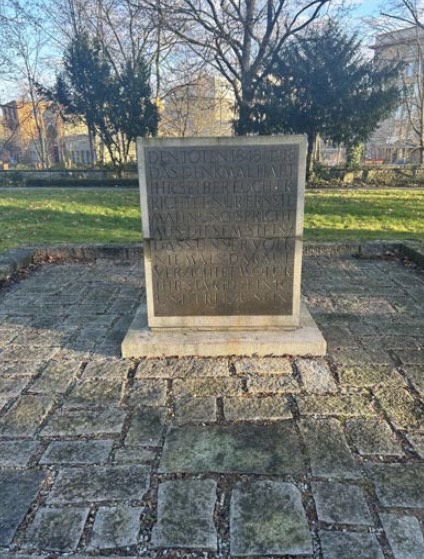
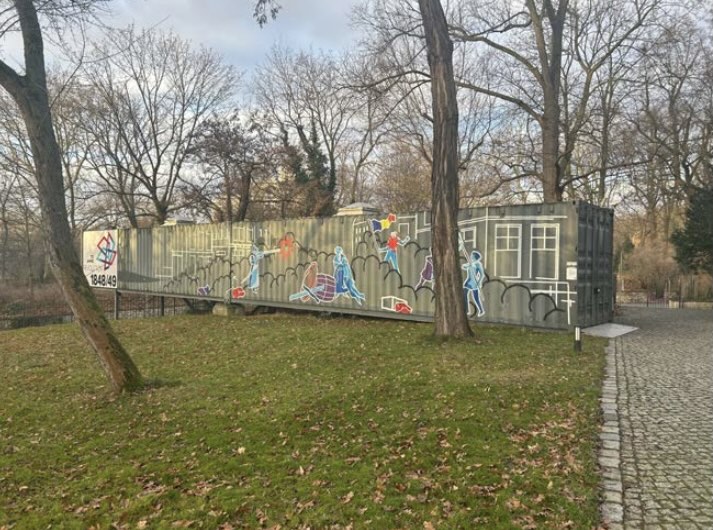
Over the course of my trip I visited seven museums: the Historisches Museum Frankfurt, Deutsche Historische Museum, Deutschlandmuseum, Spionage Museum, DDR Museum in Berlin, Stasi Museum, and the Stolze Museum. I also visited six historical sites: the Paulskirche, Friedhof der Märzgefallenen, Frankfurt Hauptfriedhof, Berlin Wall Memorial, Checkpoint Charlie, and Alexanderplatz. The museum exhibits I visited mostly focused on how these two revolutions had shaped the development of democracy in Germany: the Historisches Museum Frankfurt’s exhibition Democracy: then versus now took ownership of the claim that Germandemocracy started in the Frankfurt Assembly of the 1848 revolution and followed instances support for democracy in Frankfurt on to the present, and the exhibit Roads Not Taken in the Deutsche Historische Museum isolated moments of Germany history between 1848 and 1989 to look at how small decisions and coincidences had moved the path of the country closer or farther from a peaceful democracy and imagine what what alternative paths could have arisen instead. Though I had intended to visit museums for information and historical sites simply to see if they were preserved and/or commemorated, I found that almost all of these sites had informational components as well, often in English, or had been turned into museums themselves. Though some were able to be preserved to the current time, like the Cemetery of the March Fallen or second floor of the Stasi headquarters, others had not only been commemorated but carefully and intentionally rebuilt, like the Paulskirche where the Frankfurt Parliament met to create a german constitution or the reconstructed section of the Berlin wall at the Berlin Wall memorial on Bernauer straße.
My summarized conclusion from my trip is that the story about 1848 and 1989 a visitor picks up from visiting Frankfurt and Berlin is generally in line with the mainstream academic opinions I have found during my research in terms of who is described as being involved, general timelines of events and causes of revolution, but understandably the narrative told by these sites in Germany tends to highlight as more direct the role of both of these revolutions in creating an ideal and a governmental structure of German Democracy. Beyond answering this question for me, my Clark Fellowship trip has changed completely how I interact with this thesis. It is now not only an academic exercise but curiosity about people of the past who stood in the same halls I stood in, who marched in the streets I clumsily navigated, and whose graves I have visited.
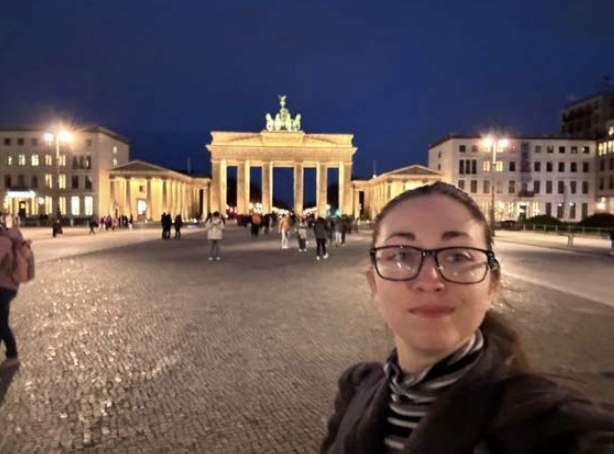
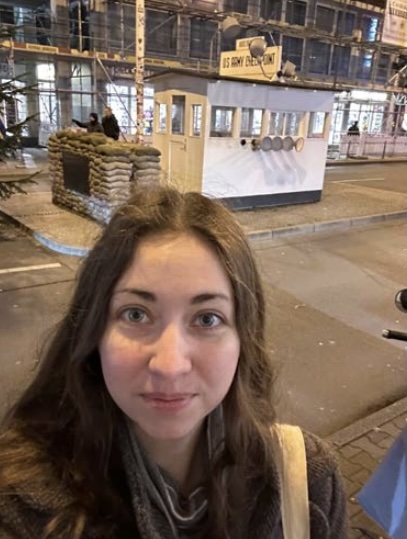
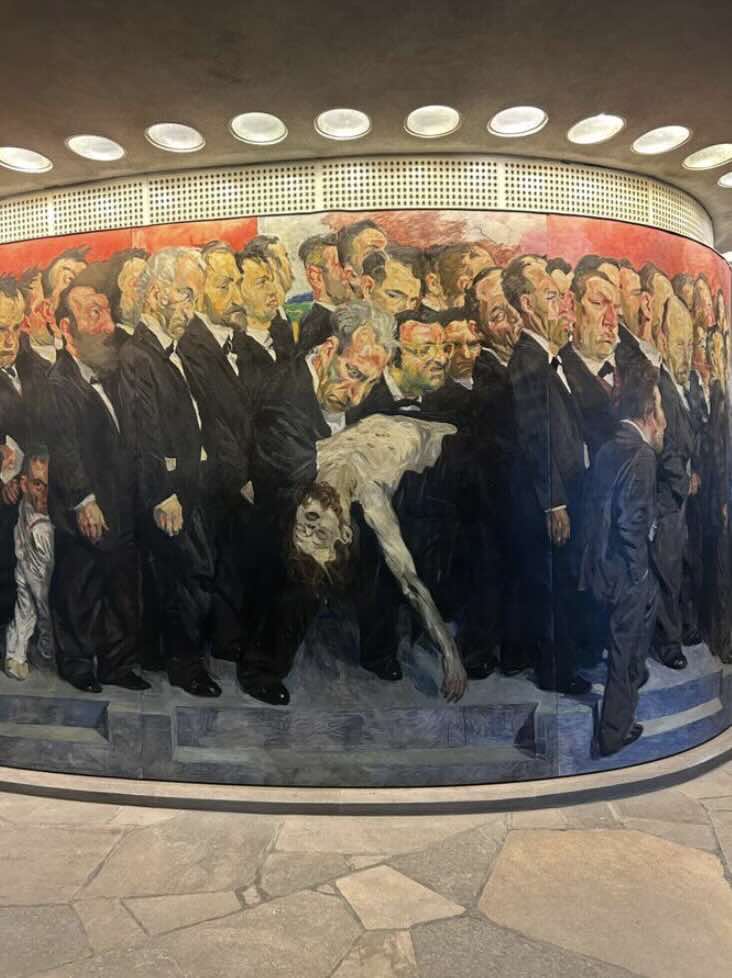
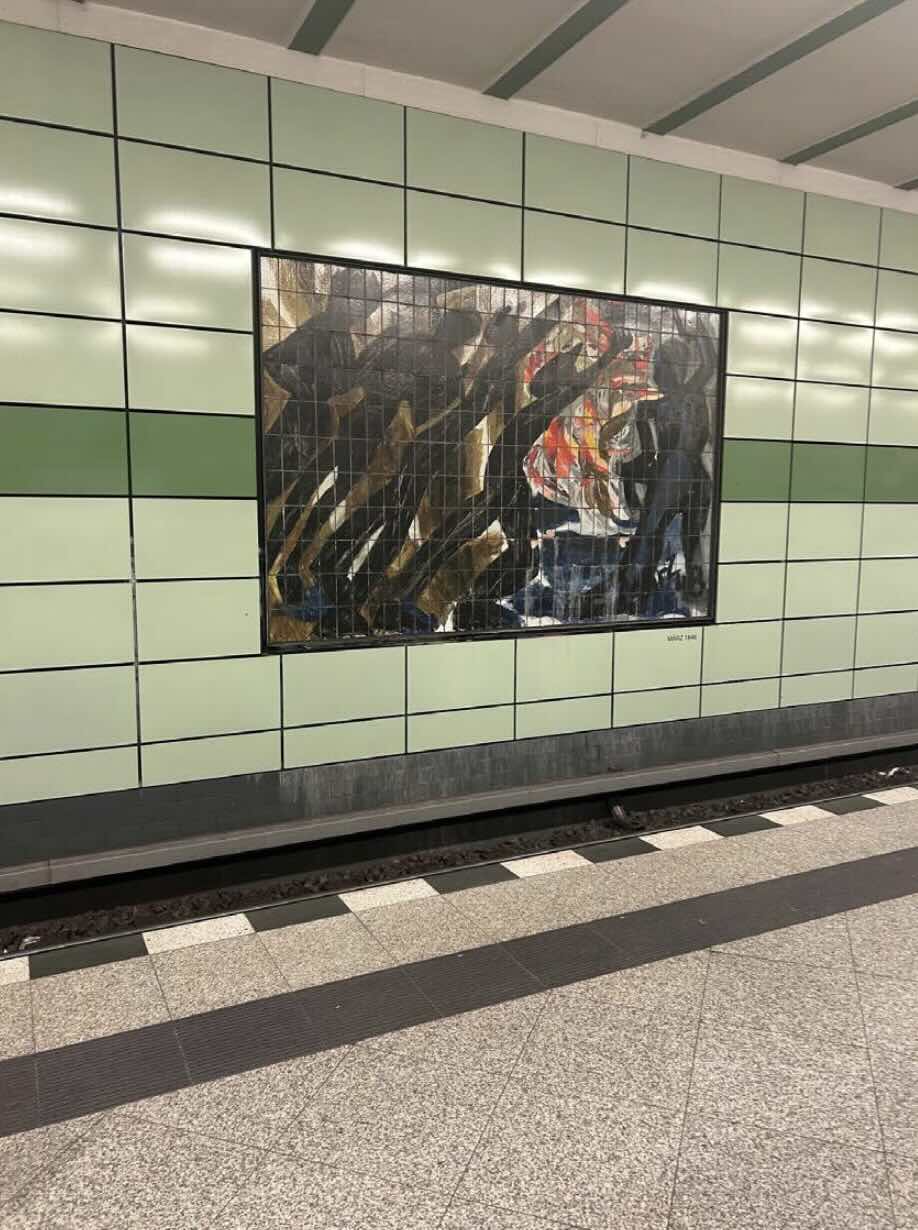
I will close the story of one of my unexpected discoveries: the GDR era murals in the U-Bahn station at Magdalenenstraße, in particular the mural of 1848. This commemoration of 1848 was unexpected to me as most people I had spoken to about my thesis and trip, from Vassar classmates to my roommates in my hostels to the passport officer at the Frankfurt Airport, had responded with little recognition and polite confusion about my interest in this era. Still, simply on the wall of the subway station, was a painting of just that obscured revolution I had come to study, itself connected to the 1989 revolution by the time of its creation, and I knew I had been given a wonderful gift in the chance to come find these unexpected sites that would expand my understanding of these histories beyond the ability of books alone.The mural of 1848 in the Magdalenenstraße stationA mural depicting the barricades of 1848 on a shipping container used as an exhibition space at the Cemetery of the March Fallen and the stele marking their resting place. One side of a fascinating circular mural at the Paulskirche called the Cradle of German Democracy, by Johannes GrutzkeAlexanderplatz in the early morning.Myself at Checkpoint Charlie and the Brandenburg Gate (I don’t take many pictures of myself so these aren’t the best).