
Vassar Announces Faculty Members Receiving Full Professorships
Nine members of the faculty in eight academic disciplines have been designated full professors, Dean of the Faculty Demetrius Eudell announced. Vassar’s Board of Trustees ratified the promotions in February and their new titles will take effect on July 1. The faculty members are: Hadley C. Bergstrom and J. Mark Cleaveland, Psychological Science; Light Carruyo, Sociology and Latin American/Latinx Studies; Alison Spodek Keimowitz, Chemistry; Samson Okoth Opondo, Political Science and Africana Studies; Christopher C. Raymond, Philosophy; Justin C. Touchon, Biology; Nicolás Vivalda, Hispanic Studies; and Silke von der Emde, German Studies.
Dean Eudell said these faculty members had made significant contributions to Vassar’s academic endeavors. “The research of faculty promoted this academic year to the rank of professor reflects great innovation across their fields, including studies of local pollution in the Hudson Valley, new translations of classic Greek texts, and the intersection of memory, disability, and feminist inquiry in German Studies,” he said. “Their work, which has deepened many areas of scholarship, will also enhance Vassar’s curriculum and collegiate life.”
Following are biographical sketches of the nine new full professors, prepared by the professors themselves:
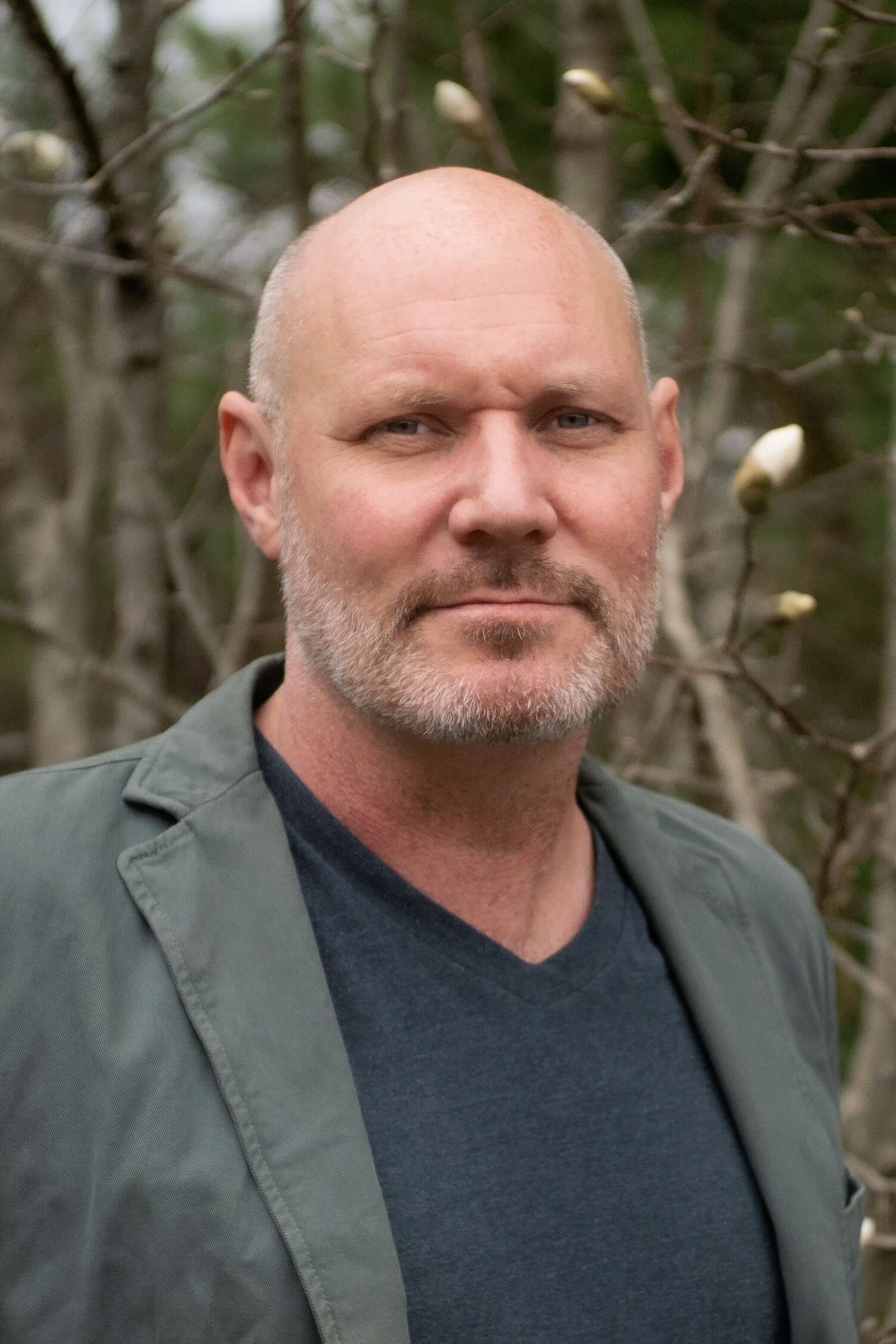
Hadley C. Bergstrom, Psychological Science
Education: BS, University of Oregon; MA and PhD, George Mason University; Postdoc, Uniformed Services University of the Health Sciences; Postdoc, National Institute on Alcohol Abuse and Alcoholism, National Institutes of Health.
Joined the Vassar faculty in 2015.
Teaching and research: I have taught courses in psychological science and neuroscience. My research focuses on how our memories are formed, stored, and remembered in the brain. Primary research interests are memory expression and modification, with an emphasis on how memory generalizes across space and time, and how memory retrieval can be changed through extinction -- a fundamental memory process by which memory, once formed, can be suppressed. To study these questions, we use advanced neuroscience tools that allow for the visualization and manipulation of memory processes in the brain.
Hobbies, interests: Cooking, snowboarding, and most importantly, playing and reading with my three-year-old son.
Why I like teaching and conducting research at Vassar: The students. Vassar students spark my intellectual curiosity, keep me nimble, and provide for unique scholarly interactions with the future of empathetic deep thinkers. Vassar is a privileged space that has allowed me to address fundamental questions in fields of psychology and neuroscience. I also appreciate the aesthetic beauty of the Vassar campus grounds—for me most notably, the architecture and the Arboretum.

J. Mark Cleaveland, Psychological Science
Education: BA, Brown University; PhD, Duke University; Postdoc, University of Konstanz, Germany.
Joined the Vassar faculty in 2003
Teaching and research: I have taught courses in psychology and neuroscience. My research is in the area of comparative psychology, with concepts drawn from behavioral ecology, evolutionary theory, and neuroscience.
Hobbies, interests: I am an avid vegetable gardener and board-game aficionado. And yes, I have named my car after a favorite gaming character.
Why I like teaching and conducting research at Vassar: I like teaching at Vassar because of the culture of curiosity that exists in the student body. This has allowed me to take certain conceptual risks in my teaching with a high level of confidence that my students will “meet me halfway.” So, for example, having students read Hamlet in a senior seminar on psychological agency or having students design games as part of a course on evolutionary psychology. In my experience, Vassar students are willing to give something new a try, and that is something I find very endearing.

Light Carruyo, Sociology and Latin American/Latinx Studies
Education: BA, Oberlin College; MA and PhD, University of California, Santa Barbara.
Joined the Vassar faculty in 2002.
Teaching and research: I have taught Introduction to Sociology,Transnational Perspectives on Women and Work, Feminism, Knowledge, Practice, and The First-Year Writing Seminar.
I study the gendered and racialized dimensions of nation building and economic development, and my research examines themes of feminist ethnography, historical sociology, and pedagogy in higher education.
Why I love teaching at Vassar: The opportunity to dialogue and think with sharp and engaged young people. Intergenerational conversations seem more important now than ever, and we get to do it daily!

Alison Spodek Keimowitz, Chemistry
Education: BA, Wesleyan University; MS, Yale University; MPhil, PhD, Lamont-Doherty Earth Observatory, Columbia University .
Joined the Vassar faculty in 2009.
Teaching and research: I have taught Chemical Fundamentals, Integrated Chemistry Laboratory, Aquatic Chemistry, Global Change and Sustainability, and Environmental Science in the Field. Currently in my lab, we are researching heavy metal mobilization through hydraulic fracturing. The process of hydraulic fracturing, or fracking, involves injection of large volumes of acidic fluid into rock formations. Much of this fluid returns to the surface with significant dissolved concentrations of trace elements such as arsenic, selenium, lead, and uranium, which pose threats to both human health and local ecosystems.
Hobbies, interests: Reading, hot yoga, swimming, mah-jongg, and crafting (very badly).
Why I like teaching and conducting research at Vassar: My educational background and research leave me positioned exactly at the interface of chemistry and environmental science. Working at Vassar allows me to both teach and conduct scholarship in both these disciplines, and in the area where these disciplines overlap. The autonomy I am granted at Vassar, in addition to Vassar’s emphasis on multidisciplinary work, make it an excellent place for me as a scholar and educator.

Samson Okoth Opondo, Political Science and Africana Studies
Education: BA, Moi University, Kenya; MA, Keele University, UK; PhD, University of Hawai‘i at Mānoa.
Joined the Vassar faculty in 2012.
Teaching and research: I have taught courses on comparative politics, settler colonialism, postcolonial diplomatic cultures, and African cities. My research focuses on “the mediation of estrangement” and the emergence of diplomatic and colonial cultures and subjects in Africa. I have written on the often-overlooked amateur diplomacies of everyday life, humanitarianism, biopolitics, ethics, postcolonial cities, the politics of genre, and cultural translation in Africa. I am the author of Diplomatic Para-citations: Genre, Foreign Bodies, and the Ethics of Co-habitation (Rowman & Littlefield, 2022), The Books of Judas and Other Musings on Betrayal (Mkuki na Nyota, forthcoming in 2026) and Salt & Breast Milk: Poems (with Sundus Hassan, Mkuki na Nyota, forthcoming in 2026).
Why I like teaching and conducting research at Vassar: I enjoy the interdisciplinary conversations I have with students and the critical connections they make between their classes and the multiple worlds they inhabit.

Christopher C. Raymond, Philosophy
Education: BA, Brown University; PhD, University of Texas at Austin.
Joined the Vassar faculty in 2013.
Teaching and Research: I regularly teach introductory courses on ancient Greek and medieval philosophy, the first-year writing seminars What Is College For? and Tragedy and Philosophy, and advanced seminars on Plato’s Republic and topics in ancient Greek ethics. My research focuses on the translation and interpretation of ancient Greek philosophy, especially Plato’s dialogues. I am also interested in Platonic reception, 19th-century European philosophy, ethics, and aesthetics.
Hobbies, interests: Music and film, squash and archery, mushroom foraging with my wife and son, and the Boston Celtics.
Why I like teaching and conducting research at Vassar: I feel very fortunate to teach in such a high-trust, collaborative institution, which is increasingly rare in higher education. For the most part, faculty have discretion to choose what we teach and how we teach it. The trust of students allows us to experiment and improvise, and we can rely on them to be open-minded and inquisitive. The Vassar ethos has also encouraged me to take risks and cross conventional disciplinary boundaries in my own scholarship.

Justin C. Touchon, Biology
Education: BS, Willamette University; PhD, Boston University.
Joined the Vassar faculty in 2014
Teaching and research: I have taught Introduction to Biological Investigation, Animal Structure and Diversity, Experimental Animal Behavior, and Seminar in Neuroscience and Behavior. My primary research focuses on understanding how animal development is shaped by the environment. I primarily study tadpoles and want to understand how developing in a world with various types of stressors (predators, pollutants, pathogens) influences how they develop, including both at the genetic level (which genes might be turned on or off in response to certain stressors) and at the external phenotypic level (how those stressors change how animals behave or what they look like).
Hobbies, interests: I love getting outdoors with my family, going camping and hiking in the summer. I coach both of my sons in youth soccer. I also enjoy running.
Why I like teaching and conducting research at Vassar: I particularly enjoy the freedom to follow my interests where they might take me. I don’t feel constrained or pressured to pursue particular lines of research but rather I get to explore the things I think are interesting. I love working with students and showing them the pleasure of designing, executing, and analyzing your own research project.

Nicolás Vivalda, Hispanic Studies
Education: BA, Universidad Nacional de Rosario, Argentina; MA and PhD, University of Pittsburgh.
Joined the Vassar faculty in 2006.
Teaching and research: I have taught Topics in Multidisciplinary Analysis and Peninsular Seminar. Some of the most meaningful scholarship I have done at Vassar has emerged directly from collaborative research with undergraduate students. A good example is the Oviedo Project with Professors Lizabeth Paravisini-Gebert and Michael C. Aronna, which aims to produce the first complete English translation of the Historia general y natural de las Indias by Gonzalo Fernández de Oviedo y Valdés, a monumental 16th-century account of the natural world and societies of the Americas. Since my promotion to associate professor with tenure, I have developed a sustained and interdisciplinary research agenda centered on the literary representation of knowledge, the rhetoric of power, and the intersections of philosophy, medicine, and religion in early modern Spain and colonial Latin America.
Hobbies, interests: Listening to Argentine rock and 1990s–early 2000s pop, watching horror films, and tackling hands-on home improvement projects—from small painting refreshes to other practical upgrades around the house.
Why I like teaching and conducting research at Vassar: I value doing my teaching and research at Vassar College because its liberal arts environment fosters sustained dialogue between scholarship and pedagogy. Small, discussion-based classes allow me to introduce students to complex early modern texts while also integrating emerging areas of my research—Baroque epistemology, transatlantic cultural exchange, and the history of medicine—into the classroom. This dynamic not only enriches students’ learning but also continually sharpens my own scholarly questions. In addition, the College’s emphasis on global engagement resonates with my focus on the intellectual circulation between imperial Spain and colonial Latin America.

Silke von der Emde, German Studies
Education: BA, Tübingen University, Germany; PhD, Indiana University Bloomington.
Joined the Vassar faculty in 1994.
Teaching and research: I have taught classes at all levels in German Studies and also teach courses in Women, Feminist and Queer Studies. This semester, I am teaching German Cinema Behind the Wall, which covers films from the former socialist German Democratic Republic (GDR) as well as Feminist Disability Studies. My research is situated at the intersection of memory, disability, and feminist studies. In addition to my scholarship on memory and contemporary German literature, film, and culture, I am also interested in foreign language teaching and have copublished articles on foreign language pedagogy together with my colleague Jeffrey Schneider.
Hobbies and Interests: I love hiking with our sweet rescue dog, Cece, bird-watching, and of course reading and watching films.
Why I like teaching and conducting research at Vassar: I love working at Vassar not only because of its smart, curious, and caring students, but also because of the wonderful academic community that exists at Vassar, which feels energizing and supportive.