Experiencing the Culture and History of Mexico
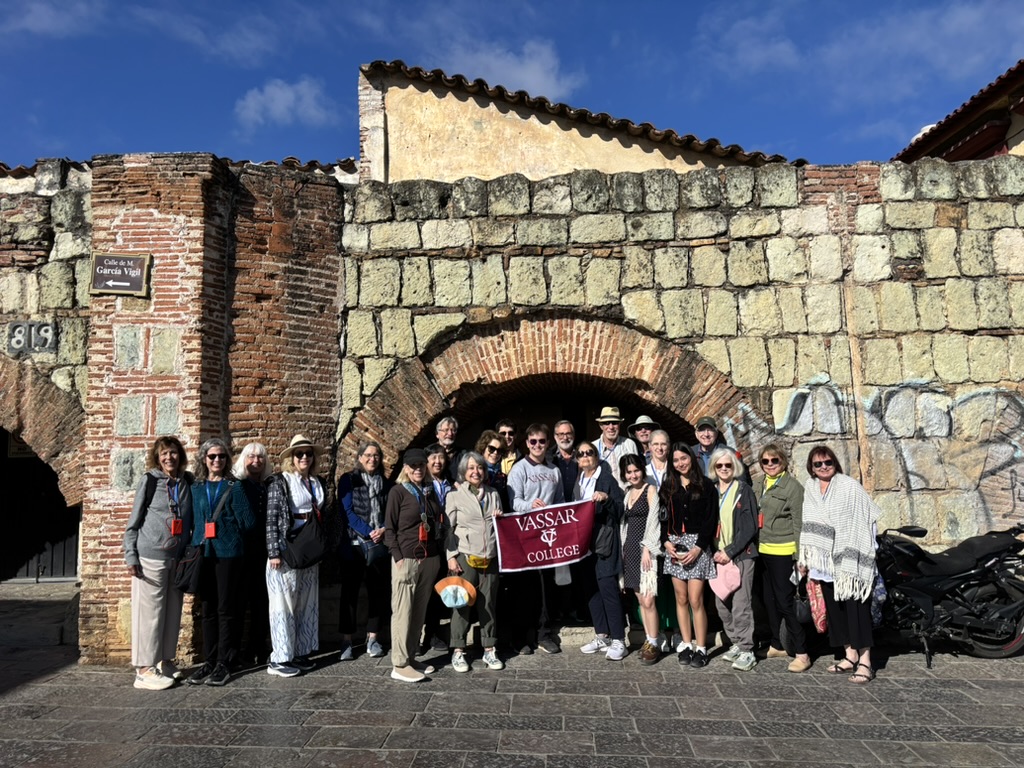
Four Vassar students took a deep dive into Mexico’s history and culture in a six-week, intensive course last fall taught by Colleen Ballerino Cohen, Professor of Anthropology and Women, Feminist, and Queer Studies and Chair of Anthropology. During Winter Break, students augmented what they had learned by taking a nine-day excursion to Mexican cities, towns, and villages, sampling the country’s rich culinary tradition and visiting museums, artists, and craftsmen.
The students—Kamila Barrios ’26, a mathematics major from Douglas, AZ; Tyler Briceño ’28, an anthropology major from Hamptonburgh, NY; Sierra Iames ’27, an anthropology major from Orange, CA; and Diego Martinez-Hahn ’27, an anthropology and Latin American Studies major from Los Angeles—were accompanied on the trip by Professor Cohen, Associate Professor Emerita of History Leslie Offutt, and more than a dozen alums.
The students visited Mexico City, Puebla, and Oaxaca and delivered oral presentations to the alums at many stops along the way. “No surprise. Their presentations were flawless, and the alums were impressed,” Cohen reported.
One alum, Laura Graceffa ’87, said she was impressed with the students’ mastery of the material they had studied. “They were able to participate in the travel with deep background knowledge, and this really enhanced my own learning and was humbling,” Graceffa said. “They were just awesome people—committed, confident, and genuinely interested in the other participants. Getting to know these students gave me yet another reason to be proud of my college.”
The trip was funded by the Office of the Dean of Faculty. The students recounted, in their own words, highlights from their journey through Mexico’s past and present.
Kamila Barrios
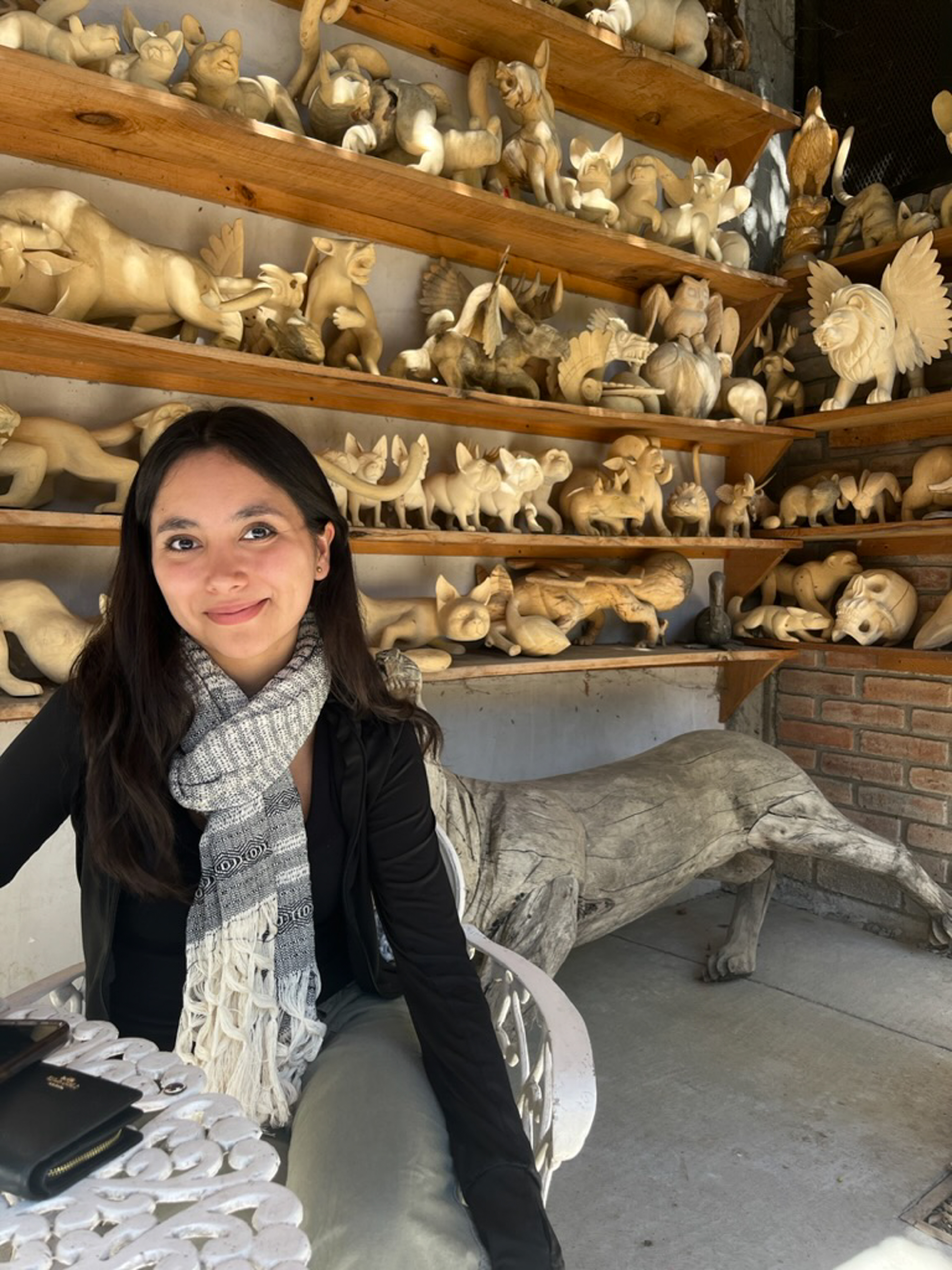
Photo by Sierra Iames
The idea of a Mexican identity has been questioned, challenged, and reinvented since the beginning of its creation. It’s easy to forget the truths of our past when new realities are constantly being fabricated, but Mexico is a country where history isn’t just remembered, it’s lived! Our travels in Mexico City, Puebla, and Oaxaca taught us about indigeneity and colonial powers, but also about modern education and present-day life in Central and Southern Mexico.
In conversations about pre-Hispanic worldviews and ancient belief systems, we learned about the Cuicuilco Archaeological Zone, the oldest pyramid in Central Mexico, and how, unlike Mayan tombs in southern Oaxaca, it was solid. We discussed ball games, which weren’t games at all but rather rituals where sacrifice was an honor. I was struck more by this absence of fear than by the violence of the offering. We marveled over Olmec beauty standards, and their commitment to being closer to God by altering their physical appearance via piercings and facial abnormalities
Spanish rule and colonial power were also major themes. Before independence in 1810, criollos, or people born in New Spain, were denied opportunities like becoming friars. This was especially emphasized on our visits to Dominican churches, where we learned about their connection to the Virgin of the Rosary. The 22-karat gold interiors were just as captivating as their commitment to honoring her in war and travel, and it all displayed how faith became both a spiritual refuge and a political tool under colonial rule.
Presently, Mexico continues to serve as a window into the past. During our travels, we also learned about the Biblioteca Palafoxiana in Puebla. It’s home to classics like Don Quijote and has been named a UNESCO Memory of the World, but it also sits within a cultural center where kids are taught piano and chess. Kids who, we learned, have different educational experiences depending on their location. In Northern Mexico, while students are taught English as their second language, kids further south of the border are taught an indigenous language. They can then go on to further their education at institutions like Universidad Nacional Autonoma de Mexico (UNAM), where students can attend university for as little as $5 a semester (about $100 pesos).
Adrian, our tour guide during a visit to one of Mexico City’s most booming markets, talked about UNAM as the catalyst for all he is now, and Mexico as the essence of his identity. In Mexico, history doesn’t feel distant. It’s embodied in language, food, and its people.
By the end of our trip, I stopped thinking of Mexico in terms of before-and-after. Before the Spanish, after independence, before modernization. Instead, I saw a country, my country, that carries everything with it, and does so with pride!
Tyler Briceño
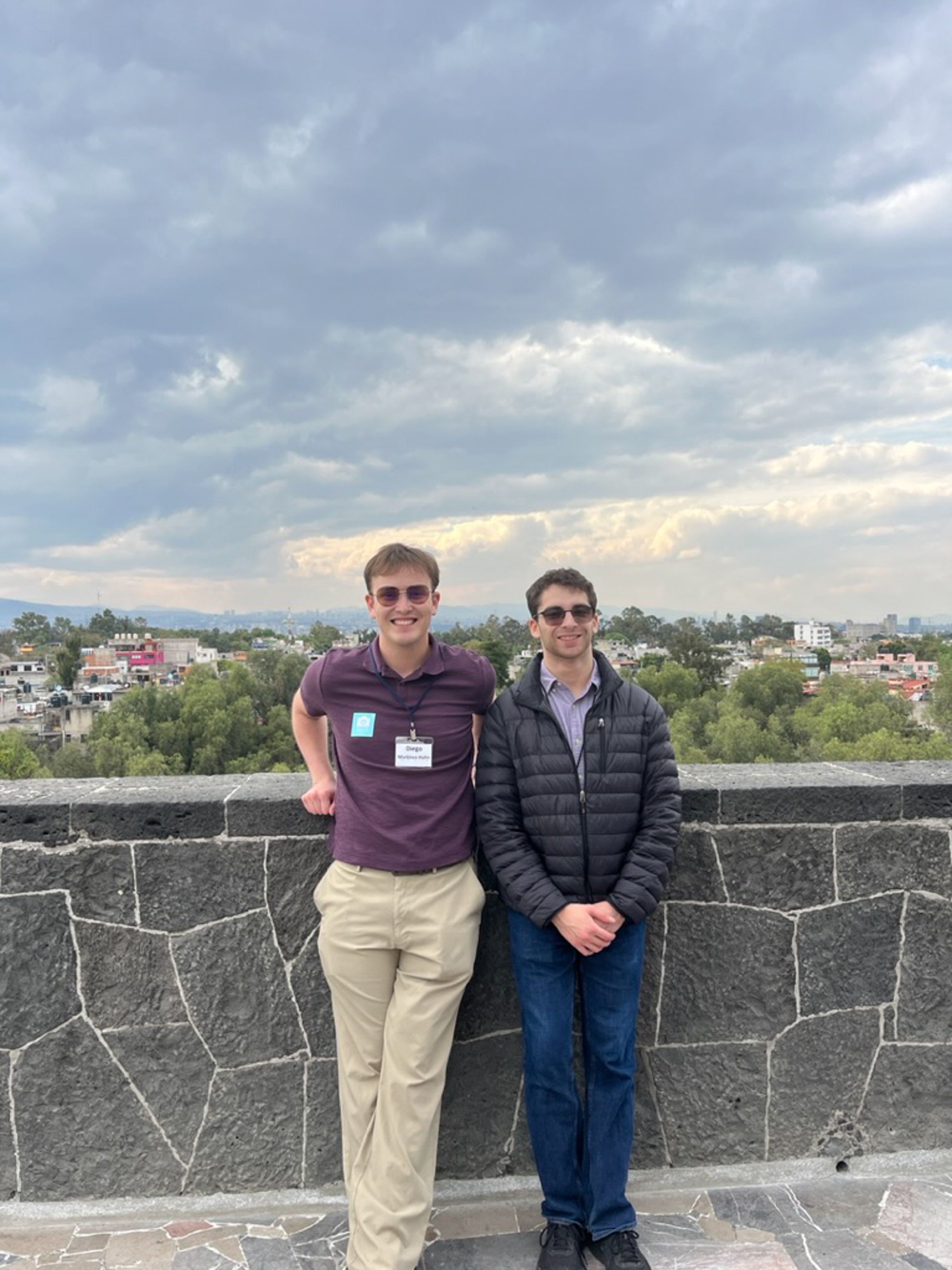
Photo by Sierra Iames
The trip with the alumni to Mexico was personally, culturally, and educationally enriching while being the most fun I’ve ever had. The semester before the trip, the four of us students participated in an intensive anthropology class where we read scholarly articles and essays about the places we were going to visit, and had in-depth conversations about the readings with each other and our professors. We were also tasked with doing our own research projects that we could present to the alums and talk about extensively. It was my first time taking an intensive like this, and there were definitely ups and downs. It was a lot of work, but I ended up gaining a lot of research experience that I’m sure will prove invaluable to the rest of my career as an anthropology major at Vassar.
When we got to Mexico, the first thing I did was go out into downtown Mexico City with Diego, another student on the trip. We headed to the main Zócalo, where we saw an incredible art exhibition in front of the National Palace, but behind that, in a gated off section of the Zócalo, we saw something much more interesting. During our class, we read a lot about the protest culture in Mexico and a lot about the struggle of indigenous populations. That day in the Zócalo, we saw a small encampment of people protesting for indigenous rights. It was incredibly quiet and peaceful, and most people paid it no mind; it was incredibly humbling and eye-opening to finally step into a world that I had only read about thus far. Reading about something without experiencing it may provide knowledge, but never a full understanding.
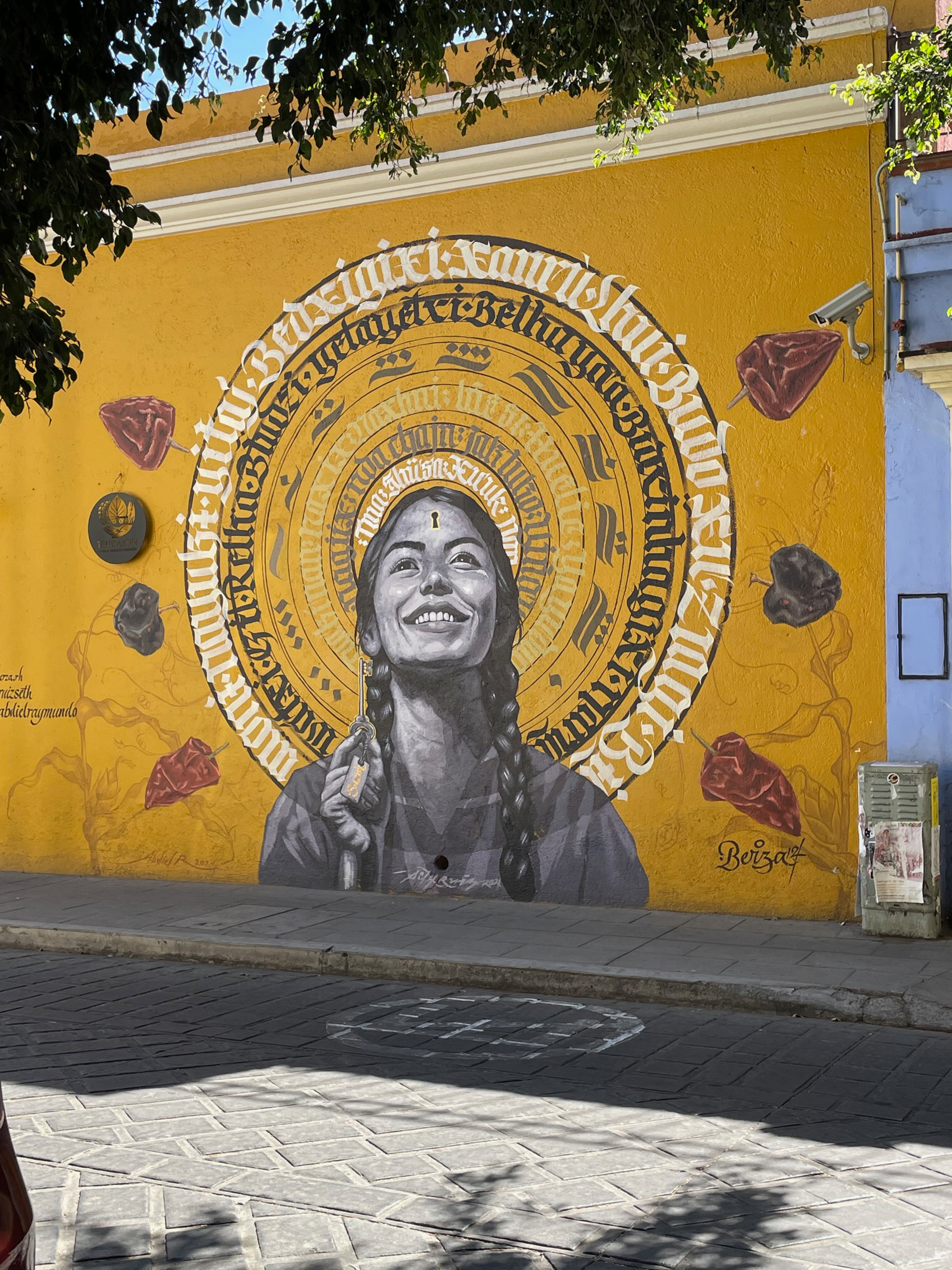
The moments during the trip that hit the hardest for me were when people allowed us to enter their homes and eat at their tables. This happened on two different occasions; both of our hosts were artisans whose art was made and sold in their residences. During both visits, our hosts cooked us some of the best food I’d ever tasted, and graciously shared an intimate part of their lives with us.
Another major part of the trip was connecting with the alums. It was incredible to hear about what Vassar was like in the 60s and 70s and entertaining to hear the alums reminisce about their time in college. They were also very interested in what Vassar is like now, and us four students got to tell them about the ins and outs of life at their alma mater. It was cathartic to be able to talk about all of the material that I had read and researched about with a genuinely interested audience, which I wished happened more with [people] outside of Vassar!
I am also incredibly grateful to our professors, Dr. Colleen Cohen and Dr. Leslie Offutt. I had an amazing time connecting with them outside of a school setting, and it was very refreshing to see them truly in their element doing what they love.
Sierra Iames
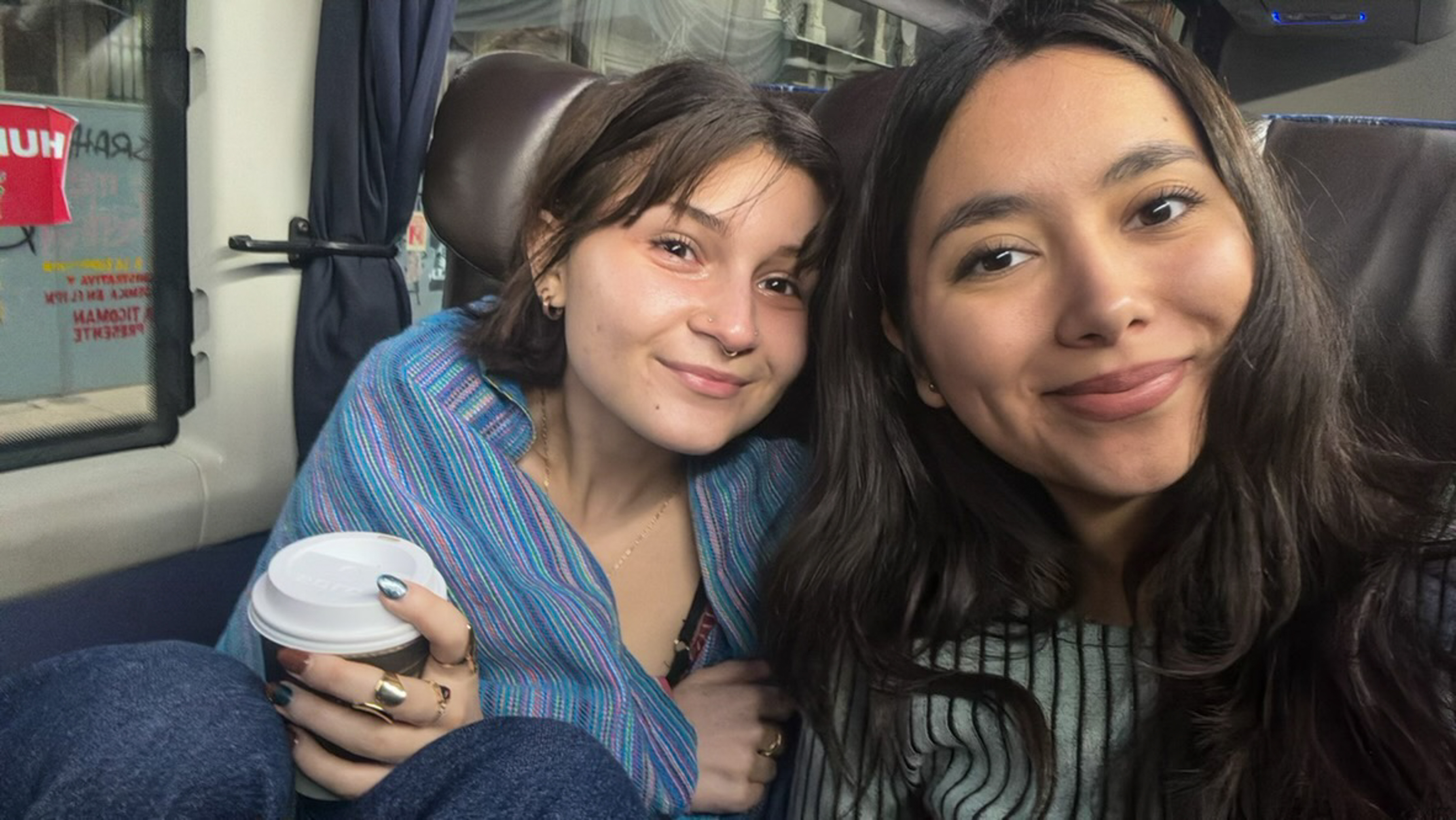
While the body of this intensive was to research one aspect of Mexican culture, after traveling to Mexico City, Puebla, and Oaxaca, the scope of my research and exploration burgeoned. I was compelled by the rich history that seeped through Mexico’s contemporary developments. The focus of my research was on the transnational identities of Mexican migrants in the United States, and in the life of each city we visited, I was able to see the ways in which histories of movement shaped the culture, architecture, arts, and values of the nation.
With the help of our tour guides, Yaya and Florencio, I was able to expand my research on Mexican identities by exploring them in their place of origin. I had ascertained that Mexican migrants in the U.S. engaged in a selective acculturation process while maintaining intrinsically Mexican values. This was as prevalent inside the nation as it was in transnational communities in the United States.
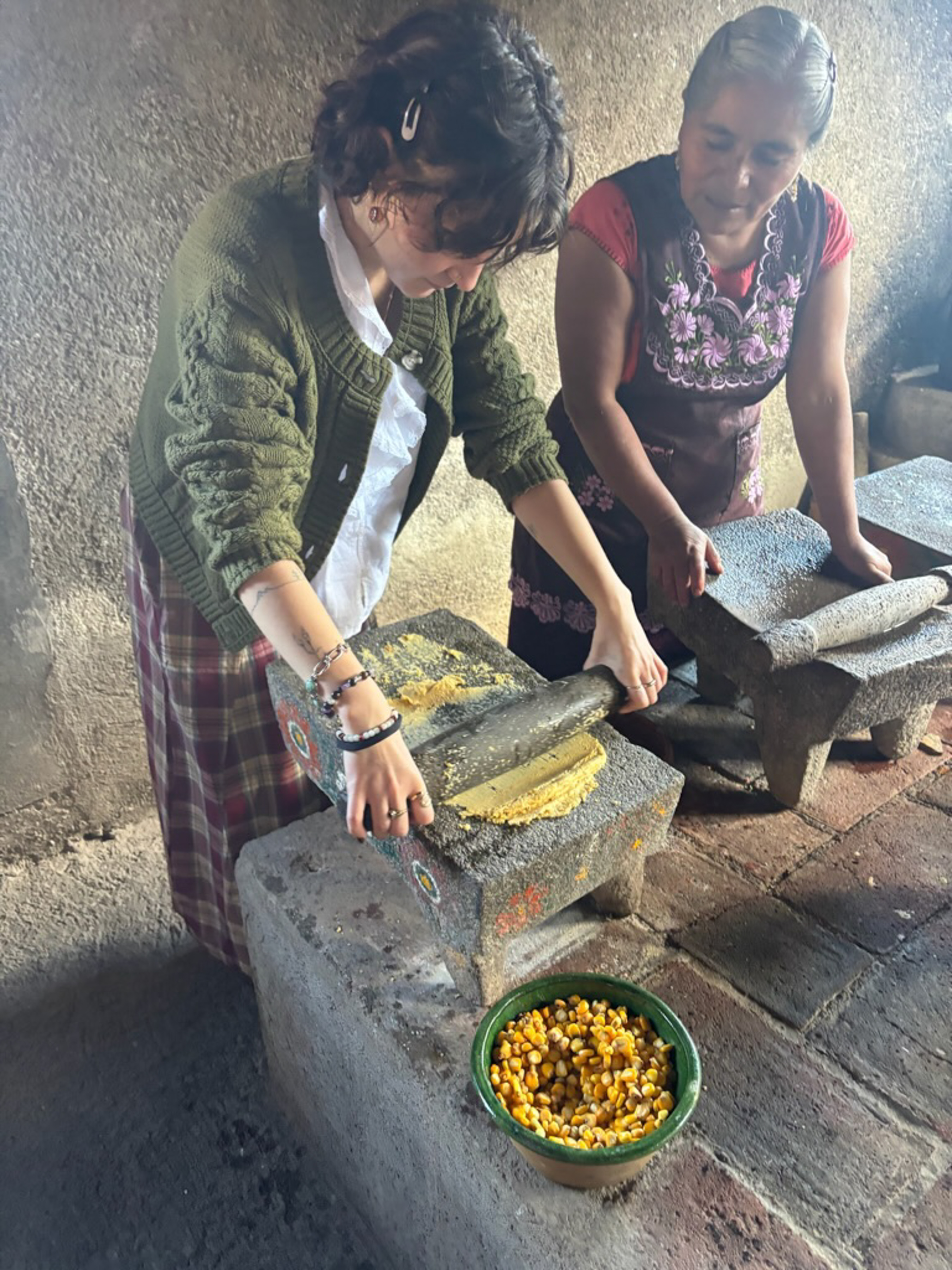
My immersion with the country, culture, and people, governed my understanding of how Mexican identity is shaped by an embrace of the different influences exchanged between native and non-native occupants of Mexican territories. There is no defense for colonialism and heritage destruction, but it is clear that there remains a unifying capacity in the introduction and acceptance of difference in Mexico. There is a reverence for history—ancient and contemporary—that elicits the ever-changing nature of expression and pride in response to contact, heritage, development, and industrialization. This is evident in the efforts to preserve Mestizo architecture without obliterating the colonial structures built atop it, such as the windows that peered into the underground to expose the remains of an Aztec temple in the Metropolitan Cathedral.
In this sense, Mexican identity is not fixed. It is fluid and responsive to progress and change. It is not assimilative, but an amalgamation of different moments in time and adoptions of new technologies, ideas, and values. What is most captivating about Mexican identity is how visible it is in the nation’s cities and towns. You don’t need to go to a museum to recognize these nuances—just talk to the people, look at their crafts, walk around the Zócalo. Vassar and this trip made it possible for me to do just that. In reflecting on this experience, I’ve been grateful to find knowledge in a myriad of places and people. Those connections will stick with me in my future pursuits and adventures.
Diego Martinez-Hahn
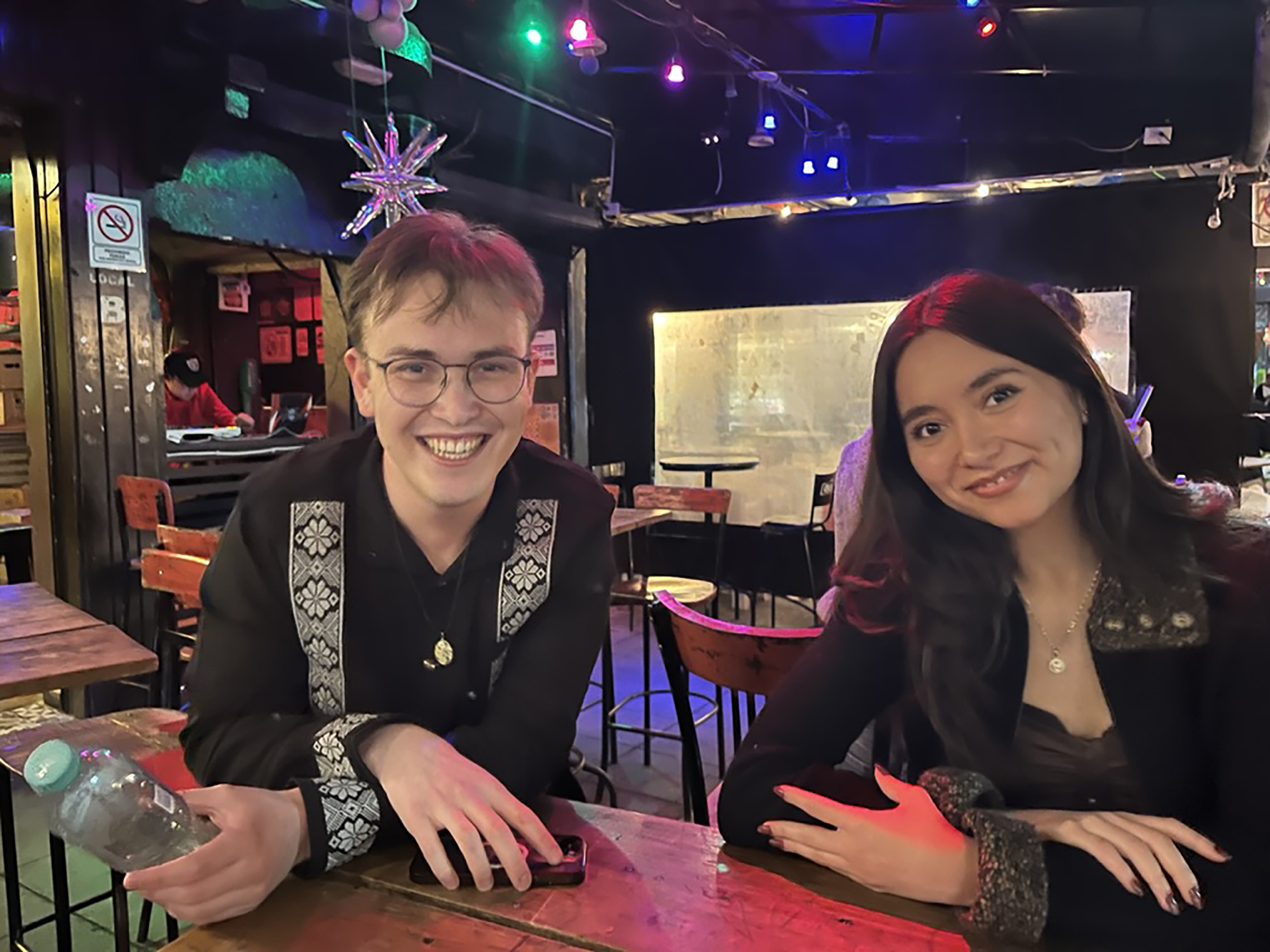
I was raised in a multicultural Los Angeles household. LA is a city with a diverse identity. My neighborhood, Sawtelle, is a historically Japanese area with a significant Oaxacan population. When I was not in Sawtelle, I would be visiting my grandparents in Mexico where I would frequent archeological sites and museums. It was my city’s diverse history combined with my Mexican heritage that inspired me to pursue archaeology. I am double-majoring in anthropology and Latin American studies at Vassar. When I learned about [the trip] as part of the course, “Mexico Today,” I was excited to apply.
The tour of Mexico City was robust. The sites we visited were bursting with history. The ruins of El Templo Mayor, Frida Kahlo’s house, and the National Museum of Anthropology were among many of the places we saw. While I have had the fortune of visiting these places before, the information I was given by our guide, Yaya, and our professors was beyond incredible.
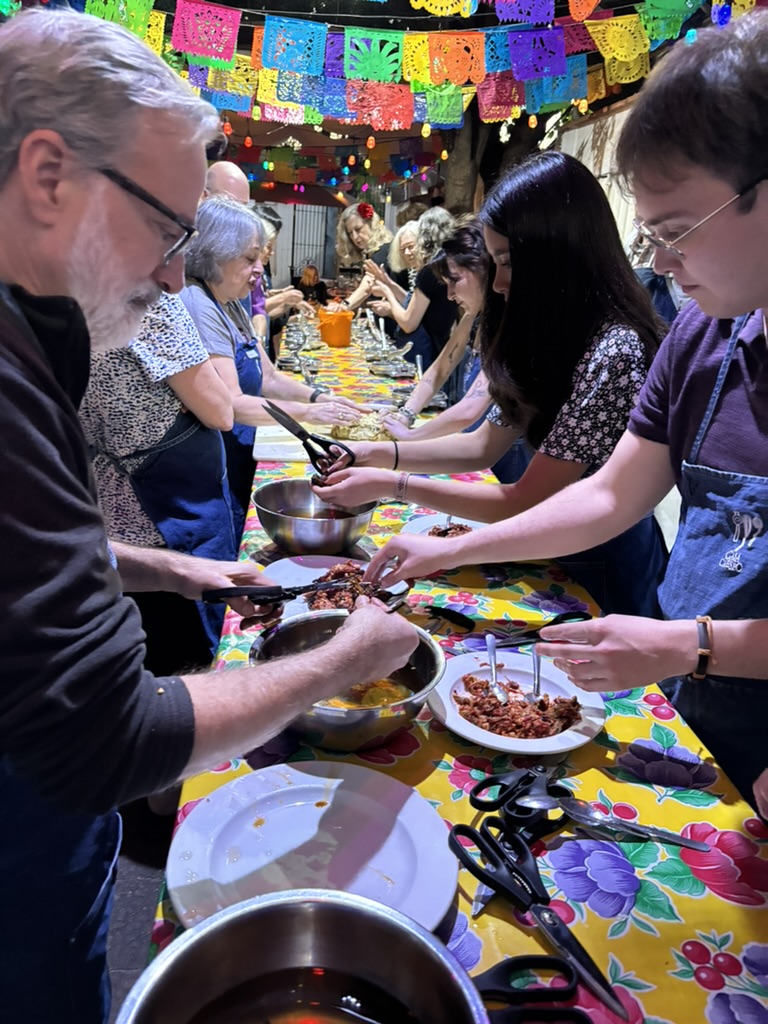
Mexico City’s food is equally impressive as their museums. While we had the opportunity to visit amazing sit-down restaurants, what stuck with me the most was the food tour. We went to a local market, sampling the goods of various stands. Right outside, we got to try the oldest al pastor restaurant and amazing turkey tortas. While eating, the alums and I had an excellent time discussing Vassar over the years. They were just as interested in Vassar’s present as I am about Vassar’s past.
Our next stop was Puebla, a city of similar gastronomic importance. Although we were there for two days, we got an equally in-depth visit. The mole poblano was an experience in itself. We learned about its mythical origin-story of nuns creating it in a convent. Our guide, Florencio, told us about how the dish's mixing of Spanish and Indigenous ingredients has allowed the dish to become a symbol of Mexican identity.
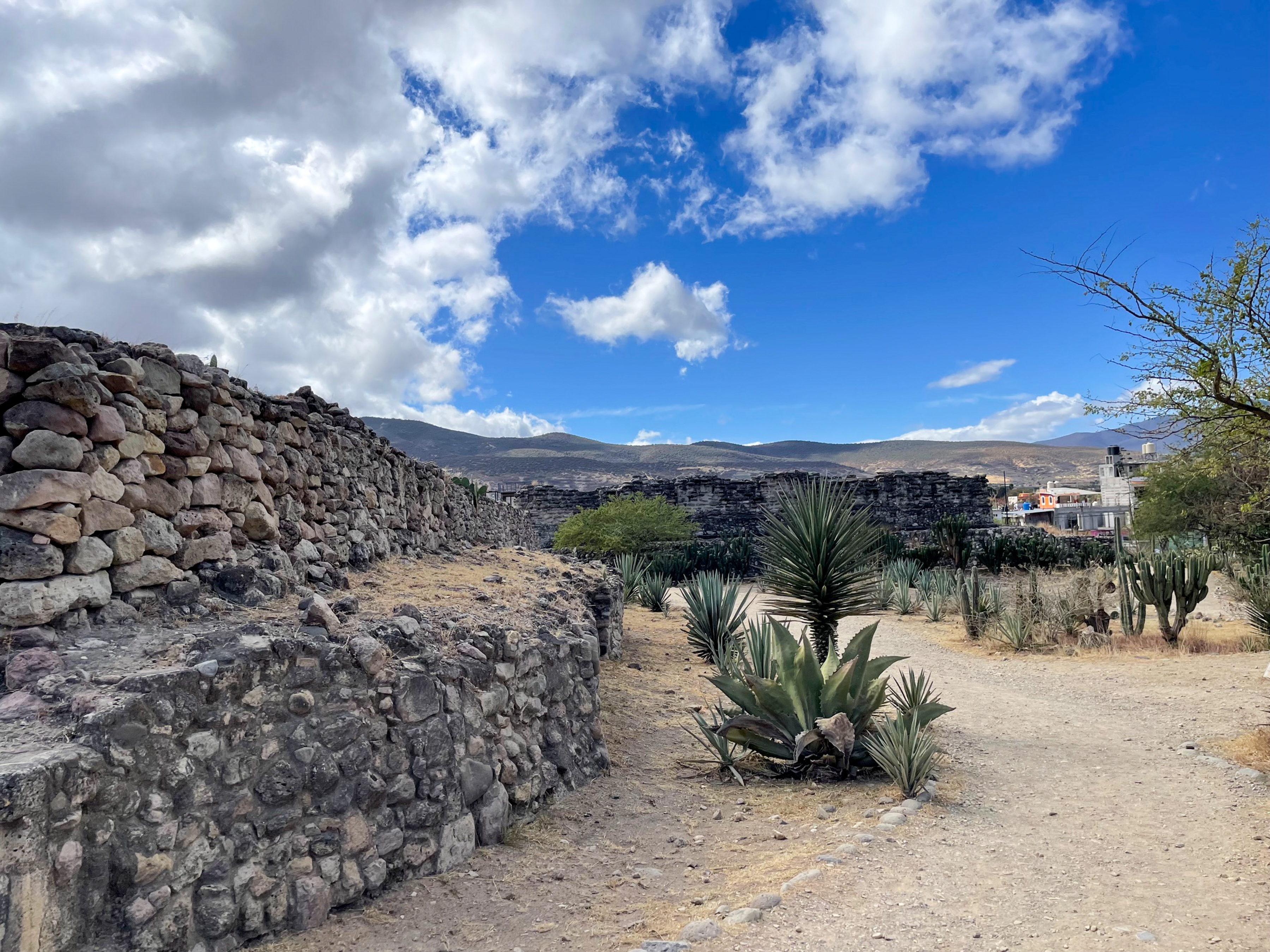
Oaxaca was perhaps the most archaeological of our stops. We visited the Zapotec site of Monte Albán and the Mixtec site of Mitla. While visiting the Monte Albán Museum, I immediately recognized a stone relief I learned about in Vassar’s Mesoamerican Worlds class. I love visiting a site because it grounds my reading, writing, memorizing, and thinking in the real world. It is easy to feel disconnected from Mesoamerica or Mexico when studying it from a distance. Being among artifacts, features, and food reminds me of the life a site once held and its continued role in shaping Mexican identity.
The Vassar alum Mexico trip was an excellent way to experience the deep cultural origins of contemporary Mexico. The itinerary and curriculum of the trip recognized Mexico’s deep history and heritage beyond the ebbs and flows of international tourism. I am grateful to have travelled with Vassar alums, professors, and students invested in studying and experiencing Mexican culture.