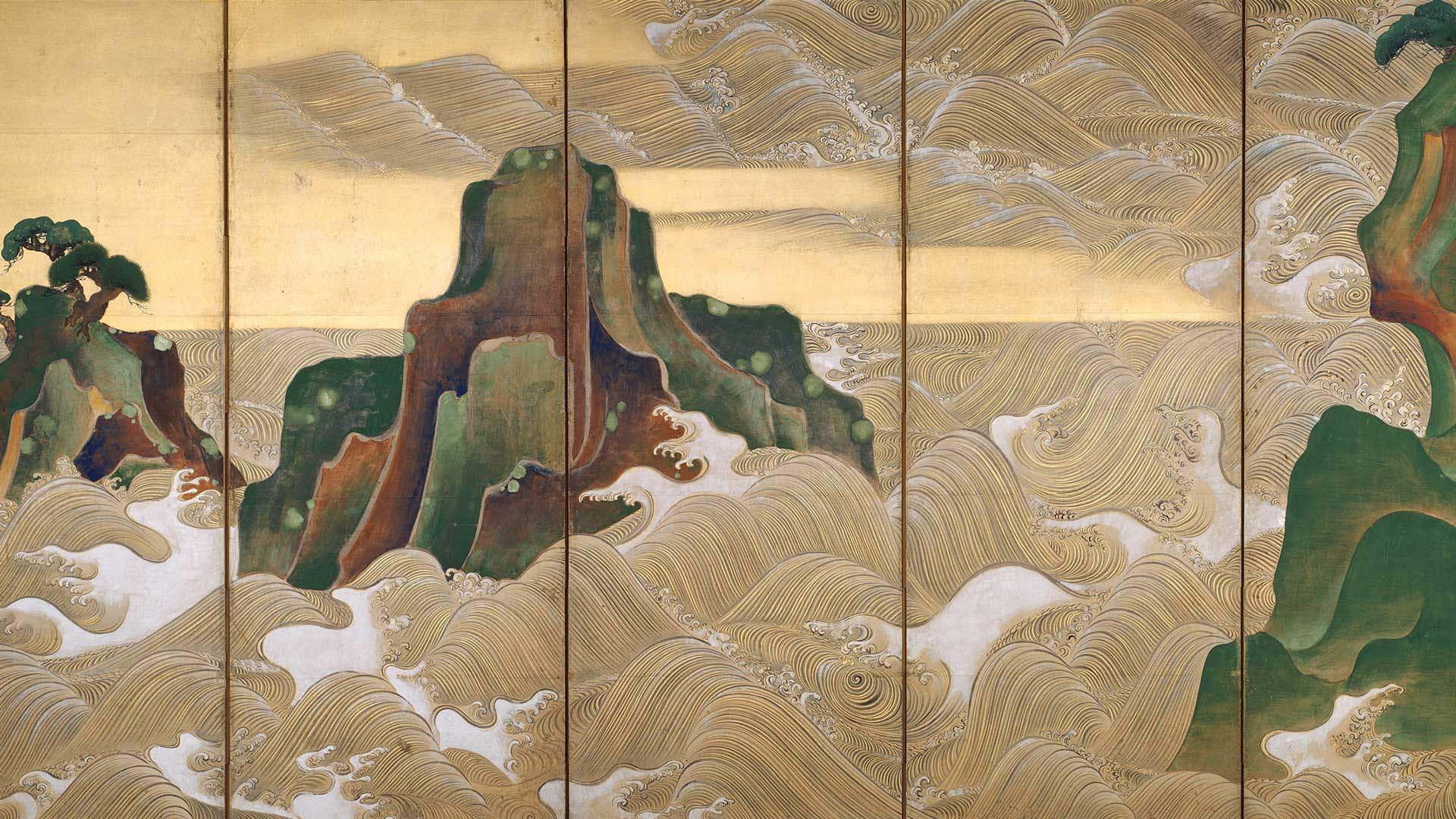
The Rime of the Speechless Mariner
Sanders Classroom—212-Spitzer Auditorium
The Ullŭng Islander’s Drift through Classical and Post-classical Japanese Poetry, lecture by Jeffrey Niedermaier.
In 1004 CE, a sailor shipwrecked at sea and made landfall with ten shipmates on the sandy shores of Inaba, a remote province of the classical Japanese state. His home was Ullŭng—known as Uryō or (more poetically) Uruma in Japanese—an island in the sea to the north of Japan and the east of Korea. Ullŭng’s denizens were notionally governed by the rulers of the Korean peninsula, but through history, it was just as often an unruly cove of pirates and outlaws. Though the island’s precise political status in the year 1004 is unclear, the Japanese Council of State granted and organized the islanders’ repatriation. Even as his actual living body was transported home, word of the islander’s appearance made a splash in various corners of classical and postclassical Japanese literature.
A modest archive of texts representing the man in various scripts and genres becomes an example of how a singular encounter with Otherness can engender multiple revealing expressions of what Heian elites took for granted about geography, gender, language, and power. In this talk, I trace the islander’s literary drift through official diaries, sinographic or “Chinese” poetry (kanshi), and vernacular court “songs” (waka)—from his eleventh-century landfall and repatriation through his transformation into a metaphor for feminine silence in the context of heterosexual courtship, and ultimately to his association with the Ryukyu Islands in the postclassical period. This errant trajectory, I argue, illuminates an alternative literary geography: one that positions Japan not only within mainland Asia’s “sinographic cosmopolis,” but also as a dynamic node in a Pacific archipelago whose less understood currents of meaning flow around, through, and sometimes against continental structures of power and writing.
Sponsored by the Chinese and Japanese Department and co-sponsored by the Asian Studies Program, Medieval Studies Program, History Department, and the Office of the Dean of the Faculty.
This event is free and open to the public.