Ligand-Based Oxidative and Reductive Catalysis for Water Oxidation and Fuels Generation From CO2
Bridge for Laboratory Sciences (BLS) 217
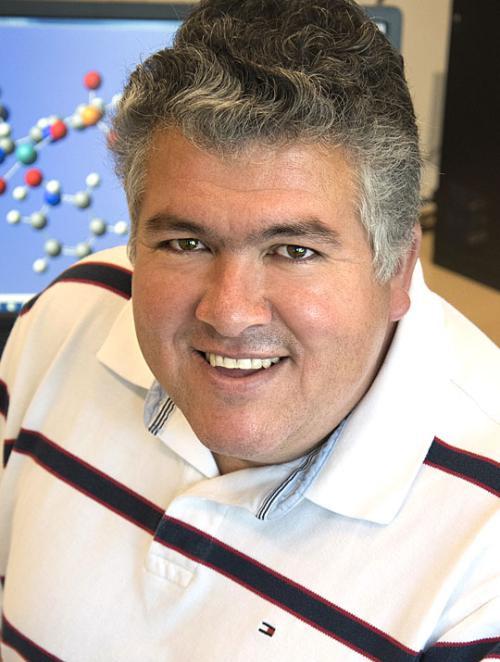
Professor Javier J. Concepcion of the Chemistry Division at Brookhaven National Laboratory will present “Ligand-Based Oxidative and Reductive Catalysis for Water Oxidation and Fuels Generation From CO2.”
Small molecule activation is at the heart of many important challenges for humanity in the 21st century, including water oxidation to dioxygen and hydrogen peroxide, CO2 reduction to fuels, and dinitrogen reduction to ammonia and other commodity chemicals. This talk discusses the use of ligand-based catalysis for small molecule activation as a strategy that enables the transition to earth-abundant, first-row transition metals. The chemical and photochemical reduction of CO2 to formate with high selectivity using metal formyl intermediates as hydride donors will be demonstrated. The development of synthetic procedures and initial mechanistic studies using ruthenium complexes have been key to understanding the behavior of these systems before transitioning to first-row analogues.
These complexes are highly active and 100% selective in the photochemical CO2 reduction to formate. The formyl intermediates, generated by an ET-PCET mechanism, are responsible for hydride transfer to CO2. The fact that the coordination environment remains saturated during the catalytic cycle is very encouraging in transitioning to first-row transition metals. The role of formyl intermediates in the reduction of CO to methanol with high yield and selectivity will also be discussed.
On the oxidative side, a ligand-based approach to water oxidation catalysis based on [M(bpy)2(bi-bimH2)]n+ will also be presented. This platform includes self-healing capabilities and, because it is ligand-based, is amenable to first-row transition metals — a feature demonstrated with cobalt- and iron-based catalysts.
Sponsored by the Vassar Chemistry Department.
The event is free and open to the public.