Political Science
Politics, the pursuit and exercise of power, exists in many realms of social life—not just in government but in businesses, religious institutions, universities, clubs, the media, and families. Political science is the study of politics in its various forms and manifestations.
The academic discipline of political science focuses mainly on the politics of states (governments), including their relations with members of society and with one another. It investigates issues such as the sources, distribution, and use of power; political attitudes and behaviors; the functioning of political institutions; relations among states and other international actors; mass media and communications; legal systems; public policy issues; and major global challenges.
Political science also examines questions of values, including: What forms of government, society, and economy ought to exist? How can liberty, equality, or justice best be achieved? How should conflicts between these values be resolved? What rights and obligations do people have?
Finally, political science considers issues of method. How does one decide questions of value? What political phenomena are susceptible to social-scientific investigation, qualitative and quantitative? Which methodologies are best suited to studying such phenomena?
The Department of Political Science at Vassar offers a major in political science and correlate sequences (minors) in each of the four principal subfields of the discipline: American politics, comparative politics, international politics, and political theory.
Vassar graduates with degrees in political science pursue careers in numerous areas, including politics, government, public administration, law, journalism, education, filmmaking, business, and finance. Many work for nongovernmental organizations concerned with particular social, political, and economic issues.
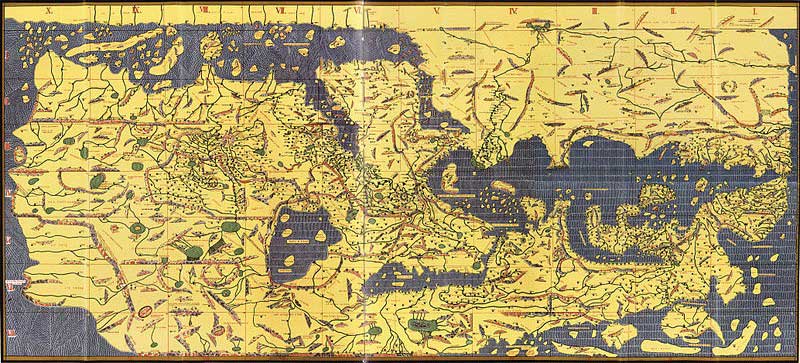
(The Nuzhat al-mushtaq fi’khtiraq al-ataq) “The book of pleasant journeys into faraway lands.” Description of the world and world map created by Arab geographer Muhammad Al-Idrisi for the Norman king Roger II of Sicily. The book, written in Arabic, is divided into seven climate zones (in keeping with the established Ptolemy System), each of which is sub-divided into ten sections, and contains maps showing the Eurasian continent in its entirety, but only the northern part of the African continent. The map is oriented with the north at the bottom.
Events
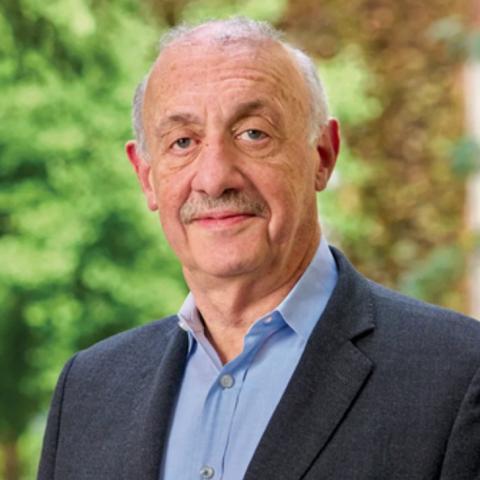
Interested in learning more about the midterm elections? Listen to the Department of Political Science’s latest guest speaker event, featuring a talk and Q&A with Professor Samuel Issacharoff on the role of the courts in the upcoming midterms.
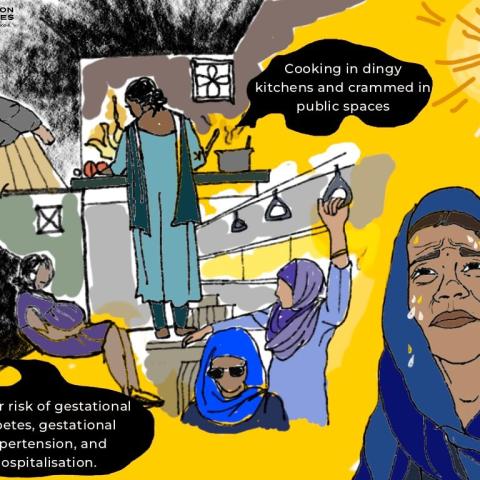
A workshop with Ruhie Kumar, co-founder of Heatwave Action Coalition and Prof. Kodiveri, will unpack how heat, law and
lived experiences of heat impacts interact.
Campus community only, please.

Interested in learning more about the midterm elections? Listen to the Department of Political Science’s latest guest speaker event, featuring a talk and Q&A with Professor Charles Tien titled “Will the Republicans Lose Control of Congress in 2026? A Referendum Model.”