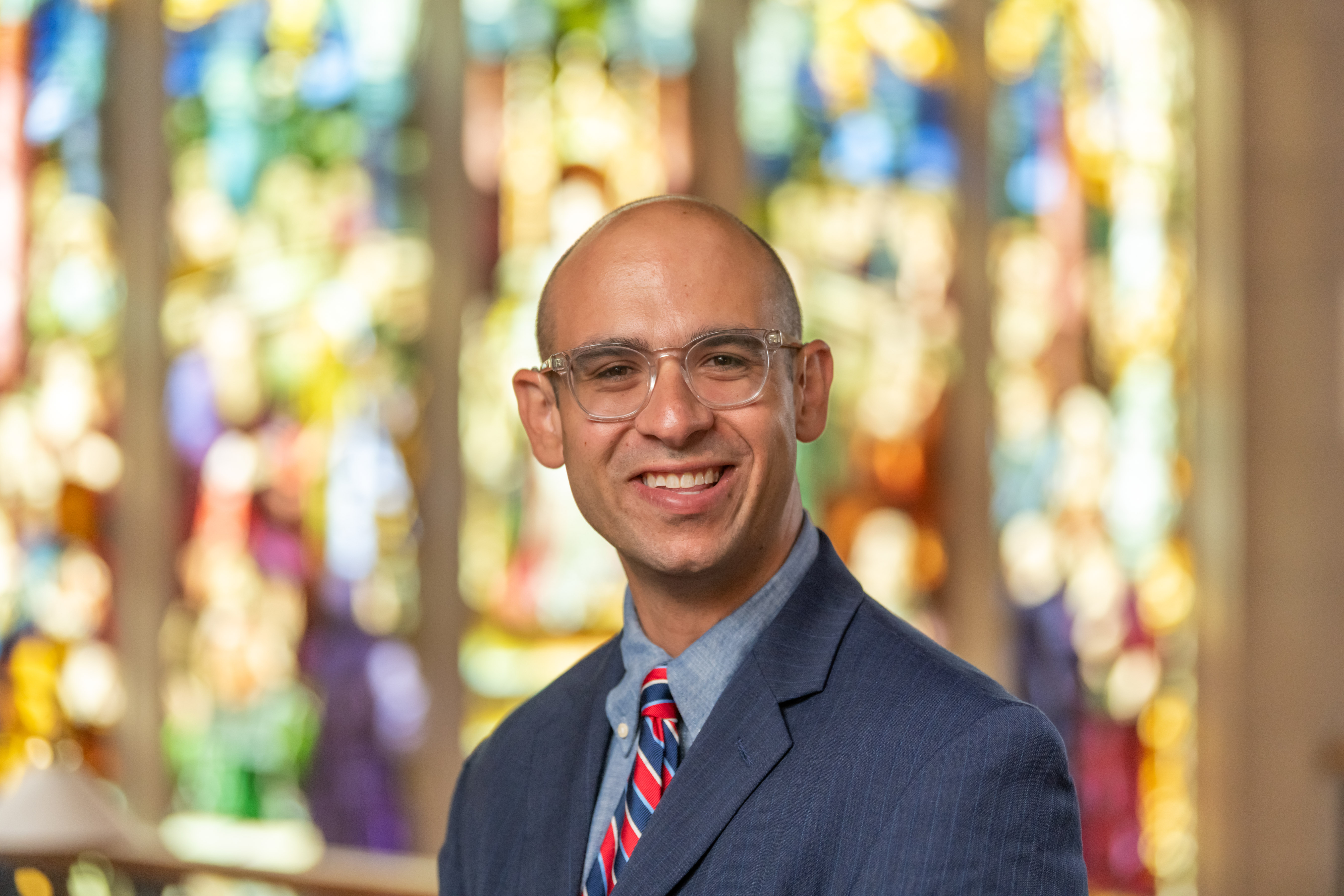
Pasquale Toscano
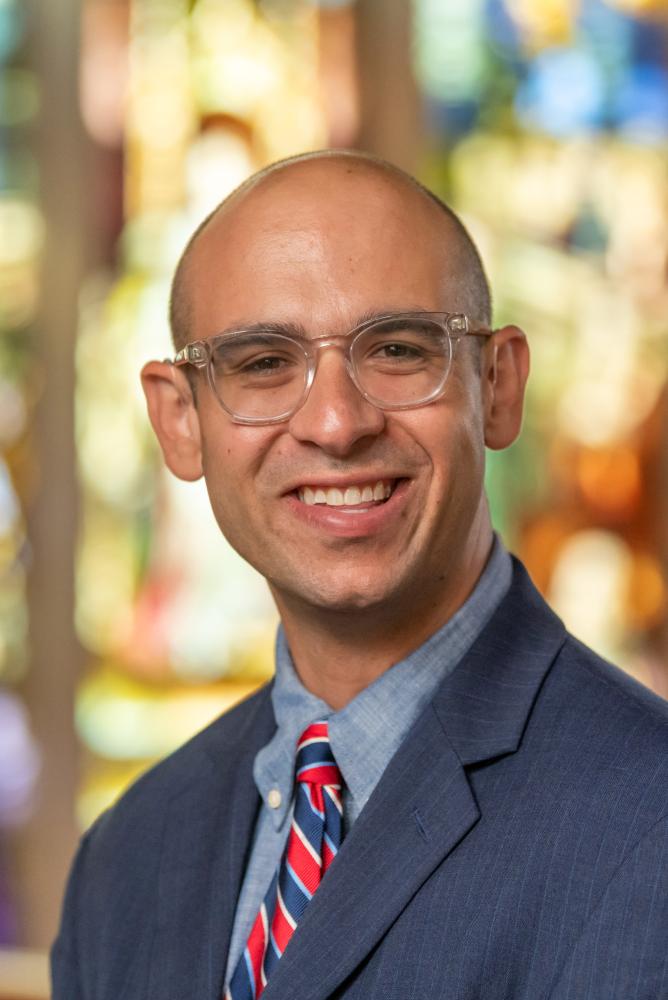
As a scholar, Pasquale explores the interplay of disability, Renaissance literature, and Greco-Roman antiquity. As a public-facing writer and critic—of op-eds, reviews, features, personal essays, etc.—he shows the broader ethical and aesthetic implications of his research. And as a teacher, he aims to practice his disability studies training as both a mentor and an instructor who helps his students develop a range of skills—critical and interpretive alike.
His scholarship, and creative nonfiction, has appeared in various publications, including Disability Studies Quarterly, SEL: Studies in English Literature 1500-1900, and the Huntington Library Quarterly. His work is forthcoming in The Oxford Handbook of Disability and Literature in English, 1500-1700, The Oxford Handbook of George Herbert, Shakespeare and Early Modern Madness, the New Cambridge Companion to Milton, and special journal issues on crip time (Texas Studies in Literature and Language) and Thomas Middleton (Early Theatre). And his public-facing essays can be found in venues such as The New York Times, The Atlantic, Electric Literature, The Hopkins Review, the Los Angeles Review of Books, the Pittsburgh Review of Books, and Synapsis: A Health Humanities Journal, for which he’s a contributing writer. Pasquale is building on many of these pieces in a memoir tentatively titled Incomplete.
With Angelica Duran (Purdue), he co-edited the first book to bring Milton and disability studies into sustained conversation, Milton and the Network of Disability, Embodiment and Care (Edinburgh UP, 2026), one of two inaugural titles for Edinburgh University Press’s early modern disability series, the first of its kind. (To get a feel for the topic, check out “5 Things You Didn’t Know about Milton and Disability”!) He is in the early stages of co-editing a second volume, with Alani Hicks-Bartlett (Brown), that triangulates premodern embodiment/mindedness, cultural representation, and “disability intimacy.”
Meanwhile, Pasquale is working on two monograph projects that chart a deep backstory for othered bodyminds, uncovering how crips like him have a past, a culture, and, even, a future that’s less tragic than generative. The first, Stand and Wait: Dynamics of Disability in an Epic Tradition, tells a new story about a very old—and very authoritative—form. It reveals how nonlethal, incurable physical incapacity has shaped a genre where it’s hardly thought to matter at all, as both a problem to be solved and a spur to generic innovation. The result is a revaluation not only of epic’s formal maneuvers and thematic imperatives but, more surprising, of the fraught relationship of access, accommodation, and aesthetics that inflects the lives of disabled folks today. Drawing on his master’s degree in Classics, Pasquale discusses Homer and Virgil to start, before foregrounding what he calls crip renovation, a concept that interweaves premodern literary theory, contemporary disability activism, and the language of heroic verse. It describes texts that rejigger the genre’s typical structures of form, temporality, and heroism to make the tradition more accessible to disabled bodies and, more significantly still, to crip experience. Once such experience finds a way in, it ends up reshaping the texture of Stand and Wait’s central case studies, which have consistently divided critics as a result: Ovid’s Metamorphoses, Spenser’s Faerie Queene, Milton’s Paradise Lost, and (what Pasquale has previously dubbed) Phillis Wheatley Peters’s “Little Columbiad.” The manuscript will be submitted for review by the end of 2026.
The second monograph, All Pity Choked: The Falls of Tragedy and the Rise of Cure, likewise considers the relationship of disability and genre. (After all, generic templates underwrite the cultural scripts by which disability is understood to begin with.) But it does so while engaging affect, Mad studies, and the history of medicine, as well. The aim of All Pity Choked is to offer the first cultural history of cure—an ideology that privileges somatopsychic correction, at all costs—from the origins of learned medicine in Greco-Roman antiquity to the ascent of a professional physician class in the Renaissance to the continued prominence of medicalization in the twenty-first century. Focalizing this account, however, is the lens of tragedy, by the likes of Sophocles and Shakespeare, Milton and Dryden—even Ilya Kaminsky today. As All Pity Choked argues, the genre becomes a locus—acutely by the seventeenth-century—for litigating the ethics, affects, and efficacy of cure, as the ideology gains authority. But even as tragedy allows us to demystify the concept’s past, this dramatic tradition offers an important, anti-ableist provocation for the present. It impels us to imagine how pity, an emotion long reviled in disability studies, might, at last, be reclaimed.
Pasquale is likewise thrilled to be teaching at Vassar and working with students interested in literary studies or any of the topics listed below, as well as postgraduate fellowships. Informed by his experiences as a proudly disabled person and former educator of incarcerated students, Pasquale’s teaching strives to center accessibility in every sense of the word. Service to the larger scholarly community is likewise important to him: he regularly participates as a panelist in events for Princeton’s GradFutures program, and, in 2026, he was elected to the executive committee of the Milton Society of America.
Research and Academic Interests
Early modern/Renaissance literature
Milton
Epic
Classical reception and Black classicism
Drama (especially Shakespeare, tragedy, and Roman plays)
Creative nonfiction
Disability studies
Medical humanities
Departments and Programs
Courses
ENG 101 - Succession, from Tudor England to HBO
ENG 101 - Taking Books Personally
ENG 222 - Early British Literature, From Heroes to the Self(?)
ENG 240 - Shakespeare, Our Collaborator
ENG 245 - Vassar Critical Journal
ENG 341 - Deviant Bodies and Dangerous Minds: Health, Medicine, and Disability in Renaissance Literature
ENG 345 - Milton
Selected Publications
Book
Milton and the Network of Disability, Embodiment and Care, co-edited with Angelica Duran (Edinburgh UP, 2026). [This includes a co-written introduction, “‘With wand’ring steps and slow,’” and his solo-authored contribution, “Access, Ableism, and Accommodation in Milton’s Samson Agonistes and Its Restoration Successors.”]
Articles
“Rhetorical Rebound: Disabling Critique in Richard III,” Huntington Library Quarterly 88.1–2 (2025): 87–118.
“The Freedom of Falling Behind: Milton, Spenser, and Truth-Telling Today,” The Spenser Review 55.2 (2025).
“Pity, Singular Disability, and the Makings of Shakespearean Tragedy in Julius Caesar,” SEL 61.2 (Spring 2021): 203-40.
“The Way History Lands on a Face: Disability, Indigeneity, and Embodied Violence in Tommy Orange’s There There,” with Brandi Bushman, DSQ 41.4 (2021).
“Epic Regained: Phillis Wheatley’s Admonitory Poetics in the ‘Little Columbiad,” Classical Receptions Journal 13.2 (April 2021): 178-211. [Cited favorably in two recent biographies of the poet.]
Public-facing Essays
“Presenting Prevention: Milton’s Crip Technique,” Darkness Visible, 31 March 2026.
“What a Web We Weave,” The Hopkins Review, 18 March 2026.
“A Useless Art Is Very Hard to Master,” The Pittsburgh Review of Books, 29 Jan. 2026.
“How to Access Art,” The Los Angeles Review of Books, 20 Nov. 2025.
“An Echoing Embrace,” The Hopkins Review, 8 Sept. 2025.
“The Paradoxical Concessions of Crip Poetics,” Synapsis: A Health Humanities Journal, 27 May 2025.
Op-eds
“It’s Time to Trust Professors to Do the Right Thing,” The Dayton Daily News, 16 July, 2025.
“Legal Abortion Isn’t the Problem to be Solved,” with Alexis Doyle, The Atlantic, 19 July 2019.
“Stop Using Disability as a Political Club,” The Boston Globe, 4 Feb. 2018.
“My University is Named for Robert E. Lee. What now?,” The New York Times, 22 Aug. 2017.
“The Myth of Disability Sob Stories,” The New York Times, 14 June 2017.
Grants, Fellowships, Honors, Awards
Peter Ogden Jacobus Fellowship (humanities division), 2023–2024 (Princeton’s top honor for graduate students)
Graduate Teaching Award, 2024 (Princeton University)
Harold Grimm Prize, with Genelle Gertz, 2022 (from the Sixteenth Century Society, for the year’s best English-language article on the Reformation)
Rhodes Scholarship, 2017
Pushcart Prize nomination, 2017
Beinecke Scholarship, 2016
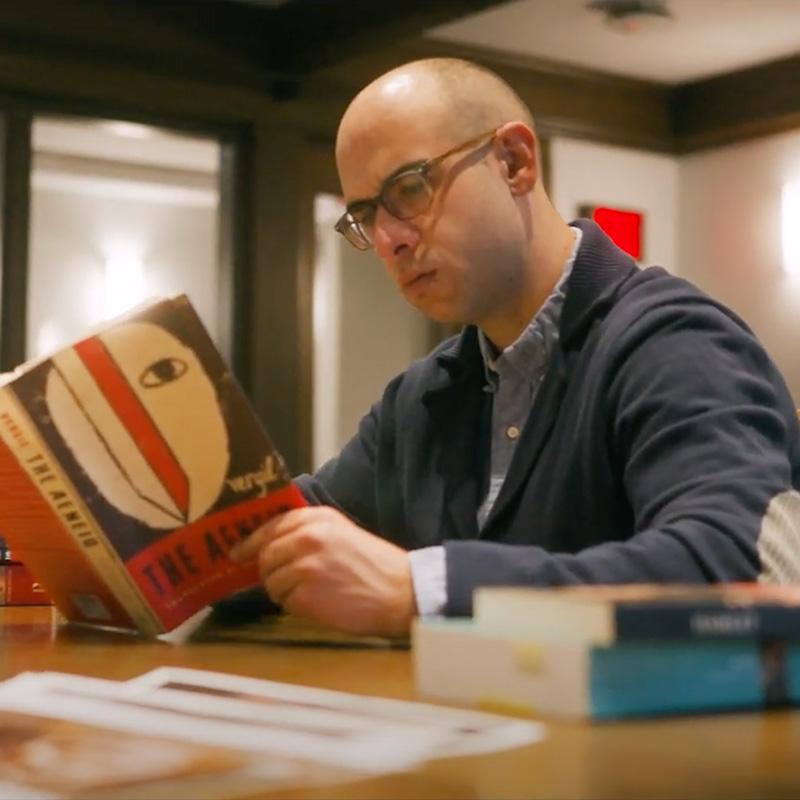
In the Media
Photos
Download images for non-commercial use, photo credit required.