Vassar Recognized as ‘Top Producer’ of Fulbright Awardees
Vassar, a consistent Top Producer Recipient Institution for the U.S. State Department’s Fulbright Student and Fulbright Scholar programs, has received the recognition again this year, Fulbright officials announced.
Vassar was one of 114 institutions to be cited as a Top Producer. Four recent recipients, Simon Goldsmith ’23, Cayla Kallman ’25, Simon Lewis ’25, and Devon Aaron Lopez ’23, are currently teaching English and undertaking research projects abroad. Goldsmith, Kallman, and Lopez are living in Spain, and Lewis is living in Colombia.
Francois Olivier, Vassar’s Director of Fellowships, said the College prepares its students well for their Fulbright experiences. “Fellowships such as Fulbright are a natural extension of a Vassar education,” Olivier said. “Our students learn to think across disciplines, to engage critically with the world, and to build relationships across difference, which are exactly the qualities these programs look for and the ones our recipients carry into their work abroad.”
Stacy Bingham, Associate Dean of the College for Career Education, said Vassar has been recognized consistently as a Top Producer of Fulbright recipients for more than two decades. “This track record isn’t an accident,” Bingham said. “It is the direct result of a campus culture where students are encouraged to look outward, faculty are invested in guiding them, and administrators provide the resources to turn those ambitions into reality.”
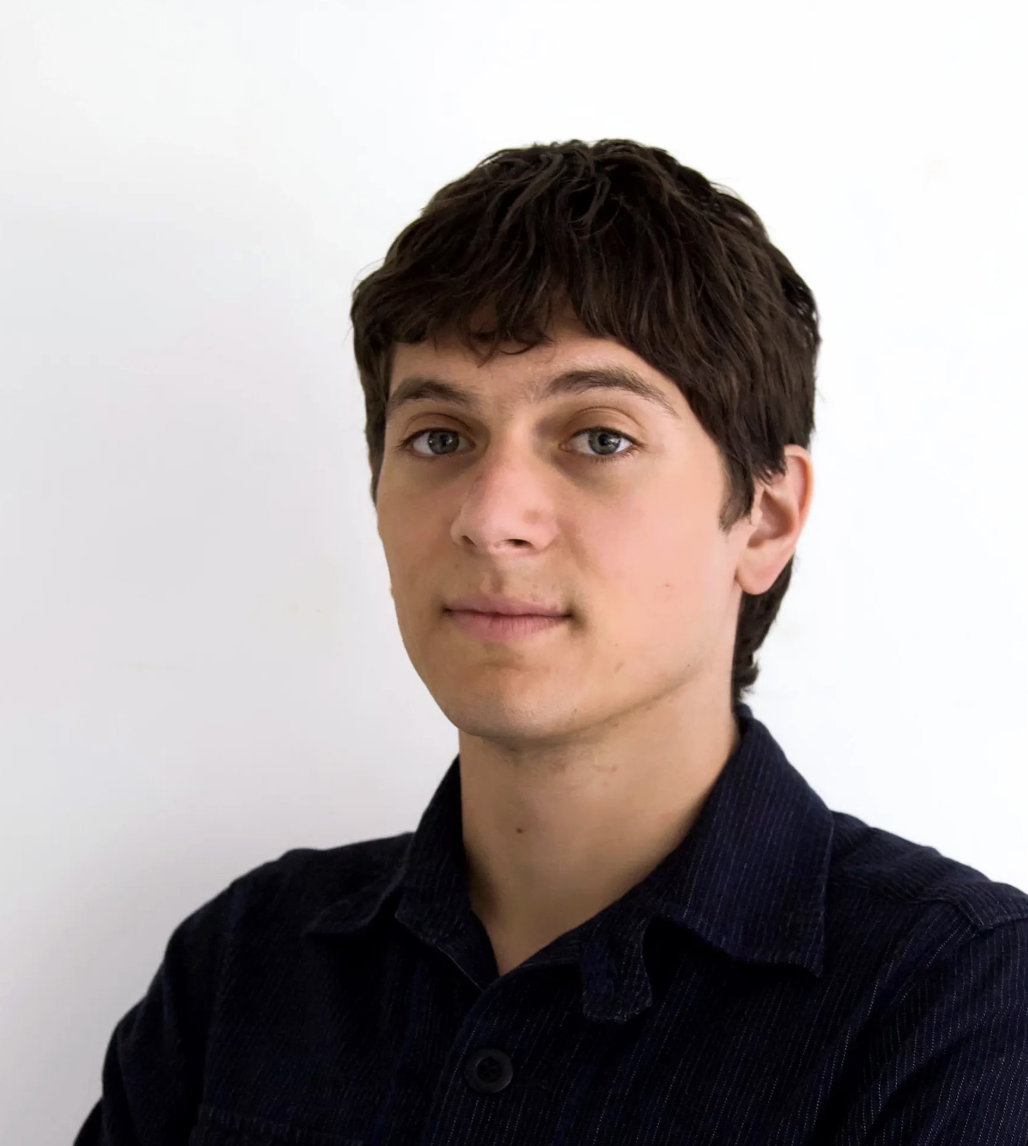
Goldsmith is living in Galicia in northern Spain working as an English Teaching Assistant in several secondary and vocational schools. His research project addresses how Galicia’s principal industries—ship building and seafood processing—have shaped the region’s architecture. He said his Vassar education had prepared him well for his Fulbright experience. “At Vassar, my academic and creative work engaged with the overlapping histories of industry and urban life,” he said. “My senior thesis theorized the meaning of metal in early 20th-century literature, art, and architecture. In Spain, I am continuing to pursue this intellectual project as a close observer of the region’s history.”
Kallman is living in La Rioja, a region of northern Spain, and is teaching English in the town of Logroño at a school for students from preschool through high school. “I work with 20 different classes and 10 different teachers that are part of the Bilingual Program at the school,” she said. Kallman noted the beauty of the town. “Logroño is full of cobblestone streets and churches,” she reported. “There are also green parks, plazas, and beautiful paths that take you along the river Ebro, which travels through northern Spain.”
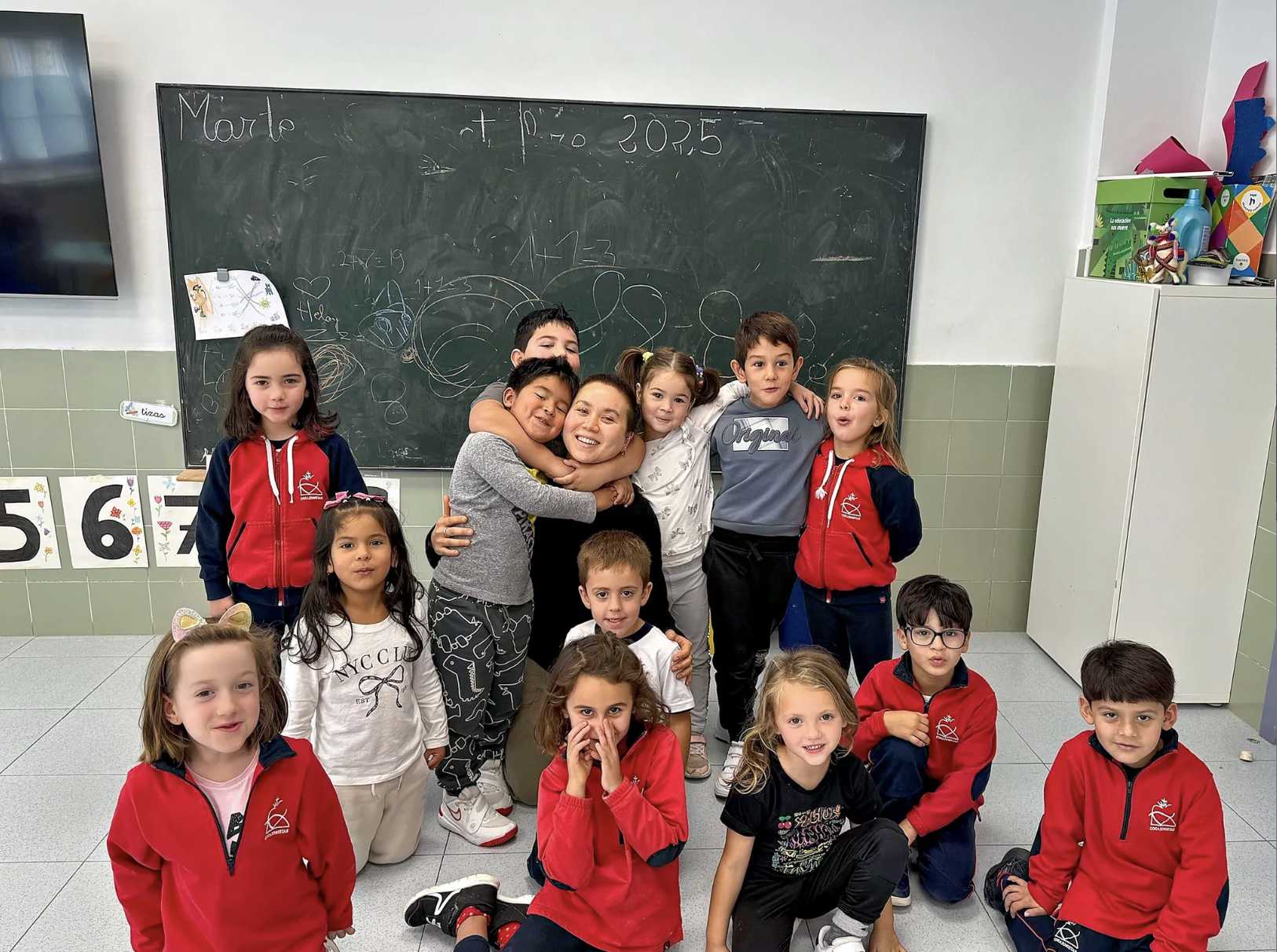
Kallman said her experience has prompted her to alter some of her plans for her post-Vassar life. “Before coming to Spain, I planned on returning to the United States to pursue a further degree in psychology and obtain a license to become a therapist,” she said. “That profession still feels like the right path for me, but I feel more drawn to the idea of pursuing that degree in a different country.”
Kallman said her time at Vassar had prepared her well for her Fulbright experience in several ways. “More than anything, my four years at Vassar helped me learn how to form meaningful, connective relationships. This ability to connect and feel confident and at ease in both personal and professional settings has been most relevant during my time here in Spain,” she said. “I have been able to comfortably adapt to different situations and interpersonal dynamics. I’ve also been able to enjoy myself throughout the unpredictability that teaching and integrating into a new school system can entail.”
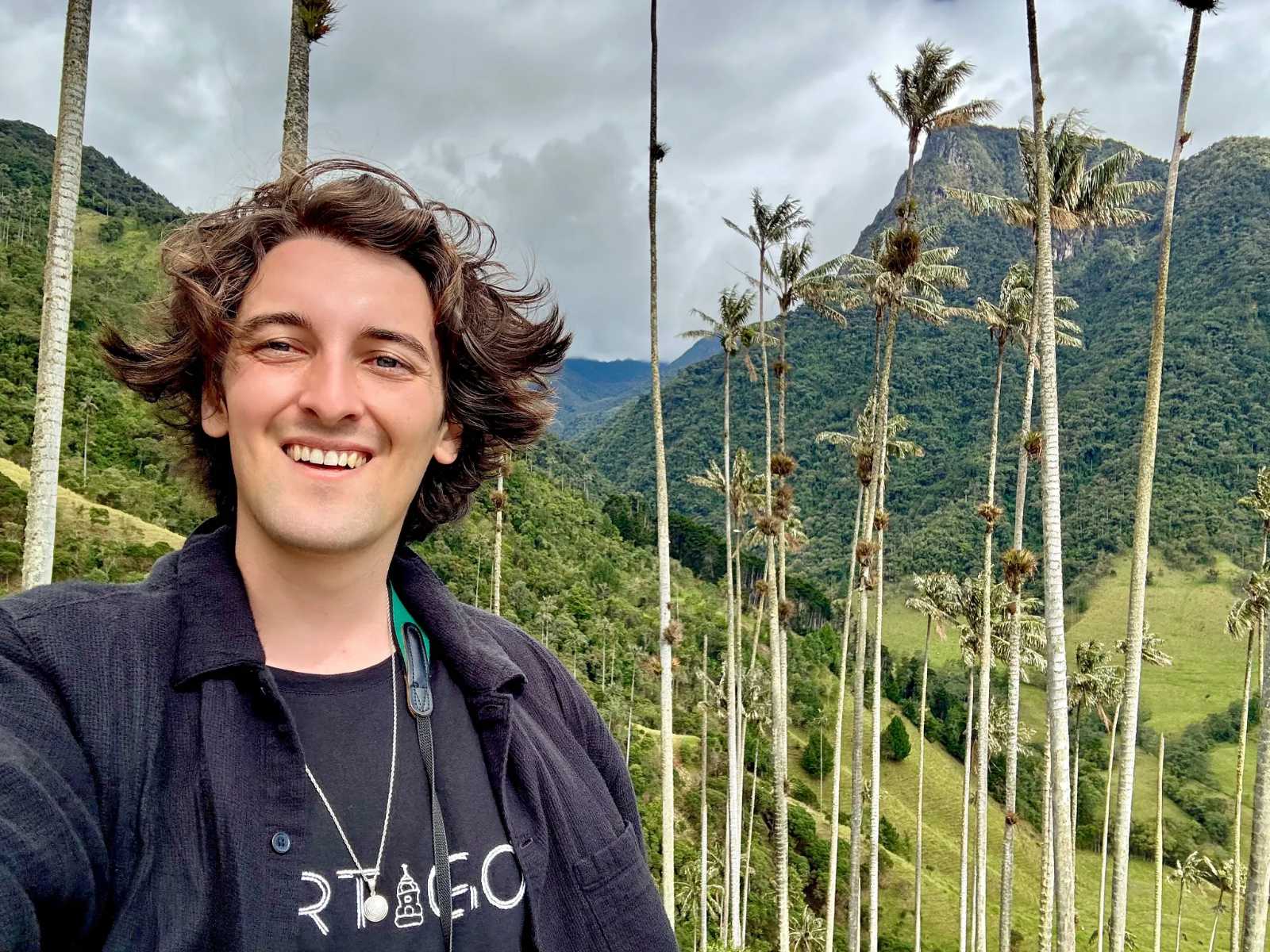
Lewis is an assistant professor, teaching English at the Universidad Cooperativa de Colombia in Cartago, a town of about 140,000 people. He teaches six classes and creates activities for the students. “I lead a virtual practice session with another 30 students and an in-person conversation club that some of these students come to. They are all university students, most of whom are 17 to 24 years old, although some of the night classes have students in their 30s, 40s, and 50s,” he said.
“Cartago is located in a valley between two ranges of the Andes,” Lewis continued. “People spend a lot of time outside, drinking coffee in parks and plazas under huge saman trees draped in Spanish moss. There’s a lot of fresh fruit; the university has a mango tree in the main courtyard. People are very friendly and warm, always willing to help out.”
Lewis said his Vassar experience as an International Studies major had played a key role in enabling him to quickly become comfortable in a foreign country. “Understanding the historical context is super important, especially since I’m representing the United States, and we’ve been involved in destabilizing Colombia, promoting violence, and poisoning their environment in our ‘war on drugs,’” he said. “I think that my ability to acknowledge and engage with the truth of what they’re saying gives me the opportunity to challenge their ideas about the United States, too—to center how wonderful the diversity of our country is or to talk about U.S. music and culture.”
Lewis said he would “totally recommend” a Fulbright experience to any college student. “Fulbright is a wonderful way to meet lots of people in a new place while engaging with that community,” he said. “Life is good!”
Devon Aaron Lopez ’23 was not available for comment.
About the Fulbright Program
The Fulbright Program, the United States government’s flagship program of international educational and cultural exchange, offers passionate and accomplished students and scholars in more than 160 countries the opportunity to study, teach, conduct research, exchange ideas, and contribute to mutual understanding. These talented Fulbright recipients from all backgrounds inspire, innovate, and contribute to finding solutions to challenges facing our communities and our world.
The Fulbright Program was established by Congress in 1946 with an ambitious goal—to increase mutual understanding and support friendly and peaceful relations between the people of the United States and the people of other countries.
For more than 75 years, Fulbright alums have made an impact in areas like public service, science and technology, public health, arts, education, and the environment. They have taught in local schools, led nations, made groundbreaking discoveries, and advanced nearly every discipline and field in academic institutions around the world.
Today, the Fulbright Program awards approximately 8,000 merit-based grants every year to accomplished students, scholars, teachers, artists, and professionals of all backgrounds and fields.