Turning Family History Into a Global Inquiry on Remembering Genocide
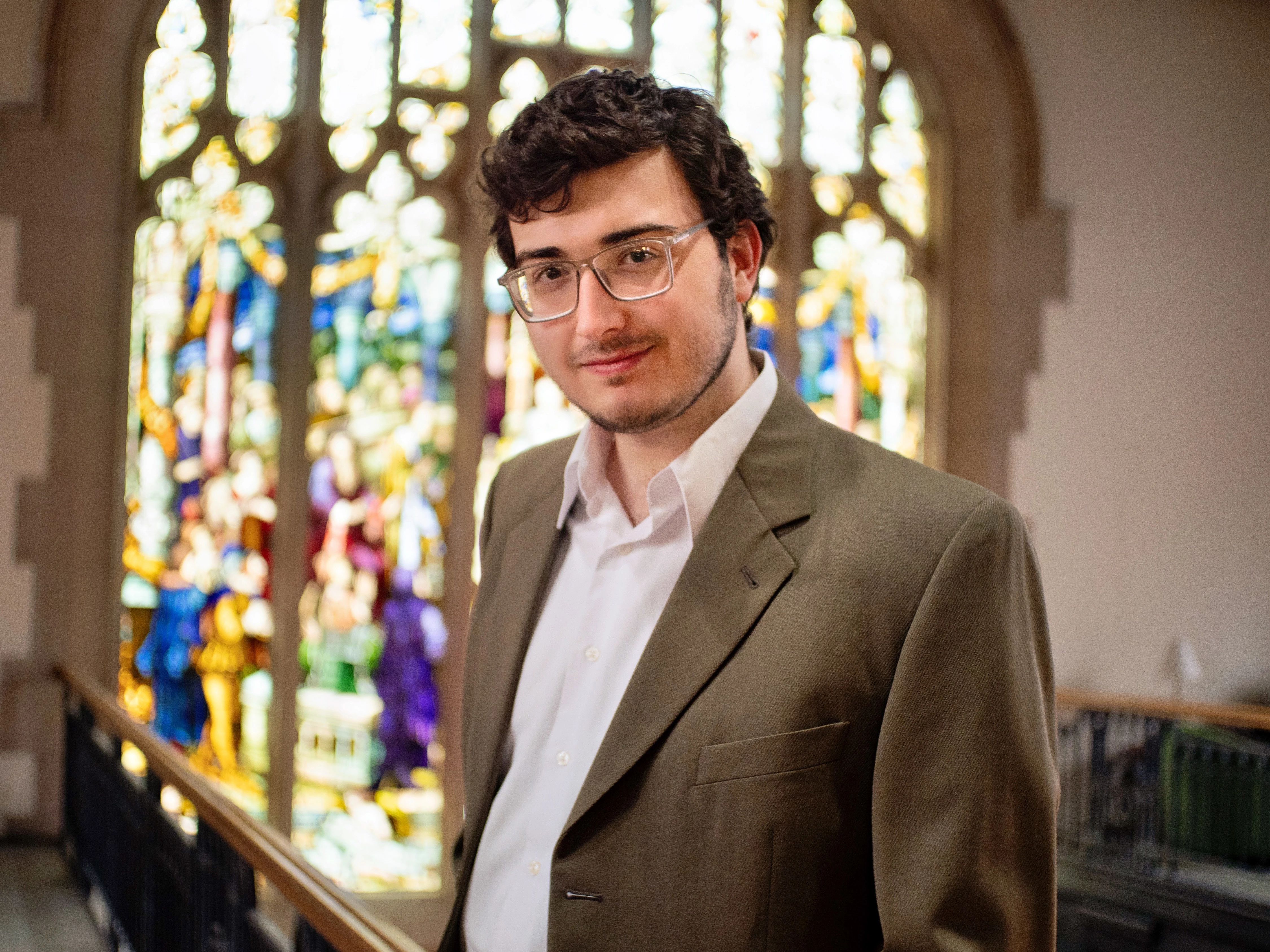
Bekir Hodzic ’26, a history and political science double major from Hartford, CT, will be investigating the long-term effects of genocide in several countries around the world over the next 12 months as a recipient of a Thomas J. Watson Fellowship, Vassar Director of Fellowships Francois Olivier announced.
Watson Fellows spend a full year outside of the U.S. pursuing their projects independently. The fellowship provides a stipend of $40,000, international medical insurance, and related support for the year. Forty-one colleges and universities participate in the program, nominating up to four students for the fellowship each year. Hodzic is one of 39 Watson Fellowship recipients who will be traveling overseas this year.
Hodzic, whose own family members survived genocide in Bosnia and Herzegovina in the 1990s, will be visiting Germany, Kosovo, Namibia, Cambodia, Rwanda, and Armenia for his project. He will explore how people affected by genocide shape and wield its memory on personal, communal, and national levels.
Hodzic said his research topic was inspired by his family’s experiences. “My parents were very open about sharing what had happened to them when I was growing up,” he said, “so I had a clear sense of that genocide’s memory. I know how it shaped us and forced us to rebuild our lives.”
Olivier said the Watson Fellowships support graduating seniors of unusual promise in pursuing a year of independent, purposeful exploration abroad through a self-designed project. “The emphasis is less on producing a formal research outcome and more on giving fellows the opportunity to test their ideas, deepen their interests, and grow as thoughtful, effective leaders through immersive international experience,” Olivier said. “Bekir’s project is very much in that spirit.”
Hodzic said his time at Vassar had prepared him well for his Watson experience. Thanks to funding from the College, he was able to secure an internship in Bosnia with the Post-Conflict Research Center in the summer of 2025, which involved researching issues surrounding the genocide there. “I want to continue this work by going to other countries [that have experienced genocide],” he said.
Hodzic said Vassar’s approach to education had equipped him with the tools he’ll need for the kind of research he’ll be conducting during his Watson Fellowship. “My liberal arts education has shown me ways to engage with hard issues civilly and holistically,” he said. “It has taught me how we can learn from one another.”