
From Obscurity to Honor—a Judge’s Legacy Emerges
“Who is she?” Taneisha Means, Associate Professor of Political Science on the Class of 1951 Chair, asked about Jane Bolin, the Poughkeepsie-born judge she read about when writing her dissertation on Black state court judges. She soon learned that, in 1939, Mayor Fiorello La Guardia appointed Bolin to the Domestic Relations Court in New York (now the family court system), making her the first Black woman to become a judge in the U.S. She served on the bench for four decades.
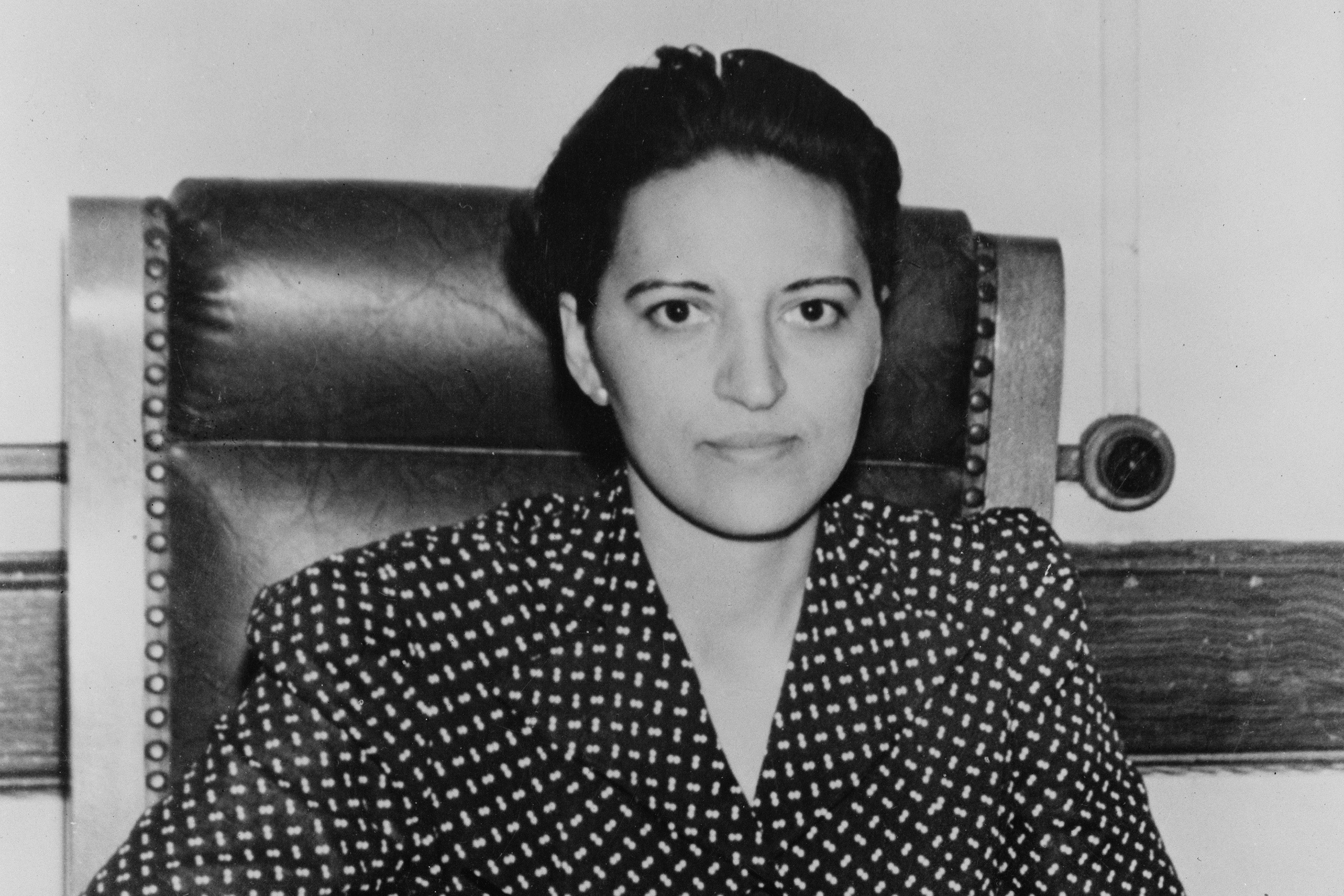
She was determined to get Judge Jane Bolin the recognition she deserved. As a result, on April 11, Bolin’s birthdate, it was proclaimed that Jane Bolin Day would forever be an annual event in Poughkeepsie to spotlight Bolin’s life, work, and legal legacy.
Means learned that Bolin wanted to attend Vassar, but the College did not accept its first student openly identified as Black until the 1940s. Bolin attended Yale Law School, but struggled, facing both racism and sexism. “Despite all of the racial and gender racism that she experienced, she went on to become such a powerful judicial player in our governing system,” said Means, Associate Professor of Political Science at Vassar College and author of Robed Representatives: How Black Judges Advocate in American Courts (Stanford University Press, 2026). “I wanted to do something that would help us keep her in our memory.”
The packed uplifting event was held at Scenic Hudson in Poughkeepsie.

“We received beautiful, supportive, responsive collaborations from organizations,” said Means. Together with Brian Robinson, a Poughkeepsie-based civil rights advocate, researcher, and community leader involved with Vassar and the local community, Means wrote a resolution to make April 11 Jane Bolin Day. It was passed in the Poughkeepsie Common Council, adopted by the Poughkeepsie Town Board and the Poughkeepsie City School District, and a proclamation was made by the Dutchess County Legislature.
“There’s an African proverb that says it’s important to know where you come from to know where you're going, and why. So we went to the community and brought people into our vision. Jane Bolin Day continued to reaffirm to ourselves and to each other that we must highlight diversity, especially in this current political moment, where there are attacks against diversity, Black excellence, Black history, affirmative action, and knowledge and memory.”
The attendees enjoyed an informative presentation by Bill Jeffway, Executive Director of the Dutchess County Historical Society, that spotlighted Jane Bolin’s family and life in Poughkeepsie. Carmen McGill, Co-Chair of Celebrating the African Spirit, an organization with a mission to commemorate contributions to the financial and cultural enrichment of the Hudson Valley by African Americans, spoke, emphasizing the importance of commemorating those who, like Bolin, have excelled.

The audience also enjoyed an eye-opening panel of three local Black women judges—Judge Abayomi Ajaiyeoba, Judge Sharon N. Clarke, and Judge Gigi N. Parris. The panelists answered questions about diversity in the judicial system and what Bolin’s accomplishments have meant to them in their careers. The discussion helped attendees better understand, celebrate, and uplift contemporary diversity in the law.
“When I think about her and what inspires me, the word that comes to mind is perseverance,” said Judge Parris. “Perseverance because of courage, because it takes a lot of that to be the first. She persevered in the face of being told that’s not going to work; you can’t do that; that’s not going to happen for you. And she made it happen. If there’s anything that I love, it’s a go-getter. I am encouraged completely by what she did in terms of paving the way for me to get here.”
“I learned about Jane when I decided to go to law school, and I learned how to use social work and law together,” said Judge Clarke. “We always tell ourselves what we can’t do instead of what we can do. I was a single parent in my late thirties. I had every reason not to go to law school, but I chose to take a leap of faith and do it anyway. So, to find out about this woman who was the first Black judge in the entire United States, and she was doing the type of law that I wanted to do? I immediately identified with that.”
“I came across Jane Bolin when I was at the NAACP Legal Defense Fund,” said Judge Abayomi Ajaiyeoba. “I learned about her resilience and that she was a trailblazer. And with everything that she did, it was [done] with excellence.”
Shona Tucker, Professor of Drama on the Mary Riepma Ross ’32 Chair and Chair of Drama, and D. Jen Brown, Esq., closed out the event, performing the words of civil rights activist Ella Baker set to the music of Sweet Honey in the Rock, an all-female African American a cappella ensemble that expresses their history as Black women through song, dance, and sign language.
Tucker first saw Bolin’s picture hanging in her son’s middle school with no explanation of who she was. She was impressed with what she later learned about the “mystery” woman.
“Judge Bolin was an important individual who made such a difference in countless lives in Poughkeepsie, in New York City, [and] in the court system by helping families, and particularly young children, in family court,” explained Tucker. “If nothing else, it embraced the spirit of ‘Yes, I can make a difference.’ I want those who learn about Bolin to think about history and people from our community who went and did great things. I want this to be inspiring, especially for the youth.”
The organizers hope this event will move the U.S. toward a time when people will never have to ask “Who is Jane Bolin?” again.
The event was co-sponsored by Vassar’s Political Science Department, the ALANA Center, Africana Studies Program, Office of the President, and Office of Community-Engaged Learning; the Northern Dutchess Branch of the NAACP; Celebrating the African Spirit (CAS); Dutchess County Historical Society (DCHS); End the New Jim Crow Action Network (ENJAN); and Arlington Partners Against Racism. The event was intentionally multigenerational, with significant involvement from youth members of River Cities Athletics and the Kappa League.