
Newly Opened Sorbonne Exhibition Highlights Postcards of Poet Elizabeth Bishop ’34
Vassar students and international scholars alike have been drawn to the College’s vast collection of papers once belonging to world-renowned poet Elizabeth Bishop ’34, who during her lifetime won the Pulitzer Prize in Poetry, the National Book Award, and numerous other honors. A small fraction of that collection—76 postcards that Bishop wrote to friends and colleagues—is on display at the Bibliothèque Interuniversitaire de la Sorbonne in Paris until July 8, with some available to view online.
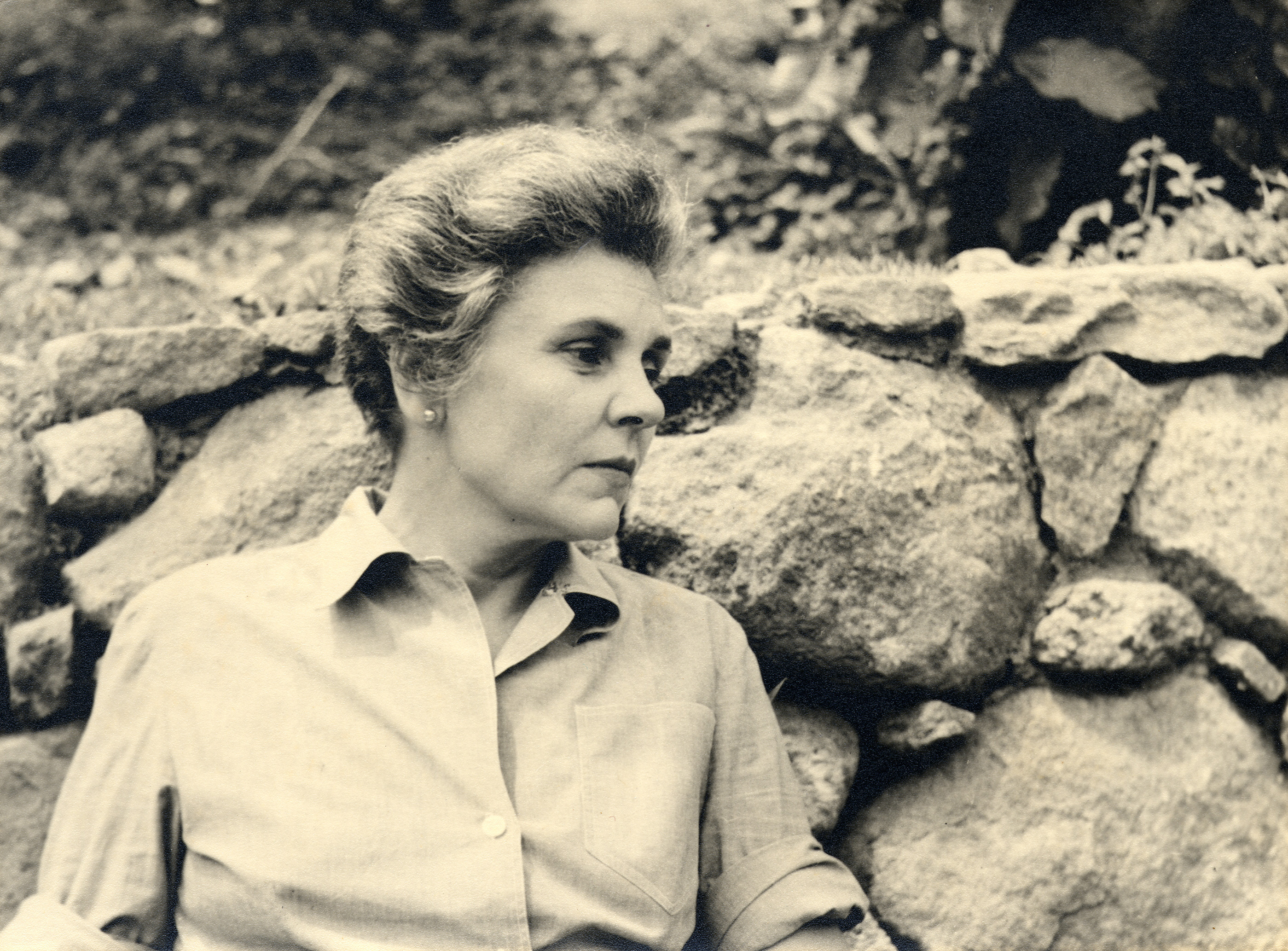
Elizabeth Bishop’s Postcards began as a 2023 exhibition at Vassar’s Thompson Library, traveled to Key West last year (where Bishop lived from 1938 to 1948), and is now in Paris, where she journeyed a year after graduating from Vassar and then again two years later. Bishop was a prolific correspondent, and Vassar owns more than 500 of her postcards, along with hundreds of letters.
“For many years, the postcards were ignored,” explained Ronald Patkus, Head of Special Collections and College Historian, “because people thought, ‘it’s just a postcard.’ But actually, the postcards tell you a lot about Elizabeth Bishop—her personality and her work. Plus, they’re fun!”
Bishop scholar and professor Jonathan Ellis of the University of Sheffield, who curated the postcard exhibition along with Patkus and English professor Susan Rosenbaum of the University of Georgia, agrees. “There is biographical information one doesn’t find elsewhere, particularly on her state of health, but also about the clothes she liked to wear or how to make the perfect cup of coffee,” Ellis noted. “Her sense of humor is evident in almost every single card, even when she is unhappy. That and her constant empathy for others.”
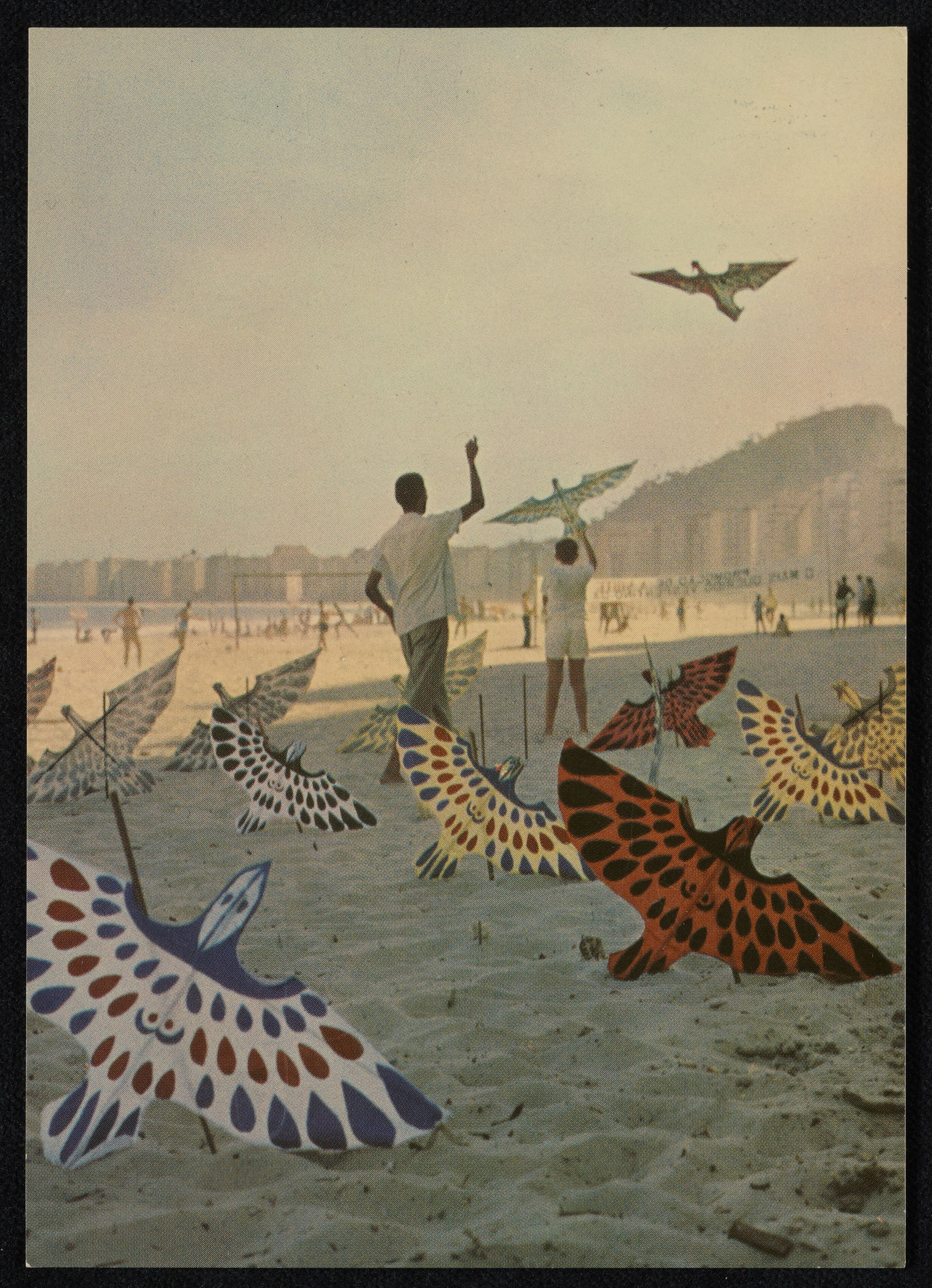
Ellis said that he particularly loves the image on a card of Copacabana Beach in Rio de Janeiro that Bishop sent to several friends. “It depicts what looks like a father and son flying kites on the beach. It’s just a very striking image,” he said. “The first line of the message is memorable, too: ‘Oh, for the wings of a kite to fly to Paris on.’ Bishop often writes about one place from somewhere else. It’s as if she’s always thinking about two or sometimes three places simultaneously, time-traveling in mind and words as the card literally traveled via the postal service.”
In fact, notes Ellis, Questions of Travel is both the title of Bishop’s third collection of poetry and one of her main subjects. Those questions, Ellis says, include: “Why do we leave home to see other places? Does being elsewhere help us to see home more accurately? How long does one have to reside in one place to cease being a tourist?”
Ellis considers a card written to poet James Merrill that describes Bishop’s working methods, perhaps the most significant item in the collection. In it, Bishop writes, “I find it much easier to write away from home than ‘at home’ for some reason. In fact, when I think about it, it seems to me I’ve rarely written anything of any value at the desk or in the room where I was supposed to be doing it—it’s always in someone else’s house, or in a bar, or standing up in the kitchen in the middle of the night.”
Says Ellis, “It’s difficult not to be wowed by that!”
In addition to the exhibition, the Sorbonne will host a symposium on “Postcard Poetry and Poetics” in early June. Alongside academic papers and a creative workshop on postcard writing, filmmaker Vivian Ostrovsky will present a screening of her 2025 documentary Elizabeth Bishop: From Brazil with Love.