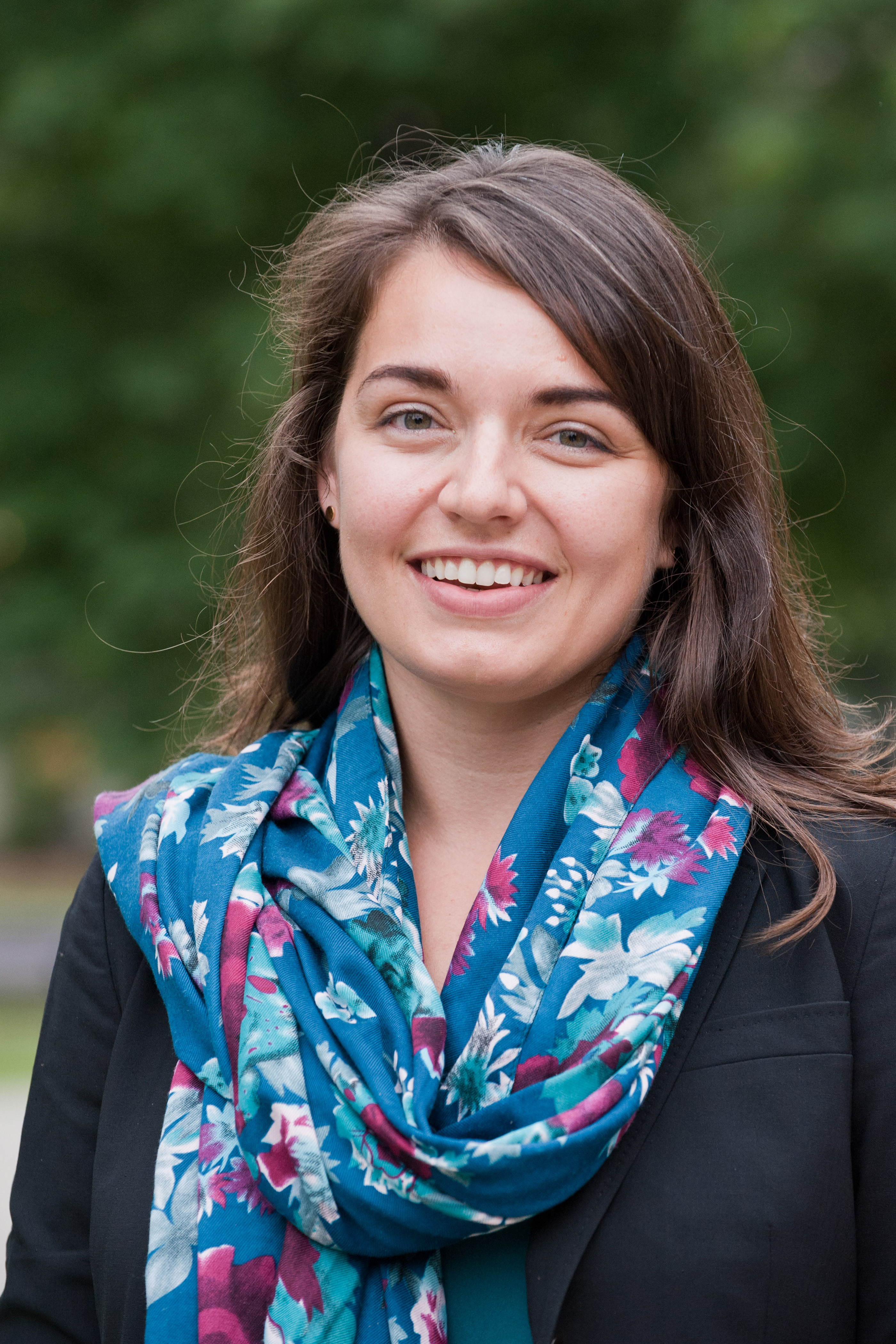
Kirsten M. Wesselhoeft

Kirsten Wesselhoeft is a scholar of modern and contemporary Islam, with a focus on the Mediterranean and North Atlantic regions. She teaches courses in Islamic studies, as well as a wide range of thematic courses: on religion and politics, on migration, on gender and religion, on foodways and ritual, and on qualitative methods. Wesselhoeft is currently at work on a modern cultural history of Ramadan (Princeton UP), drawing on research in New York City, Paris, and Istanbul, among other sites.
Wesselhoeft’s first book, Fraternal Critique: The Politics of Muslim Community in France (University of Chicago Press, January 2025), is a study of Muslim intellectual and activist culture in 21st century greater Paris. Based in ethnographic fieldwork conducted between 2008 and 2019, Fraternal Critique demonstrates how young Muslim activists use disagreement and dissent to cultivate solidarity and community, and explores why these values are in turn stigmatized by political elites as “communalist” and “separatist.”
From 2022-2024, she was the Faculty Director and PI of the Consortium on Forced Migration, Displacement, and Education, a five-college grant from the Mellon Foundation that addressed the global challenge of forced migration through the unique capacities of liberal arts institutions.
Kirsten Wesselhoeft is Associate Professor and Chair of Religion at Vassar. She directs Vassar's correlate program in Migration and Displacement Studies, and serves on the steering committees of International Studies and Women, Feminist, and Queer Studies.
Drawing on long-term ethnography as well as legal, political, and media analysis, Wesselhoeft's research seeks to understand how modern and contemporary Muslims build community and pursue social change in contexts shaped by colonialism and liberal secularism. She has been conducting ethnographic and archival research in France for over 20 years, and has also conducted research in Jordan, Turkey, and the United States. Her research interests include social ethics, gender and religion, migration, religion and race, Islam and the body, and foodways and ritual. She is currently at work on a modern cultural history of Ramadan in secular time, under contract with Princeton University Press.
Wesselhoeft’s first book, Fraternal Critique: The Politics of Muslim Community in France (University of Chicago Press, January 2025), is a study of Muslim intellectual and activist culture in 21st century greater Paris. It takes up both the agonistic ethics of community developed by socially engaged French Muslims, and the ethics of society expressed through recent French laws and policies, all in the context of widespread Islamophobia and an ascendant anti-immigrant right. Based in ethnographic fieldwork conducted between 2008 and 2019, Fraternal Critique demonstrates how young Muslim activists use disagreement and dissent to cultivate community, a value that is in turn stigmatized by political elites as "communalist" and "separatist." In the course of their arguments about the aspirations, values, and histories that should anchor Muslim life, French Muslims have developed an ethical framework and method that some of them call “fraternal critique.” This double entendre re-appropriates both the classical Islamic discourse of the “ethics of disagreement” and the canonical Republican virtue of fraternité . Rather than fragmenting moral communities, "fraternal critique" orients argument and debate as practices of solidarity and belonging. This intervention has important consequences, not only for the study of Islam and society, but also for wider conversations about the place of critique and discord in the civic life of liberal democracies.
At Vassar, Wesselhoeft teaches courses on global Islam, race, and colonialism, on gender, religion, and the body, on qualitative research methods, and on migration and displacement. She also teaches an introductory survey course in Religion entitled "Religion, Violence, and Peacebuilding," and an inter-departmental introduction to Contemporary Arab Cultures, which orients students to the religion, culture, arts and politics of the Arabic-speaking world.
From 2022-2024, she was the Faculty Director and PI of the Consortium on Forced Migration, Displacement, and Education (CFMDE), a cross-institutional grant from the Mellon Foundation, hosted at Vassar. The CFMDE addressed the global challenge of forced migration by leveraging the unique potential of liberal arts institutions to support displaced scholars, engage in transdisciplinary study of migration, and welcome newcomers to our region.
Departments and Programs
Courses
RELI 113: Religion, Violence, and Peacebuilding
RELI 222: Women and Gender in Islam
RELI 381i: Feasting, Fasting, and Farming: Religion and Foodways
In the Media

Photos
Download images for non-commercial use, photo credit required.