The Arboretum
Nature and landscape have been integral to Vassar’s culture, campus, and curriculum from the inception of the college. Its site in the Hudson Valley has long been naturally enriched by lakes and creeks, and surrounded by gentle ravines, hollows, farmland, grasslands, and woods, creating a striking range of landscape types, as well as ecological diversity. Today there are over 2600 trees spread across the campus, representing over 170 species.
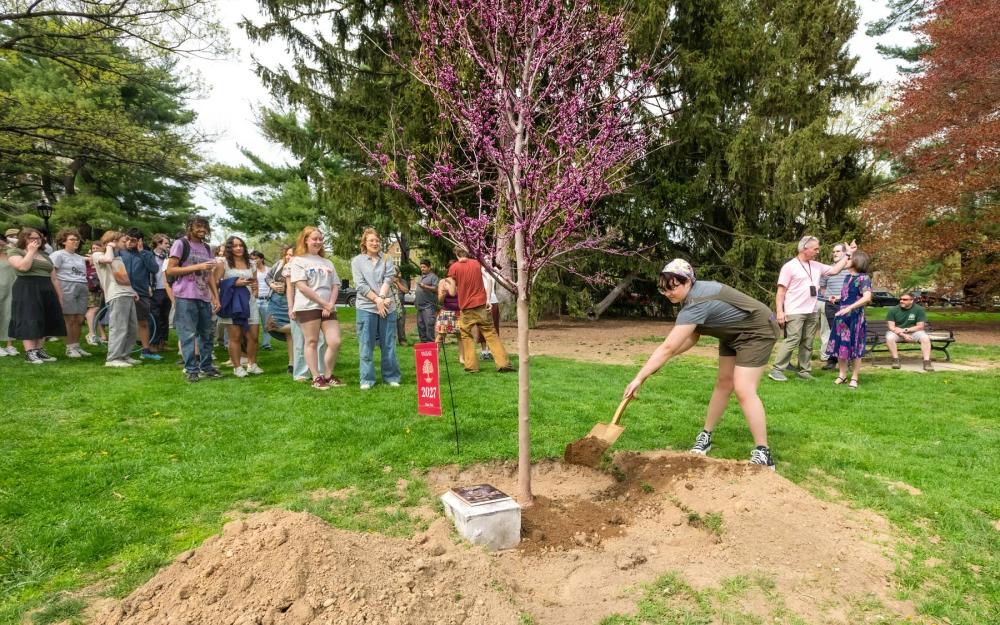
Visitors to the arboretum will see the central greensward conceived by John Charles Olmsted (1896), the country’s second oldest Shakespeare Garden, constructed by Vassar students studying Shakespeare and Botany (1916); and the Edith Roberts Outdoor Ecological Laboratory, established to showcase native plant communities, and the first of its kind (1920). The 525-acre Preserve, home to over 600 species of vascular plants, is adjacent to the main campus and accessible via several walking trails. Faculty and students from across the curriculum draw on the arboretum for their research. Each year, Arbor Day celebrations include the ceremonial planting of a Class Tree, and other tree celebrations and dedications.

Past Events

Come relax in the greenhouse and paint a rock to add to our community rock garden!
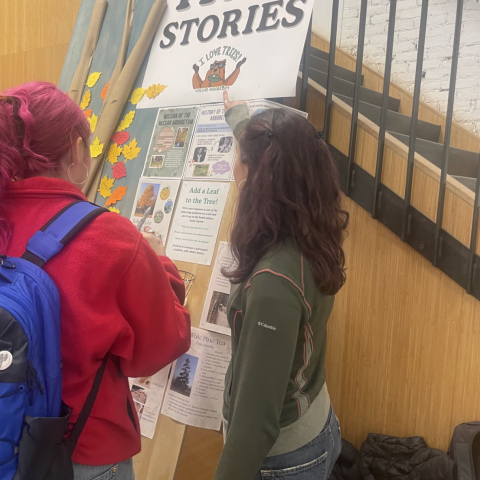
Do you love trees? Why? What’s your favorite tree? What’s your tree story? Between November 7 and 21, add your contribution to one of the large Tree Stories boards, found in Gordon Commons, College Center, the Bridge, and the Athletics and Fitness Center.
Campus community only, please.
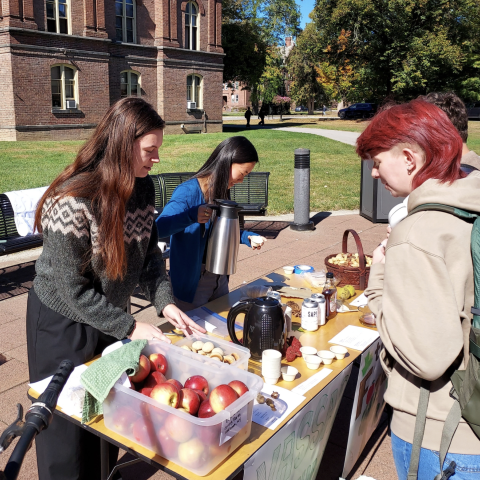
Acorn cookies?! Sumac tea?! Both are delicious! Come on out and have a taste at the Vassar Arboretum’s pop-up event showcasing the various kinds of food that come from trees.
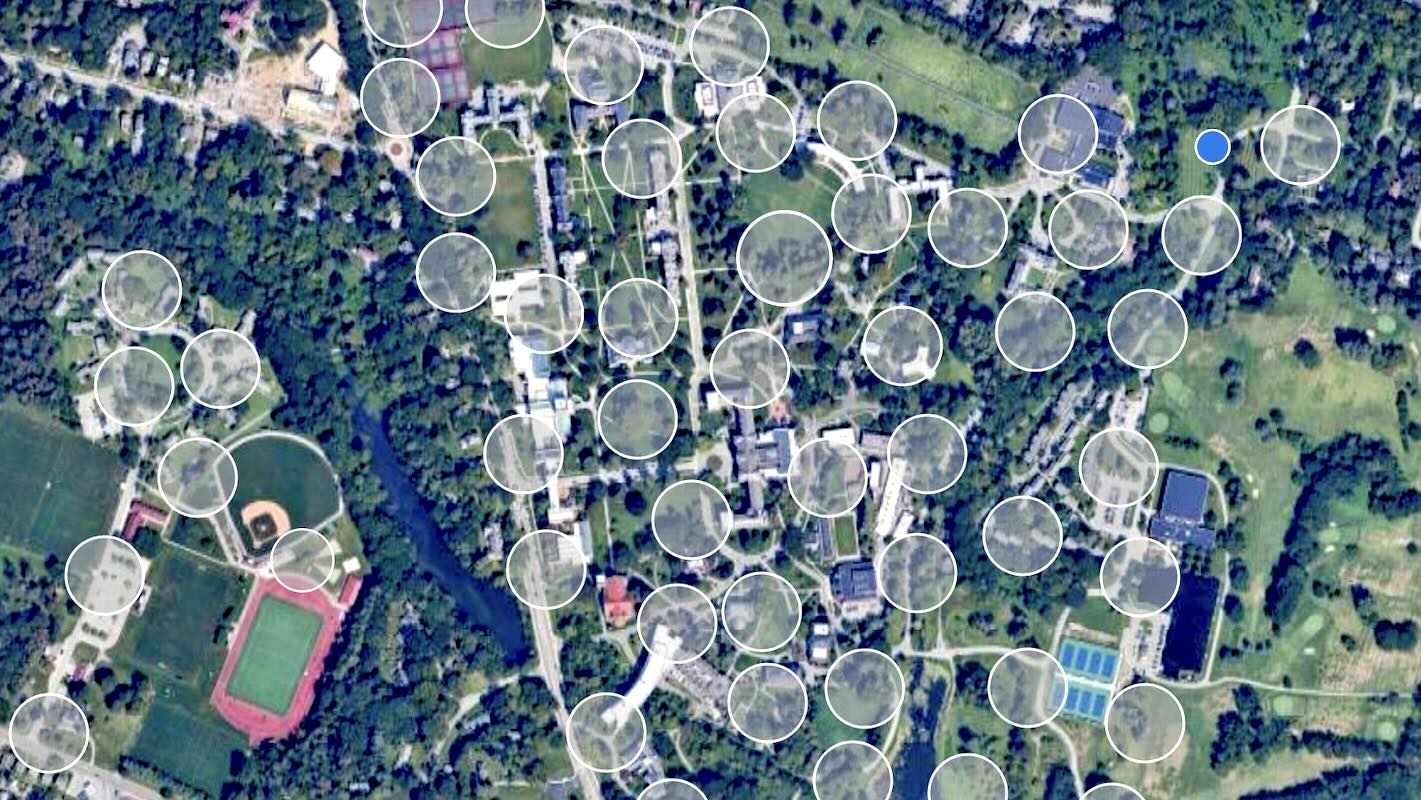
ArcGis Arboretum Tree Map
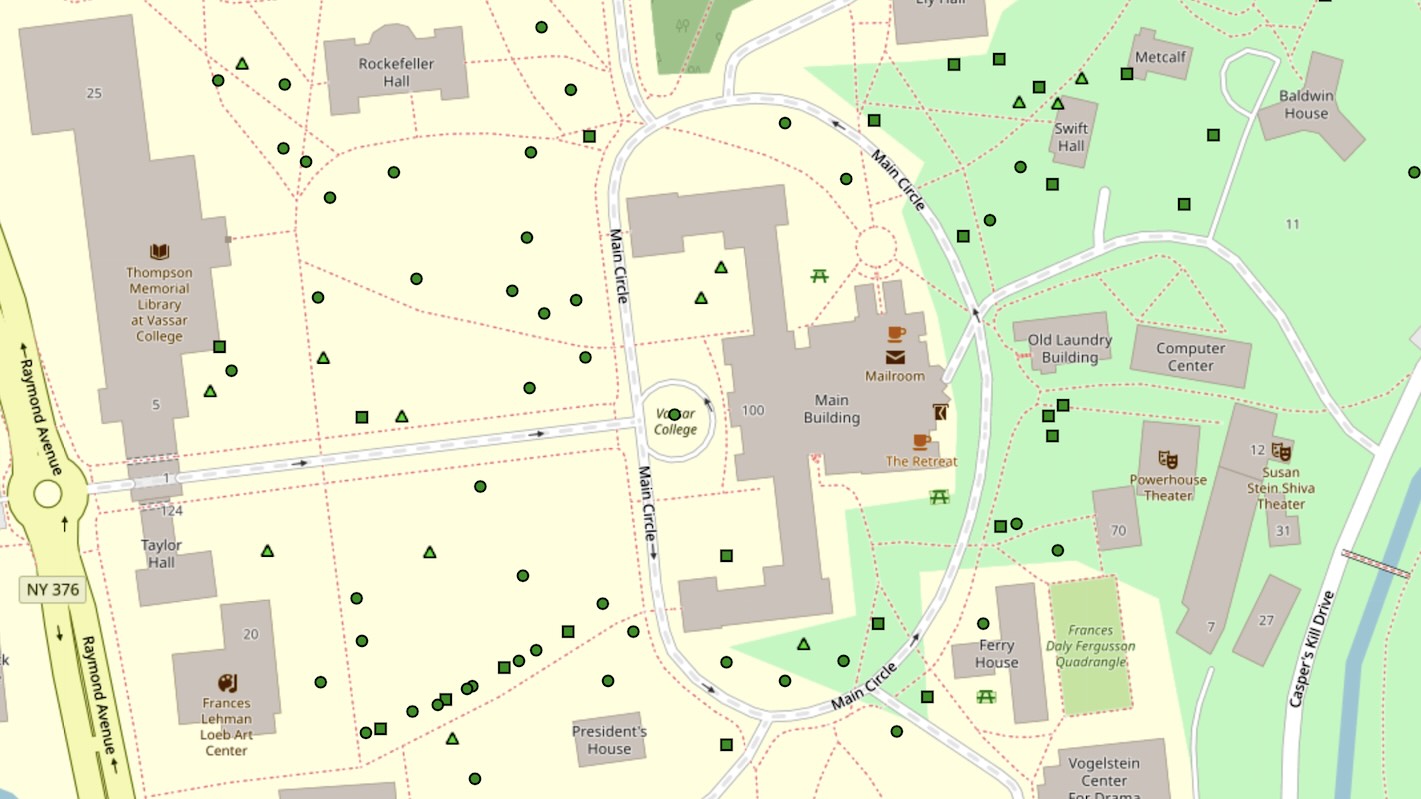
A web-based tree map of the Arboretum with details and photos. View the interactive map

In 2020, the Vassar Arboretum was accredited as an ArbNet Level II Arboretum, which is characterized by a minimum of 100 species, varieties or cultivars of trees or woody plants. These must be planted and grown in accordance with an arboretum plan with a clearly defined purpose and audience, and provisions for maintenance and care in accordance with certain standards, including a policy on invasive species. This accreditation also stipulates a governing group dedicated to the arboretum plan and staff to maintain it, as well as collections inventory and record-keeping practices. Public access, information on the plants, and programming are other key components.



Land Acknowledgment
We acknowledge that Vassar stands upon the homelands of the Munsee Lenape, Indigenous peoples who have an enduring connection to this place despite being forcibly displaced by European colonization. Munsee Lenape peoples continue today as the Stockbridge-Munsee Community in Wisconsin, the Delaware Tribe and the Delaware Nation in Oklahoma, and the Munsee Delaware Nation in Ontario. Read the full statement.