
Community-Engaged LearningEarning Academic Credit for Field Work
Community-Engaged LearningEarning Academic Credit for Field Work
Every year, dozens of Vassar students earn academic credit by venturing off-campus and working in public schools, businesses, community centers, hospitals, nonprofits, and government offices. During the fall semester, more than 170 students took part in activities ranging from mentoring teens in a violence prevention program to caring for some exotic animals at a nearby zoo.
Lisa Kaul, Vassar’s Director of Community-Engaged Learning, says she believes such experiences are a vital component of a student’s learning experience. “The mission of a liberal arts education is to think through engagement,” Kaul says, “and this program provides a rich space for that learning to take place in a way a classroom cannot provide.”
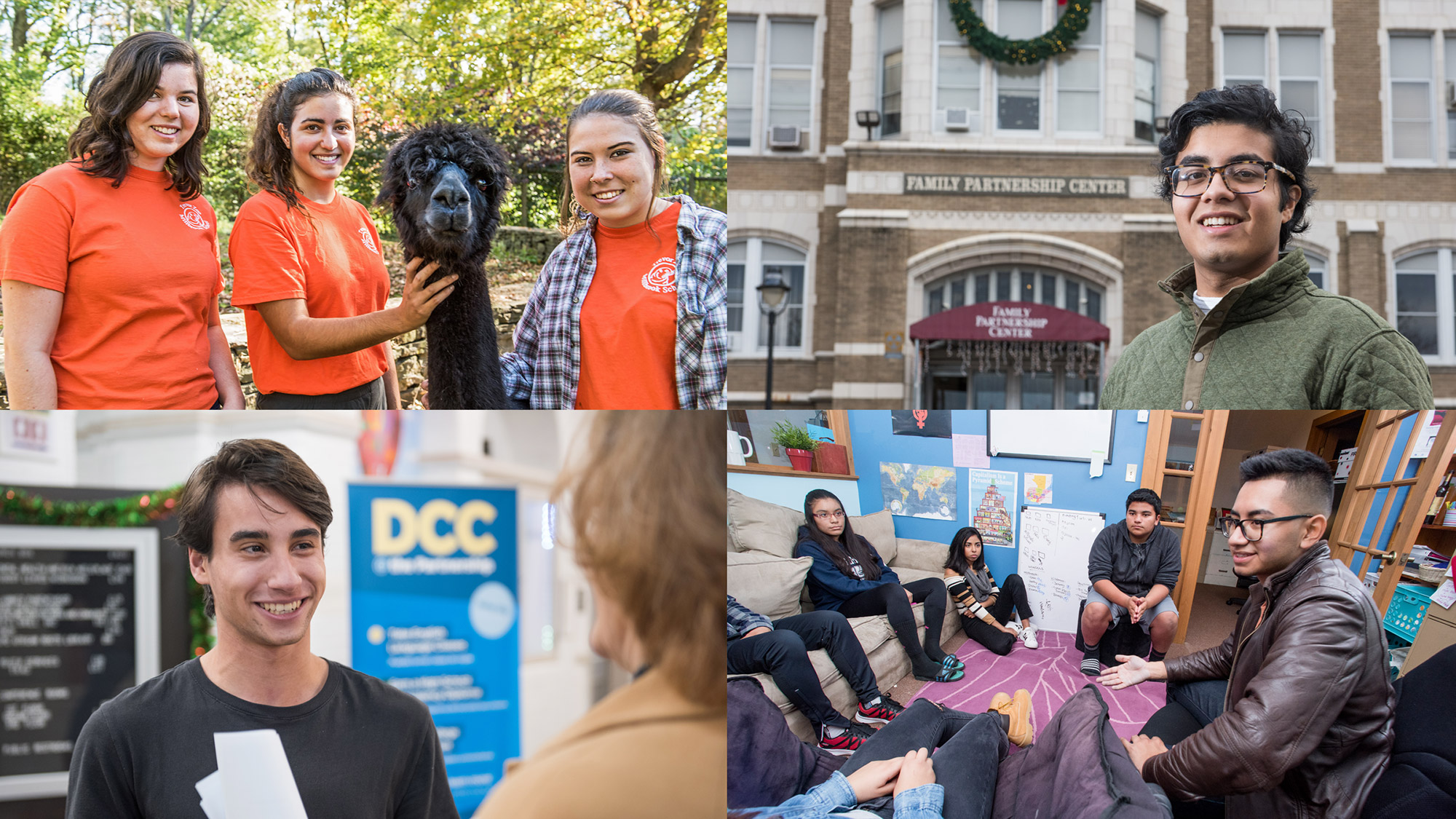
Kaul says one of her primary goals is to tie the work the students perform in the community more closely with their course work on campus and to encourage more faculty and students to collaborate with community organizations and agencies. A faculty member oversees the work each student performs, and all students are required to keep a journal and write a paper about the experience at the end of the semester. Kaul says she hopes to convince more students to remain with the same organization for at least two semesters. “Having students work for the whole year in the same place helps the organizations that have invested in their training get more productivity from those students,” she explains. “And the experience is more meaningful to the students, too.”
Kaul is also encouraging students in similar fields to engage in regular conversations with each other about their work “If all of our students who are engaged in criminal justice work, for example, share what they’re doing, it enhances the experience for everyone,” she says.
The program’s long-term goal, Kaul says, is to foster a greater sense of community involvement in the students who participate. “My hope is that these students come to understand what they’re learning in a larger context and that it fosters better citizenship,” she says. “We want to provide the opportunity to help them understand how such engagement improves and enhances the community. The hope is that they will do this in their next community, post-Vassar, and that this kind of learning by doing becomes a part of their lives.”
Following are some examples of the work performed by students enrolled in the Community-Engaged Learning program during the fall semester:
Marc Milone, drama coach, Poughkeepsie Youth Theater
Milone ’20, a drama major from Chatham, NJ, was working last spring as a youth counselor at a Poughkeepsie community center when he asked if there were any theater groups for young people in the community. “I found out that Poughkeepsie Youth Theater was being launched this fall, and I immediately applied for a job there,” Milone says.
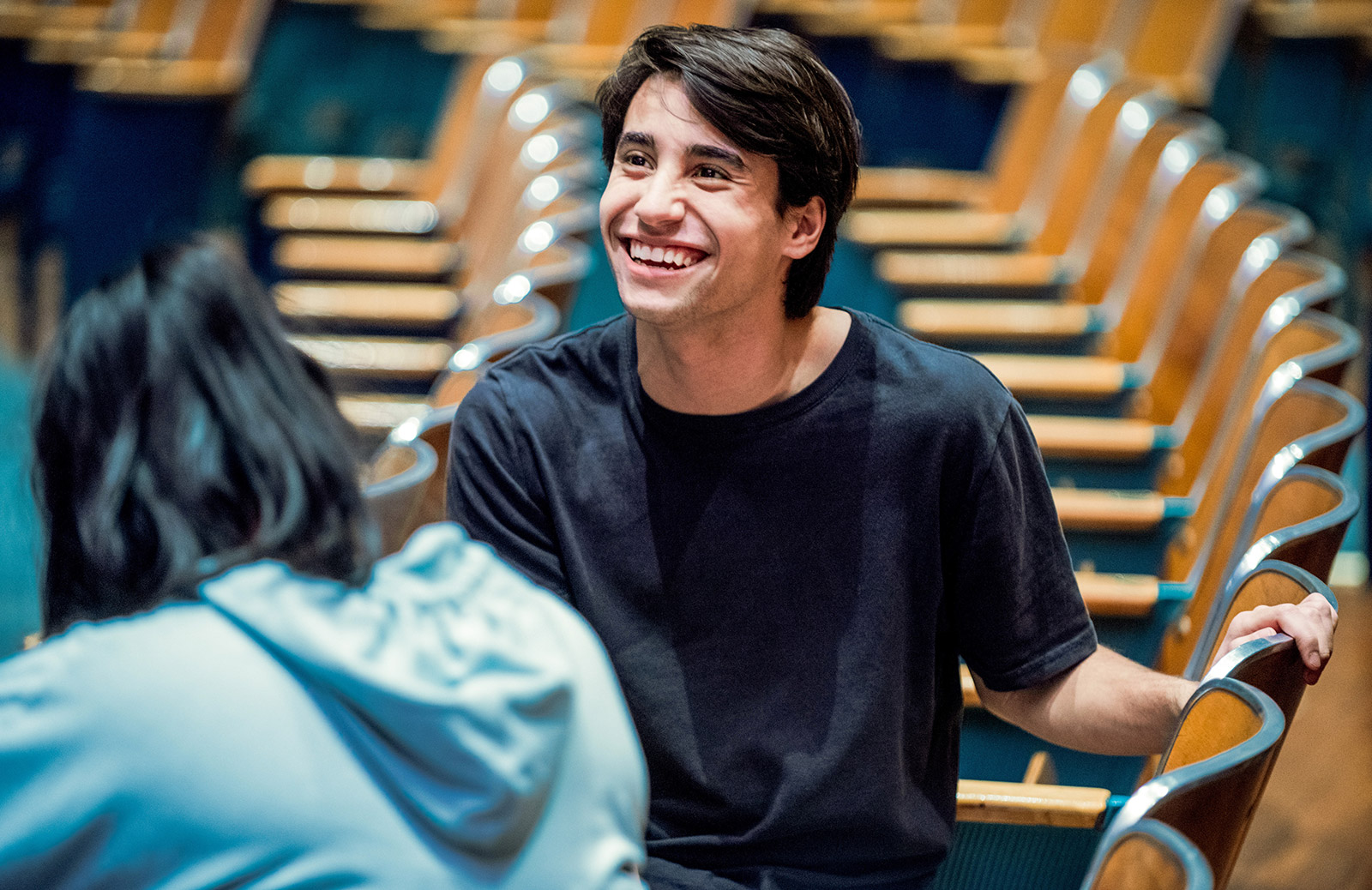
Nearly a dozen young people attend the twice-weekly sessions. Milone and his fellow drama coaches lead them through some basic acting exercises and work with them on writing original scenes they’ll perform for a live audience. “It’s amazing what they’ve come up with; they’re all willing to take risks in their performances,” Milone says.
Because the theater group was new, Milone says he wondered at first whether it would be successful. Those doubts soon disappeared. “By the second week, the magic was happening,” he says. “Everyone came with such enthusiasm, and no one has dropped out.”
Milone also heard a testimonial from the mother of one member of the group. “She asked me, ‘What are you doing to hold my daughter’s interest? She’s never gone to anything that she stuck with like this.’ That made me feel good, that we were reaching her,” he says.
The fall session of Poughkeepsie Youth Theater will culminate with a trip to New York City, where the group will attend a performance of the Broadway musical, Aladdin. Milone says he also plans to bring them to Vassar to watch a rehearsal and a show performed by a student theater group. “I want them to meet some real drama folk, to show them what the possibilities are,” he says.
Achal Fernando-Peiris, anti-violence counselor, SNUG
Fernando-Peiris ’19, a biology and political science double major from Gambier, OH, worked as an intern in the offices of New York City Legal Aid last summer. He says the experience spurred him to learn more about the causes and consequences of gun violence. When he heard there was a chapter of the nationwide anti-violence group SNUG (‘guns’ spelled backwards) in Poughkeepsie, he applied for a position as an intern there.
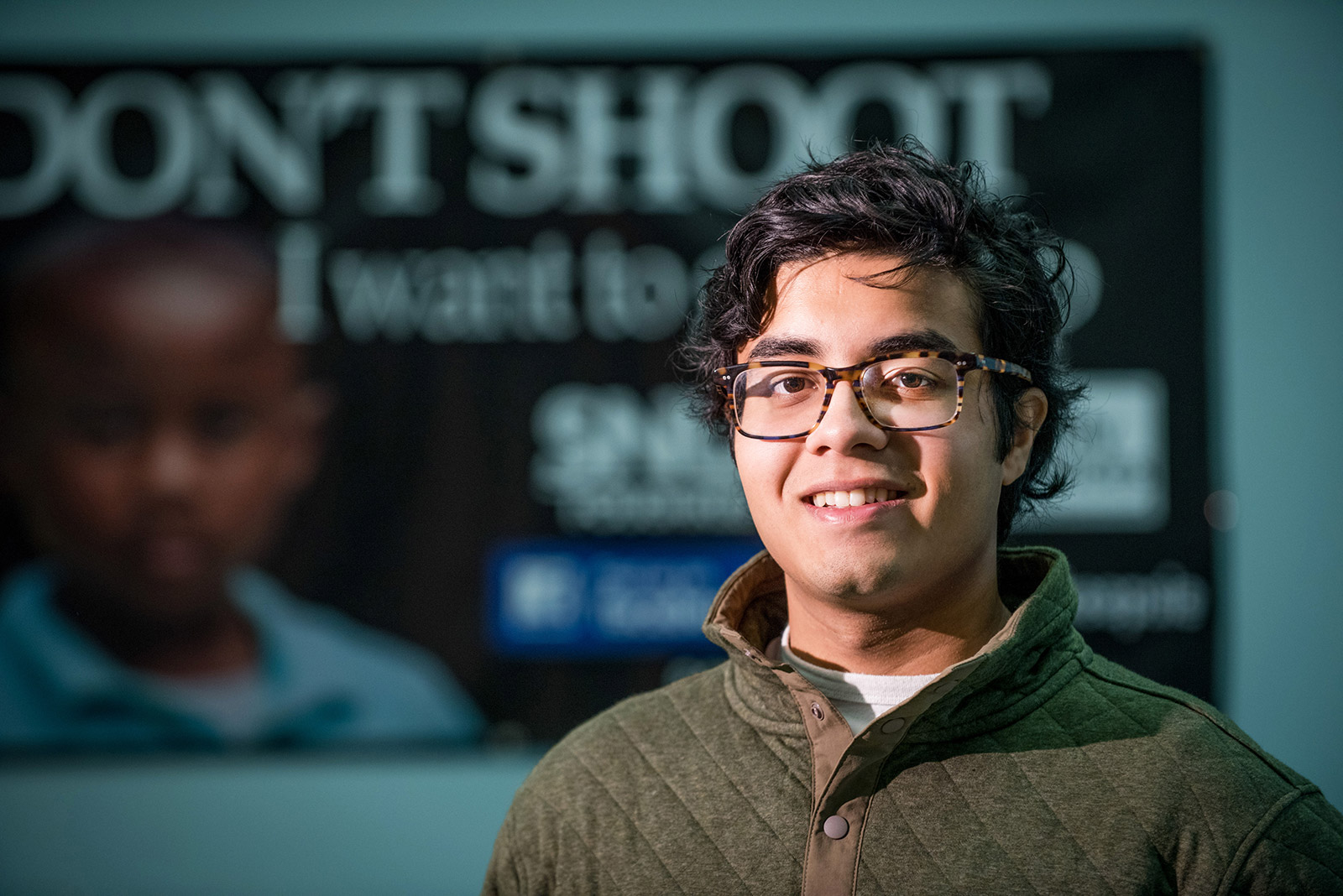
SNUG is an evidence-based street outreach program that treats gun violence as a disease. It focuses on youth between the ages of 14 and 24 who are at high risk of involvement with gun violence. Throughout the fall semester, Fernando-Peiris ran a weekly recreation program called “Night Hoops” that attracted up to 60 young people. Activities included presentations by guest speakers from law enforcement and community groups who led discussions about the threat of gun violence in the community.
Fernando-Peiris says studies have shown that SNUG programs have curbed violence in many communities in the country; a study in Chicago showed there was a 40-percent reduction in gun violence in neighborhoods that ran SNUG programs, he says. But Fernando-Peiris adds that he sometimes feels he is treating the symptoms of the problem instead of the disease. “Violence is often a product of a system that discriminates and breeds anger and hopelessness,” he says. “This tension in poor communities leads to an entire class of people being labeled violent.”
Wynn Zenni, Alexandra Reilinger, Sara Cotton: zookeepers
The three sophomores say they have long been passionate about animal rights. So when Zenni learned about the job openings at the Trevor Zoo, located on the campus of the Millbrook School, a private secondary school about 20 miles from the Vassar campus, she notified Reilinger and Cotton. They submitted their applications through the Community-Engaged Learning Office and spent every Sunday of the fall semester feeding the animals and caring for their habitat.
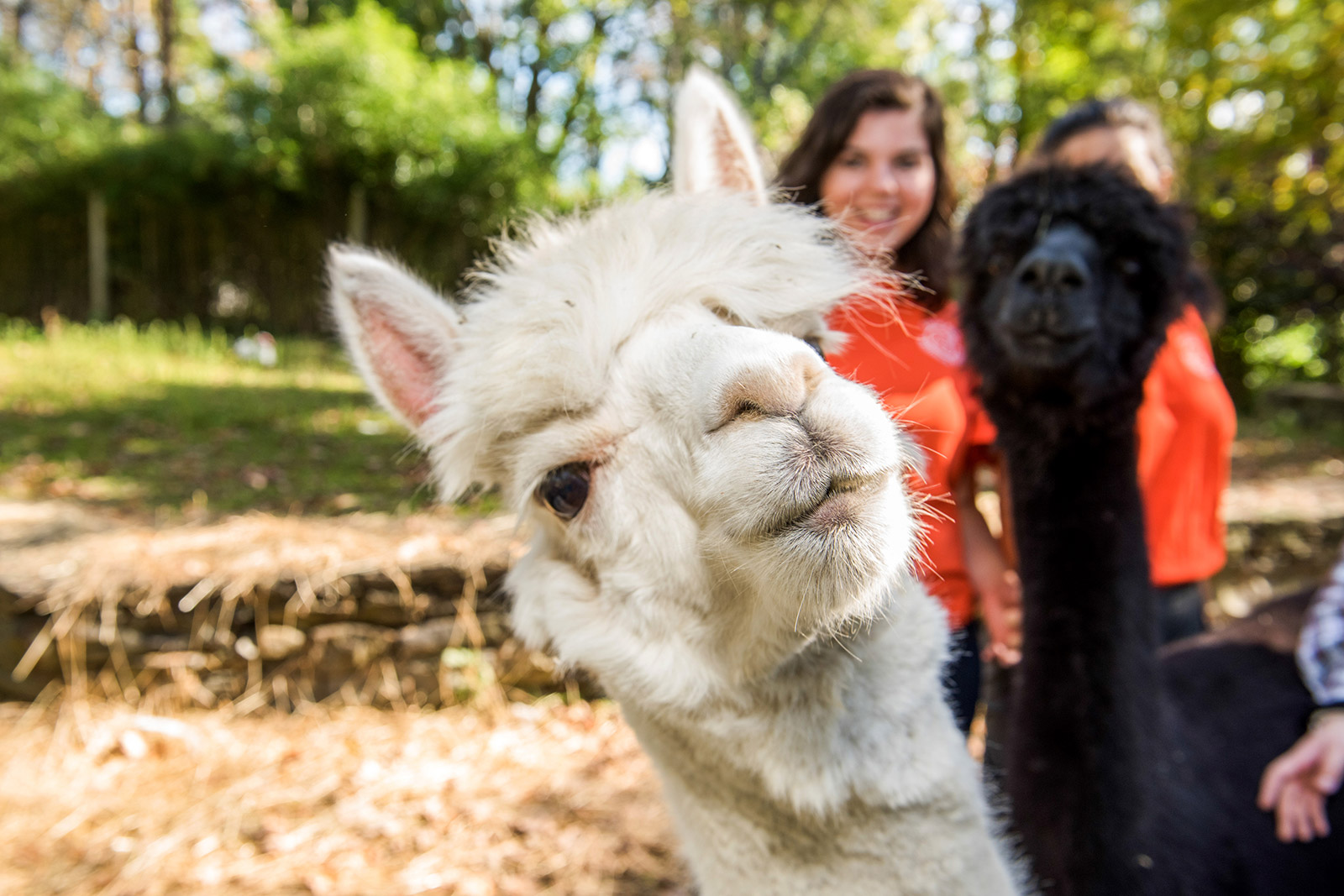
Some of the animals are skittish, says Zenni, an environmental studies major from Oak Ridge, TN, but others are affectionate. “There’s a muntjac deer who loves to be scratched,” Zenni says. There are even a few who can take cordiality a tad too far. “The alpacas really don’t understand personal boundaries,” she says. “They’re right up in your face.”
Cotton, a neuroscience major from Athens, GA, says the culture at the Trevor Zoo has enhanced her interest in animal conservation. “Working there opened my eyes to the importance of preserving these animals, some of which are threatened species,” she says. “We all see the effort the people who run Trevor put into making all of them safe and comfortable.”
Reilinger, a biology major from Boston, says she’ll always cherish an experience she had one morning while she was cleaning the muntjac deer’s habitat. “As I was working, he came up behind me silently and licked my cheek,” she says. “It was an amazing moment; he was showing me he trusted me enough to show me affection.”
Reilinger says her stint at the zoo has expanded her Vassar horizons. “Working there made me appreciate the value of field work, getting off the campus a few hours of week and doing something you love,” she says. “I definitely plan to take advantage of other opportunities.”
