Class of ’71 Gateway to the Old Vassar Farm
In the early 1970s, Biology Professor Margaret Wright had the extraordinary vision to turn the underutilized, overgrown acreage of the old Vassar Farm into an ecological preserve for conservation and field research. Over the past 50 years, the acreage set aside as an educational resource for students and faculty researching natural systems has expanded in purpose. In addition to the field research station, there are community gardens, community-supported agriculture, an environmental education cooperative, and rugby fields.
When planning for their 50th Reunion gift, the class recalled celebrating the first Earth Day and wanted to focus their efforts on the environment. They saw the potential for academic engagement with this space extending beyond the sciences. Outdoor classrooms would create opportunities for education that draw inspiration from natural settings, especially in the arts and humanities. Improved accessibility, with paths from Hooker Avenue and safer pedestrian access, would support the College’s commitment to a campus community that is welcoming to all. In honor of their 50th Reunion, the class raised more than $500,000, and the Gateway project became a catalyst for increased engagement and access, melding infrastructure improvements with ecological restoration. Check out the photo album from their 2022 Special Reunion.
Class of 1971 Impact on the Preserve
The Gateway project initiated a series of comprehensive planning workshops where representatives from the entire Vassar community participated in clarifying the vision for the old Vassar Farm and developing projects to improve accessibility and visibility, including the rebranding to The Preserve at Vassar.
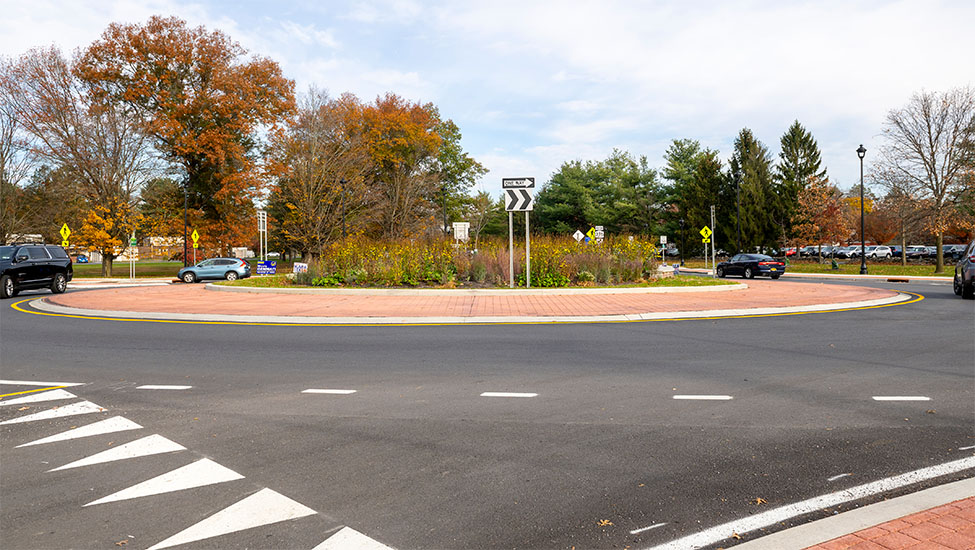
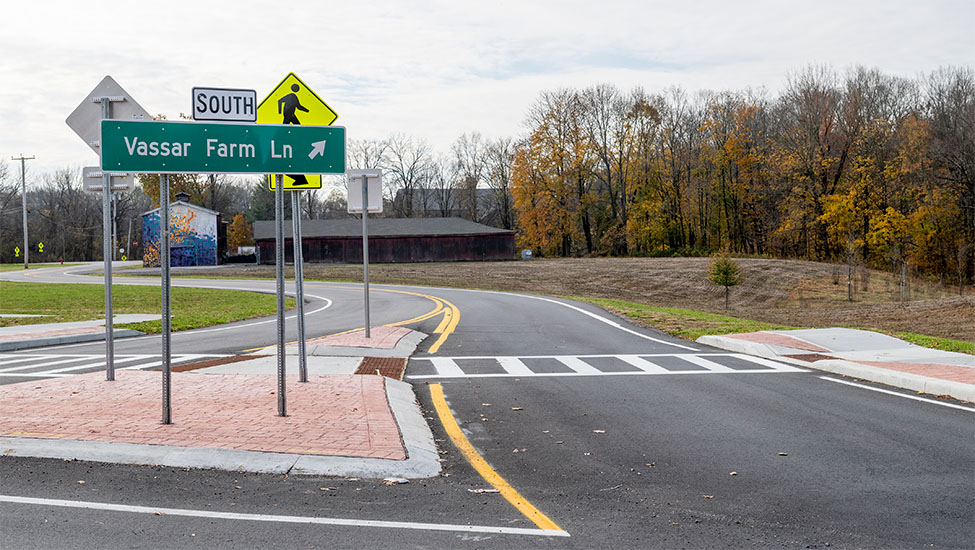
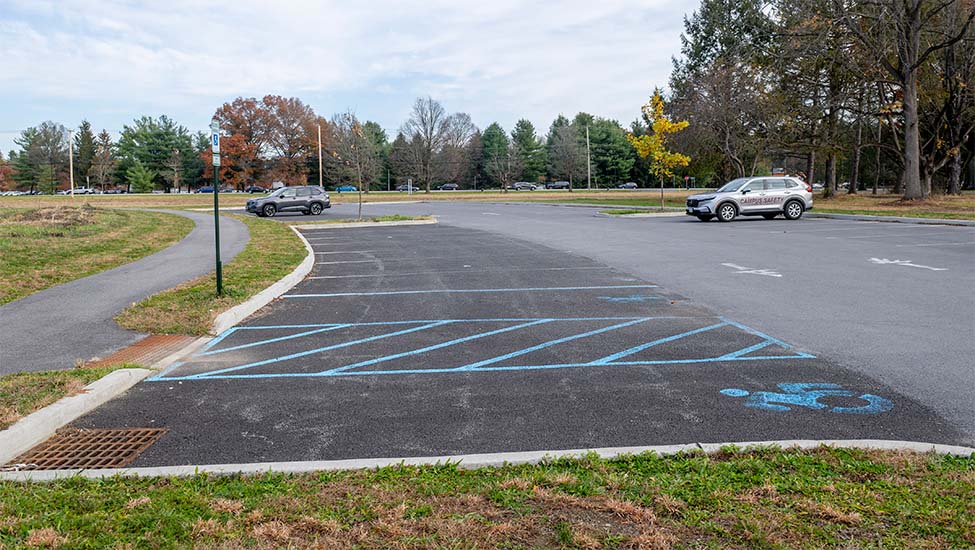
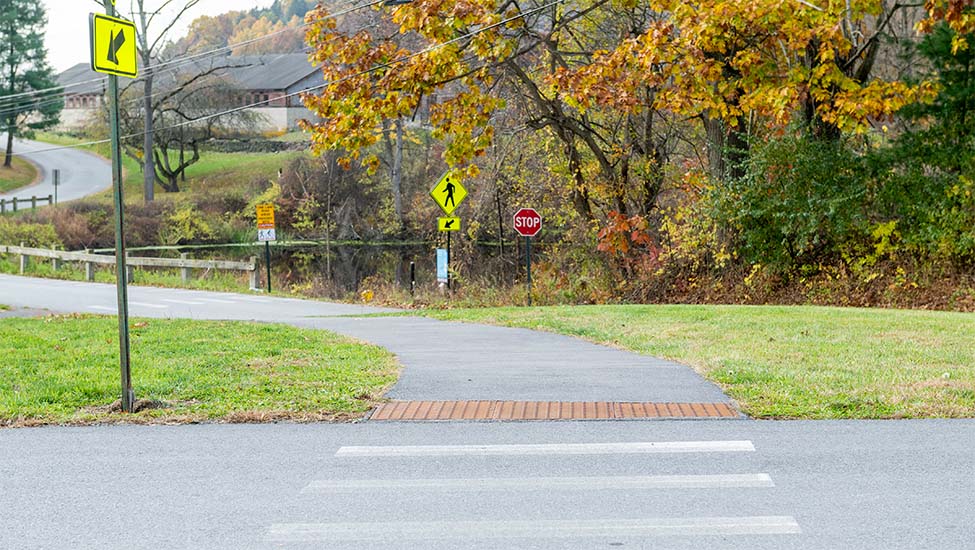
The Gateway project expedited a partnership with New York State in building a new roundabout at the intersection of Raymond and Hooker Avenues—complete with crosswalks! Pedestrians can now safely walk to and from campus, cars can park in the new parking lot on the Preserve’s perimeter, and improved paths lead visitors to the trailheads. More people are visiting the Preserve than ever before.
Progress to Date
- A reimagined comprehensive plan for the ecological preserve and rebranding The Preserve at Vassar
- Partnership with the New York State Department of Transportation in the building of a new roundabout with a new road into the Preserve. The new roundabout slows traffic on Hooker Ave, creates a pedestrian island, and includes walking path access to the Preserve.
- A permeable parking lot with 40 spaces located at the entrance of the Preserve is both welcoming and reduces vehicle traffic in the Preserve’s interior.
- A designated pedestrian path connecting the crosswalk at NYS-376 with the parking lot and the Preserve trail system improves visitor experience and pedestrian safety.
A $40,000 Ecological Restoration Grant from Partners for Climate Action Hudson Valley will support high-visibility riparian restoration. Over 200 native trees and shrubs representing 45 different plant species—23 of which were new to the Preserve—were planted by over 80 volunteers and staff along the Casperkill tributary near the entrance to the Preserve. Expanding the width of the riparian buffer will improve water quality by filtering stormwater runoff and reducing erosion, thus creating native habitat to support a greater diversity of plant and animal species, including pollinators. Watch this time-lapse of the riparian buffer restoration.
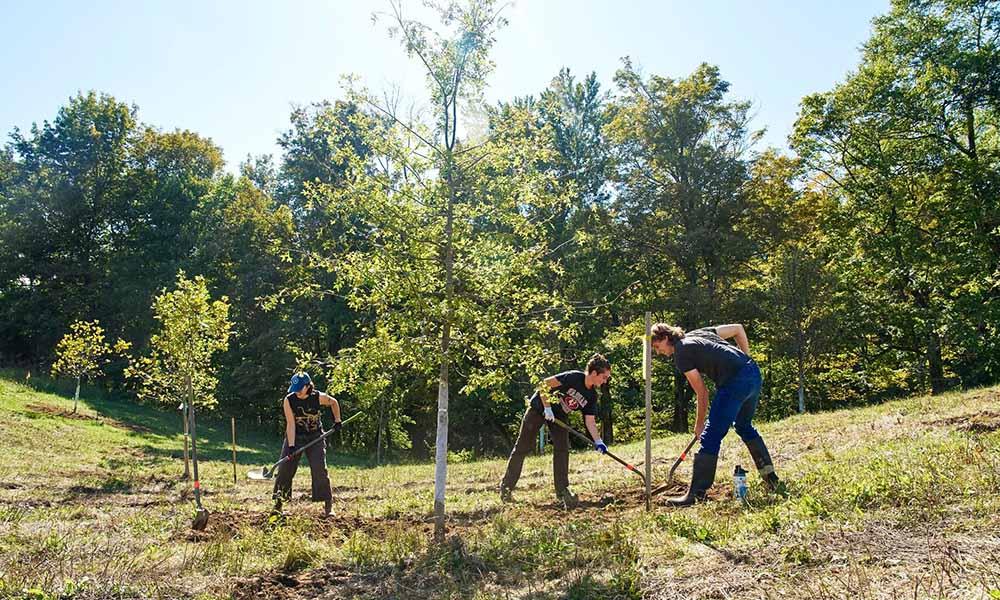
Vassar students were integral to every step of this restoration project, from planning to execution and beyond. Biology students and Preserve interns helped conduct baseline site surveys, select plant species, and host volunteer invasive removal sessions leading up to the planting days. Student volunteers, including many student-athletes, helped plant 200 native trees and shrubs across 4 days in September 2023, and Preserve interns continue to be involved in the project, carrying out post-planting monitoring, site maintenance, and tree care.
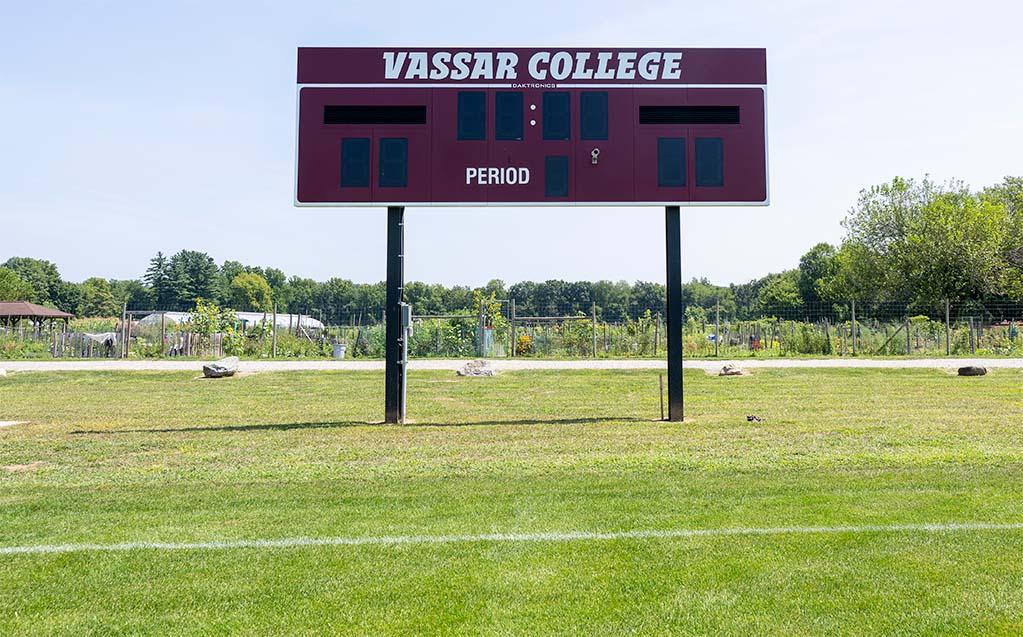
A $1,000,000 renovation of the Rugby program facilities has restored the natural grass playing fields, expanded irrigation and drainage, and potable water lines have been installed. The Women's Rugby team is currently the Division II National Champions.
Next Phase
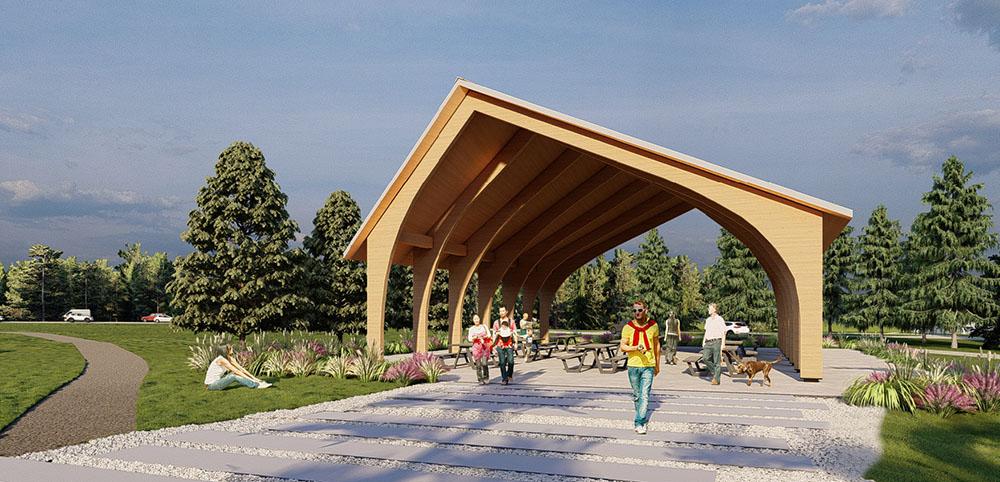
With the improvements to accessibility now complete, the Gateway project moves to visibility and preservation. A new pavilion and picnic grove is being built adjacent to the parking lot, which will serve as a welcoming hub for visitors entering the Preserve, a community gathering space, outdoor classroom, and distribution site for the Poughkeepsie Farm Project. This pavilion will be the official Class of '71 Gateway to the Old Vassar Farm. The project has already received a significant grant from the New York State Office of Parks, Recreation, and Historic Preservation.
The Future of the Preserve
As the Preserve welcomes more visitors and scholars, there will be opportunities for further investment, continuing the legacy established by the Class of 1971. These investments will preserve the engagement in experiential learning about the natural world while supporting a biologically diverse and resilient space crucial to the health and well-being of Poughkeepsie.
- Native meadow restoration of the fields at the entry to the Preserve. This restoration will be designed to increase native plant biodiversity, act as a future seed source, and serve as an opportunity for experiential learning. Vassar has already received a grant from Partners for Climate Action for a portion of the project.
- Wayfinding and signage. A new kiosk with a trail map, background information, and visitor guidelines will be installed adjacent to the parking lot. Directional signs to key landmarks will be installed, and 15 trailhead signs will be updated. Finally a new main sign will be installed along Hooker Avenue.
- Replacing the trees along the Hooker Avenue northern edge of the Preserve. In order to replace the sugar maples that are declining due to environmental stress, 40 native trees will be planted. The plantings will be designed to create a visual connection to the adjacent landscaping on the main campus, and species will be selected to improve plant diversity and support pollinators.
- Creating bus parking spaces to enable the many school groups that visit the Environmental Cooperative and establish an intermittent event parking area.